Rubin天文台仅扫7%天空即发现2个隐藏天体:Aquarius IV矮星系距地球约35.5万光年
位于智利安第斯山区的 Vera C. Rubin 天文台在正式巡天全面展开前,仅凭覆盖未来测绘天空7%的预览数据,就发现了两个此前从未被探测到的天体。相关研究2026年11月14日对外公布,其中一个是超暗矮星系 Aquarius IV,另一个是被浓厚宇宙尘埃遮挡的星团 Rubin-GC1。
Aquarius IV 距地球约35.5万光年,因亮度极低,长期混在背景天空中未被发现。该研究由 Yale 大学研究生 William Cerny 领衔,团队成员来自美国、西班牙、瑞典和加拿大多家机构。Cerny 表示,这些新卫星天体将为检验星系形成模型、追溯银河系组装历史和研究暗物质性质提供新机会。
天文学界此前已确认的银河系卫星星系约65个,研究团队据此推断,随着为期10年的时空遗产巡天(LSST)推进—该巡天已于2026年6月正式启动—可探测到的卫星星系数量将大幅增加。超暗矮星系主要由暗物质主导,被研究者视为研究暗物质如何在最小尺度上塑造宇宙的天然实验室。
Rubin Observatory Finds 2 Hidden Objects in Just 7% of Its Sky: Aquarius IV Dwarf Galaxy Lies About 355,000 Light-Years Away
Using preview data covering just 7% of the sky it will eventually map, the Vera C. Rubin Observatory in the Chilean Andes has found two objects that had never been detected before, in findings reported on November 14, 2026. One is Aquarius IV, an ultra-faint dwarf galaxy; the other is Rubin-GC1, a star cluster hidden behind thick clouds of cosmic dust.
Aquarius IV sits about 355,000 light-years away and is so dim that it had blended into the background sky. The Aquarius IV study was led by William Cerny, a graduate student at Yale University, with a team spanning institutions in the United States, Spain, Sweden and Canada. Cerny said the new satellites will give researchers new opportunities to test models of galaxy formation, trace the assembly history of the Milky Way and investigate the nature of dark matter.
Astronomers have so far confirmed roughly 65 satellite galaxies of the Milky Way. Rubin's full 10-year Legacy Survey of Space and Time, which officially launched in June 2026, is expected to raise the number of detectable satellite galaxies substantially as its coverage expands, the team said. Ultra-faint dwarf galaxies are dominated by dark matter, making them natural laboratories for studying how dark matter shapes the universe at the smallest scales.
发布:GSM·美国(发布链接)
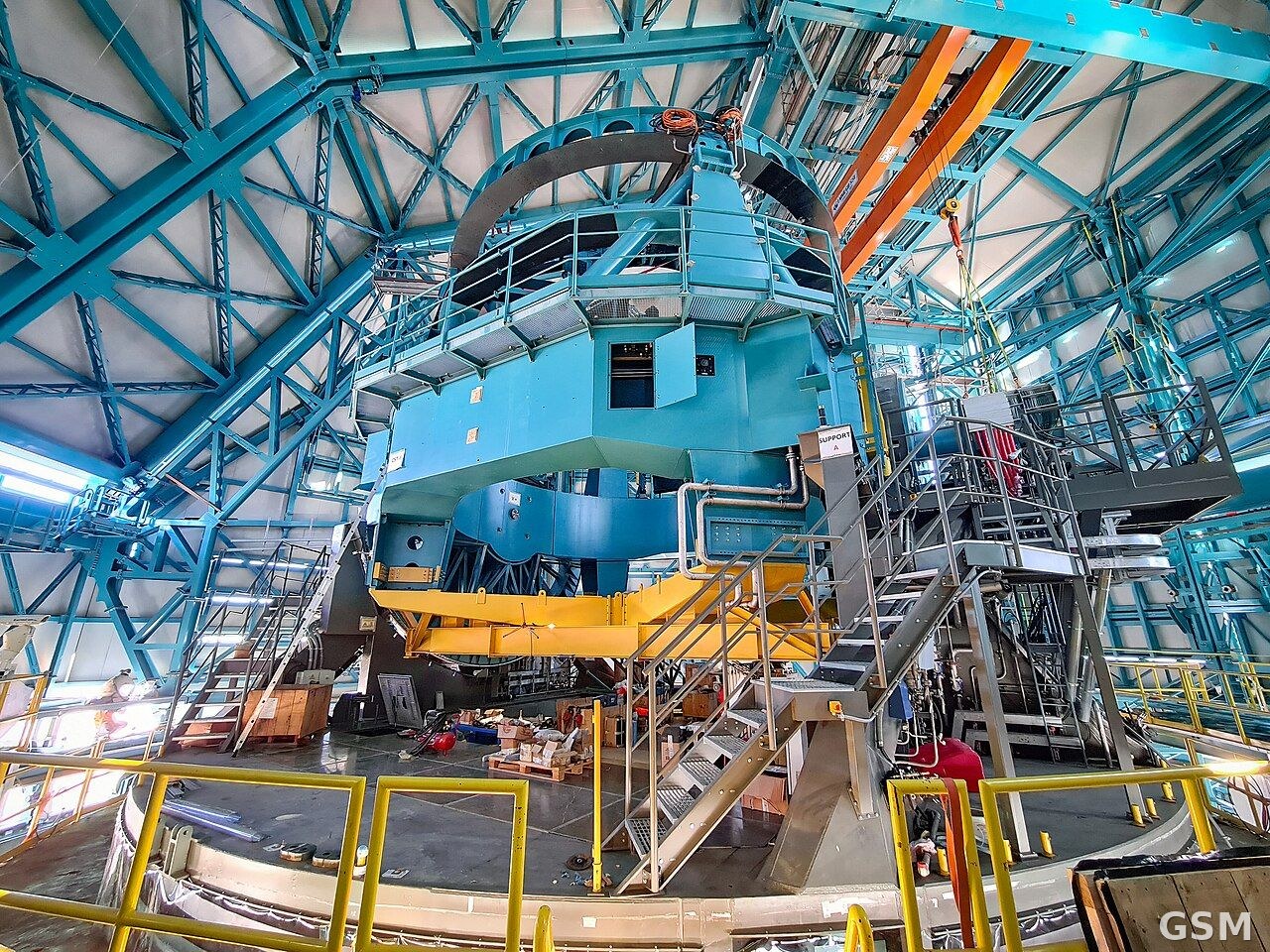
图片来源:图中是 Vera C. Rubin 天文台的望远镜支架总成,该天文台以预览数据发现了 Aquarius IV 等隐藏天体。来源:Wikimedia Commons, File:Vera C Rubin Observatory Telescope Mount Assembly (rubin-20210324 105203).jpg, Rubin Observatory/NSF/AURA, CC BY 4.0。
GSM Global · 本篇英文版 English edition of this story