《Nature》新研究独立验证 M87 黑洞环:直径与朝向一致,质量65亿倍太阳
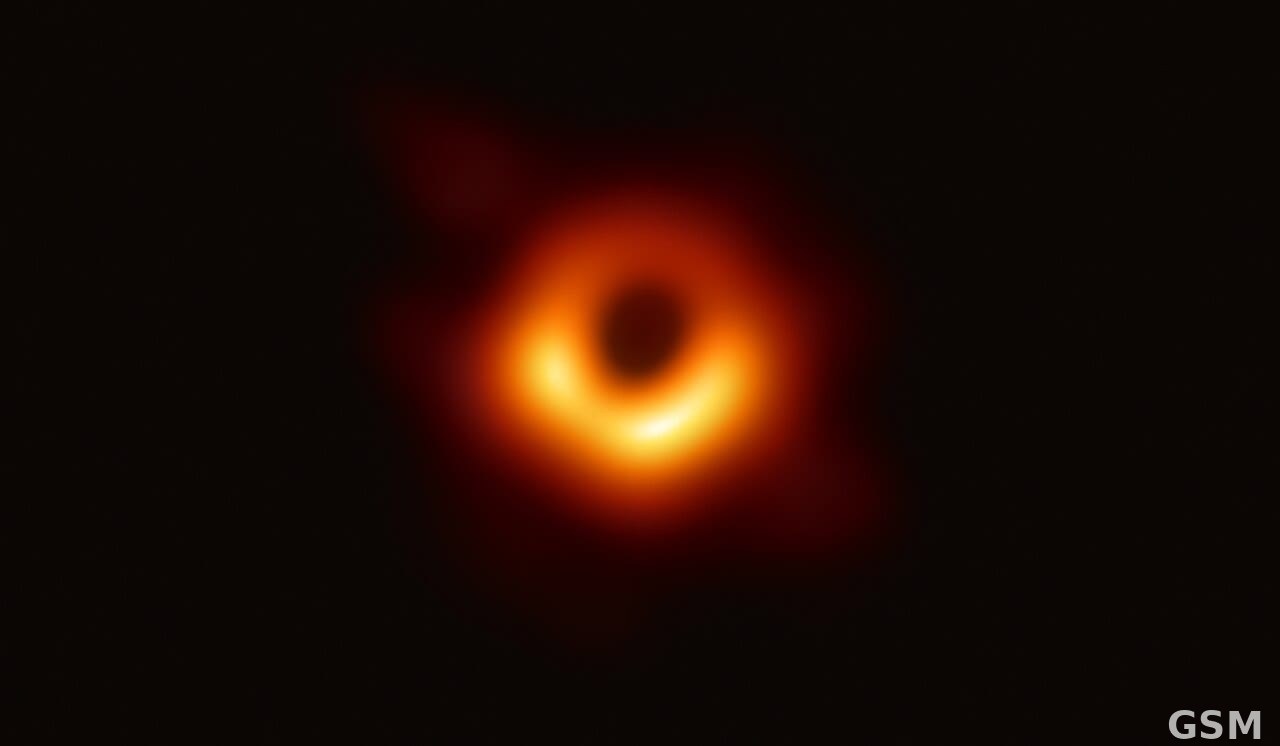
一项发表于《Nature》的新研究用新技术重新分析事件视界望远镜(EHT)2019年公布首张黑洞照片所用的原始数据集,独立验证了位于星系 M87 中心、距地球约5500万光年的超大质量黑洞环状结构。
研究团队开发了名为闭合不变量的数据组合方法,将三台望远镜的测量组合使用,以消除大气与仪器误差;并设计机器学习成像方法 GenDIReCT,其训练使用猫、狗、汽车等地面图像,未预设黑洞形态。团队在冻结训练与测试流程后,于2025年12月4日让该方法处理 EHT 的 M87 观测数据。
结果显示,在所有数据集中环结构一致,其外观与直径与一个质量为65亿倍太阳、近乎正面朝向的黑洞一致。研究团队称,与 EHT 合作组图像直接比较,直径与整体朝向一致,环宽与周向表面亮度等细节存在差异;另一套传统统计成像方法也验证了同一结构。
New Nature Study Independently Validates M87 Black Hole Ring: Diameter and Orientation Match, Mass 6.5 Billion Suns
New research published in Nature used new techniques to investigate the original data sets behind the Event Horizon Telescope Collaboration's first picture of a black hole, revealed on April 10, 2019. The object is at the centre of the galaxy M87, about 55 million light-years away.
The team developed a method for combining data called closure invariants, which combine triplets of telescope measurements at once to eliminate atmospheric and instrumental errors. To make the most of those data, they designed a machine learning imaging method called GenDIReCT, trained on terrestrial images such as cats, dogs and cars, so it had no prior idea of what a black hole looked like. After freezing the training and testing procedure, they allowed the method to look at the EHT observations of M87 on December 4, 2025.
Across all data sets, the ring structure was consistent, and its appearance and diameter were consistent with a black hole with a mass of 6.5 billion suns observed nearly face-on, the team said. Compared directly with images from the EHT Collaboration, the result was consistent in diameter and overall orientation, with differences in fine details of ring width and surface brightness. A complementary imaging method based on traditional statistical techniques also validated the structure.
来源:澳大利亚联邦科学与工业研究组织
发布:GSM·美国(发布链接)
图片来源:图中是事件视界望远镜拍摄的 M87 星系中心超大质量黑洞图像,呈环状结构。来源:Wikimedia Commons, File:Black hole - Messier 87.jpg, Event Horizon Telescope, CC BY 4.0。
GSM Global · 本篇英文版 English edition of this story

