《Science Advances》11月13日论文确认:毅力号在火星 Bright Angel 两块岩石中测得大分子碳
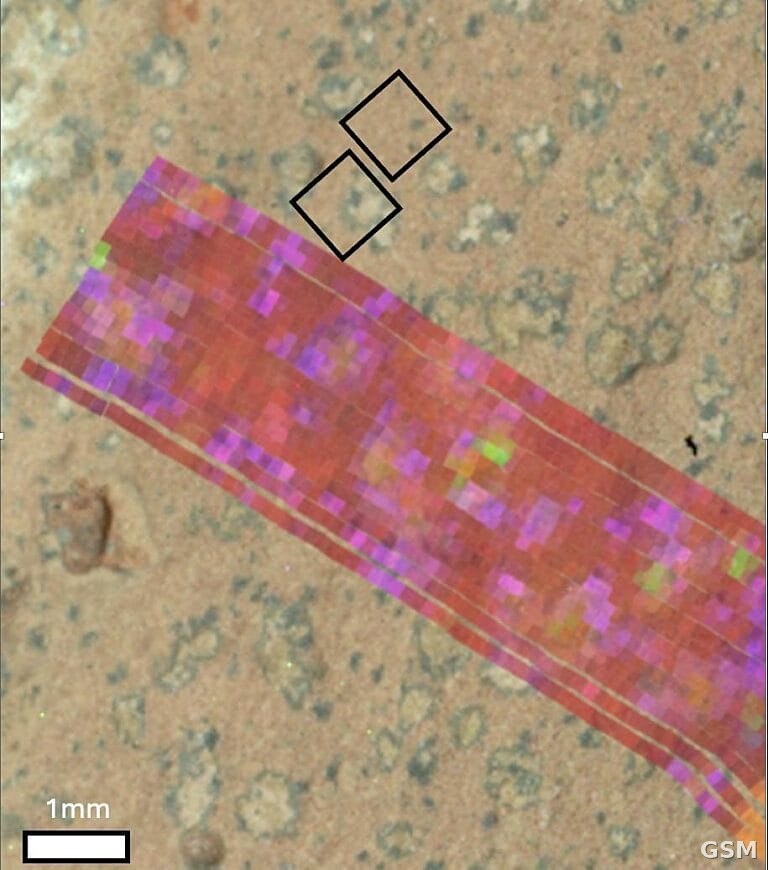
2026年11月13日发表于《Science Advances》的研究确认,NASA毅力号火星车在 Jezero 陨石坑 Bright Angel 地层的两块古老岩石中测得大分子碳。研究由行星科学研究所 Ashley Murphy 与 SHERLOC 仪器副首席研究员 Kyle Uckert 共同领衔。
SHERLOC 是毅力号机械臂上以激光拉曼与发光技术扫描宜居环境、有机物与化学物质的仪器。研究称,碳保存在暴露表面之下仅数微米处,是火星上迄今报告的最浅大分子碳探测。Murphy 表示,碳可能抗降解,或受到黏土、富铁土壤等矿物遮护。
研究同时指出,大分子碳既可由生物活动形成,也可由从未涉及生命的化学过程形成,拉曼读数本身不能判定来源,具体形成机制仍未知。毅力号已在同一地层钻取 Cheyava Falls 岩芯并封存,昵称 Sapphire Canyon,未来送回地球后实验室才可能作决定性分析。
Science Advances Paper on November 13 Confirms Macromolecular Carbon in Two Bright Angel Rocks on Mars Measured by Perseverance
Research published in Science Advances on November 13, 2026, confirms that two ancient rocks in the Bright Angel formation of Jezero crater contain macromolecular carbon, measured by NASA's Perseverance rover. The study was co-led by Ashley Murphy of the Planetary Science Institute and Kyle Uckert, deputy principal investigator of the SHERLOC instrument.
SHERLOC, short for Scanning Habitable Environments with Raman and Luminescence for Organics and Chemicals, fires laser light at rock and reads the scattered signal to map minerals and organic compounds in place. The carbon survived a few microns beneath the exposed surface, the shallowest detection of macromolecular carbon ever reported on Mars, the study said. Murphy said the carbon is either resistant to degradation or shielded by other minerals, such as clays or the iron-rich Martian soil around it.
The study also noted that macromolecular carbon can form through biological activity and through chemistry that never involved life, and that Raman readings alone cannot settle the difference; the specific formation mechanism remains unknown. Perseverance drilled the Cheyava Falls rock in the same formation and cached the core, nicknamed Sapphire Canyon, for a future return to Earth, where laboratories could run the decisive analysis.
来源:行星科学研究所
发布:GSM·美国(发布链接)
图片来源:图中是火星 Cheyava Falls 岩石的矿物分布图,该岩石位于本研究涉及的 Bright Angel 地层。来源:Wikimedia Commons, File:Cheyava-falls-mineral-map 2025-09-12-170425 bdvl.jpg, NASA / JPL-Caltech, Public domain。
GSM Global · 本篇英文版 English edition of this story

