2610 名弥漫大 B 细胞淋巴瘤患者数据 诊断至治疗中位间隔 15 天
11 月 14 日发表于《科学报告》的一项登记库研究分析了弥漫大 B 细胞淋巴瘤患者从诊断到开始治疗的时间间隔与生存的关系。研究作者为 Alem、Mohanty 与 Pati 等人,共纳入 2610 名接受免疫化疗的患者。
患者诊断至治疗的中位间隔为 15 天,四分位距为 8 至 28 天。14 天内开始治疗的患者不良特征更多,包括 III 期或 IV 期、体能状态差、LDH 升高、B 症状、大包块、超过 1 处结外部位与贫血。
未调整分析中,间隔较短与较差的总生存和无进展生存相关;经 IPTW 调整后,短间隔转为与较好的总生存相关,调整后风险比为 0.68,95% 置信区间为 0.52 至 0.88。作者的结论是,短间隔主要应解读为病情严重程度的标志,而不是不良预后因素本身。
Median Diagnosis-to-Treatment Interval of 15 Days in Registry of 2,610 Patients With Diffuse Large B-Cell Lymphoma
A registry study published November 14 in Scientific Reports examined the relationship between the diagnosis-to-treatment interval and survival in diffuse large B-cell lymphoma. The authors, Alem, Mohanty, Pati, and colleagues, included 2,610 patients treated with immunochemotherapy.
The median interval from diagnosis to treatment was 15 days, with an interquartile range of 8 to 28 days. Patients treated within 14 days had more adverse features, including stage III or IV disease, poor performance status, elevated LDH, B symptoms, bulky disease, more than one extranodal site, and anemia.
In unadjusted analyses, a shorter interval was associated with worse overall and progression-free survival. After IPTW adjustment, a short interval was instead associated with better overall survival, with an adjusted hazard ratio of 0.68 and a 95 percent confidence interval of 0.52 to 0.88. The authors conclude that a short interval should be read mainly as a marker of disease severity rather than as an adverse prognostic factor in itself.
来源:《科学报告》
发布:GSM·美国(发布链接)
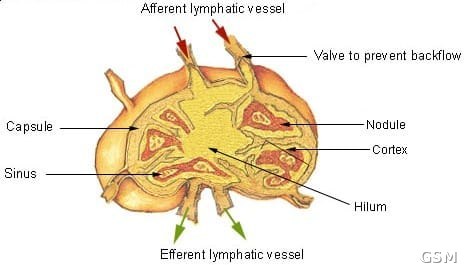
图片来源:图:淋巴结的结构示意图,显示淋巴液的流入与流出路径。来源:SEER / U.S. National Cancer Institute,Wikimedia Commons,Public domain。 / Photo: Diagram of the structure of a lymph node, showing lymph inflow and outflow. Source: SEER / U.S. National Cancer Institute, Wikimedia Commons, Public domain.
GSM Global · 本篇英文版 English edition of this story