罗马尼亚 Stăuceni-Holm 巨型建筑研究:约公元前4350至前4050年的350平方米公共建筑,出自无宫殿的 Cucuteni-Trypillia 文化
一项今年3月27日发表于《PLOS One》的研究记录了罗马尼亚东北部 Stăuceni-Holm 遗址的一座史前巨型建筑。研究由 Friedrich-Alexander University Erlangen-Nürnberg 与 Botoșani County Museum 的 Doris Mischka 等人完成,论文 DOI 为 10.1371/journal.pone.0343603。
这座建筑面积约350平方米,年代初步定为 Cucuteni A3 期、约公元前4350年至前4050年(距今约六千多年;论文同时指出,遗址的碳十四年代与陶器分期存在矛盾,年代仍属初步),属于约公元前5000年至前3000年兴盛于今罗马尼亚、摩尔多瓦与乌克兰一带的 Cucuteni-Trypillia 文化。2023年与2024年的发掘显示,建筑以木材与黏土建成,大型立柱置于长方形基槽之中,并保存有木地板遗存(炭屑分析以橡木为主)。建筑位于一处约45座房屋的聚落入口处。
Cucuteni-Trypillia 文化留下了占地数百公顷、房屋数以千计的巨型聚落,却没有宫殿、王陵或明确的王权迹象。此前这类巨型建筑主要见于最大的聚落,Stăuceni-Holm 说明较小的聚落同样建有此类建筑。研究者认为它具有公共用途,可能是居民集会、仪式与集体活动的场所;论文同时指出,建筑仅部分发掘,其确切功能尚未证实。
Stăuceni-Holm Mega-Structure Study: A 350-Square-Metre Public Building Dated to About 4350-4050 BC, Built by the Palace-Free Cucuteni-Trypillia Culture
A study published in PLOS One on March 27, 2026, reports the excavation of a prehistoric mega-structure at Stăuceni-Holm in northeastern Romania. The research, by Doris Mischka and colleagues from Friedrich-Alexander University Erlangen-Nürnberg and the Botoșani County Museum, appears under DOI 10.1371/journal.pone.0343603.
The building covers about 350 square meters and is preliminarily dated to the Cucuteni A3 phase, about 4350 to 4050 BC, more than 6,000 years ago (the paper notes that the site's radiocarbon dates conflict with the pottery phasing, so the dating remains preliminary). It belongs to the Cucuteni-Trypillia culture, which flourished from roughly 5000 to 3000 BC across what is now Romania, Moldova and Ukraine. Excavations in 2023 and 2024 revealed a construction of timber and clay, supported by large posts set in a rectangular foundation trench, with remains of a wooden floor, its charcoal pointing mainly to oak. The building stood at the entrance of a settlement of about 45 houses.
The Cucuteni-Trypillia culture created megasites covering hundreds of hectares with thousands of houses, yet left no palaces, no royal tombs and no clear signs of kings. Mega-structures were previously known mainly from the giant megasites; Stăuceni-Holm shows that smaller settlements also built them. The researchers believe the building served a public purpose, as a place for gatherings, ceremonies and other collective activities, while noting that only part of the building has been excavated and its function is not proven.
来源:PLOS One
发布:GSM·美国(发布链接)
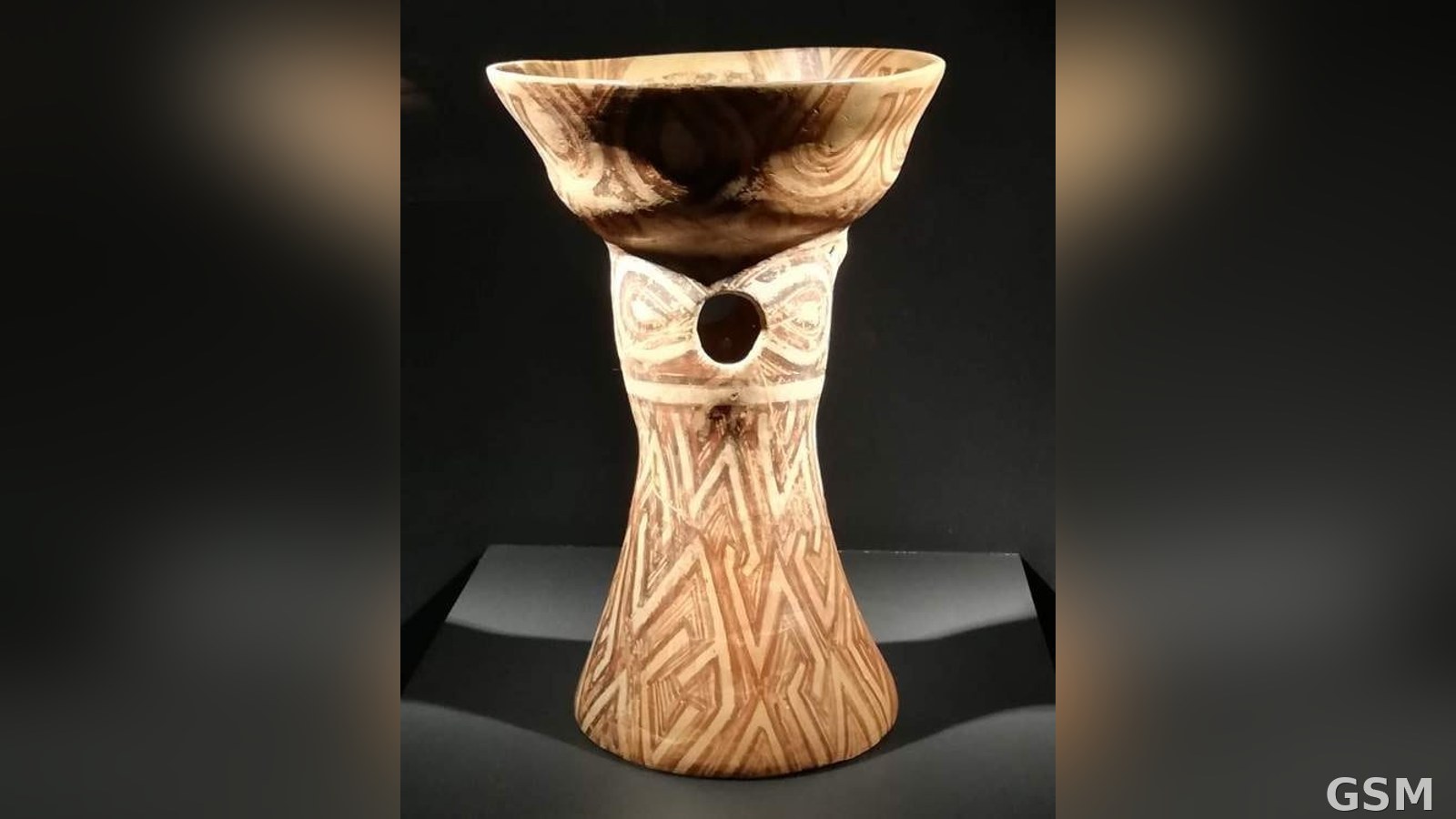
图片来源:图:收藏于罗马尼亚国家历史博物馆的 Cucuteni 文化碗形支座,约公元前4300年至前4000年,出土于 Scânteia。来源:Jona Lendering,Wikimedia Commons,CC0。 / Photo: A Cucuteni culture bowl stand, about 4300-4000 BC, from Scânteia, now in the National History Museum of Romania. Source: Jona Lendering, Wikimedia Commons, CC0.
GSM Global · 本篇英文版 English edition of this story