庞贝丧葬床骨雕研究11月13日发表:2,000多件骨片复原一世纪葬床,士兵与盾牌纹样带金箔痕迹
《Journal of Roman Archaeology》11月13日在线发表一项关于庞贝丧葬床装饰的研究。西班牙 Universitat de València 的 Pilar Mas Hurtuna、Llorenç Alapont Martín 与 Agustín Ángel Diez Castillo 分析了2,000多件雕刻骨片,这些骨片原本是装饰富裕居民陈放与火化时所用木床的构件,木质床身已不存,骨雕在火葬灰烬与墓葬沉积中保存下来。
材料主要来自 Porta Nola 墓地2015年至2017年的发掘:Marcus Obellius Firmus 墓出土约450件,另一座被称为 Tomb A 的墓出土约540件,一处火葬堆积出土约500件,其中包括一条近乎完整的床腿;禁卫军墓区 Lucius Betutius Niger 墓的一件陶瓮内另有91件。Casa del Fabbro 一处房间另出土20件装饰牌与322件条状碎片,其中包括13面盾牌。
骨雕题材以戴盔士兵头像与微型盾牌为主,盾形以六边形与新月形为主(论文类型学对照另列长方形,庞贝材料中未见),头盔有阿提卡式与波奥提亚式。Casa del Fabbro 出土的骨片凹槽中留有红色颜料,Obellius Firmus 墓的一件花环装饰上留有金箔痕迹。研究者认为两处材料在题材与工艺上相通,可能出自庞贝同一作坊,年代约为提比略至尼禄时期;但论文同时说明,这一作坊关联仍属推测,尚无确证。
Pompeii Funeral Bed Study Published November 13: More Than 2,000 Bone Fragments Rebuild First-Century Beds With Soldiers, Shields and Gold Leaf
A study of the carved bone decoration of Pompeii's funeral beds was published online on November 13, 2026, in the Journal of Roman Archaeology. Pilar Mas Hurtuna, Llorenç Alapont Martín and Agustín Ángel Diez Castillo of the Universitat de València in Spain analyzed more than 2,000 bone fragments that once decorated the wooden couches on which some wealthy residents were laid out and cremated; the wood has not survived, while the bone endured in cremation ashes and burial deposits.
The material comes mainly from the Porta Nola necropolis excavations of 2015, 2016 and 2017: about 450 pieces from the tomb of Marcus Obellius Firmus, roughly 540 fragments from another tomb called Tomb A, and about 500 more from a cremation deposit, including an almost complete bed leg; a further 91 elements came from an urn in the tomb of Lucius Betutius Niger, in the cemetery area of the Praetorian guard. At the Casa del Fabbro, one room held 20 decorative plaques and 322 strip fragments, including 13 shields.
The carvings show helmeted heads in profile and miniature shields mainly in hexagonal and crescent shapes (the typology also lists a rectangular form, which is unattested at Pompeii), with helmets in Attic and Boeotian styles. Red pigment survives in the carved grooves of pieces from the Casa del Fabbro, and a garland from the Obellius Firmus tomb keeps traces of gold leaf. The authors link the two groups through shared themes and production methods and suggest a common Pompeii workshop in the later Julio-Claudian period, broadly Tiberian through Neronian, while noting that the workshop link remains a hypothesis rather than proof.
来源:Journal of Roman Archaeology
发布:GSM·美国(发布链接)
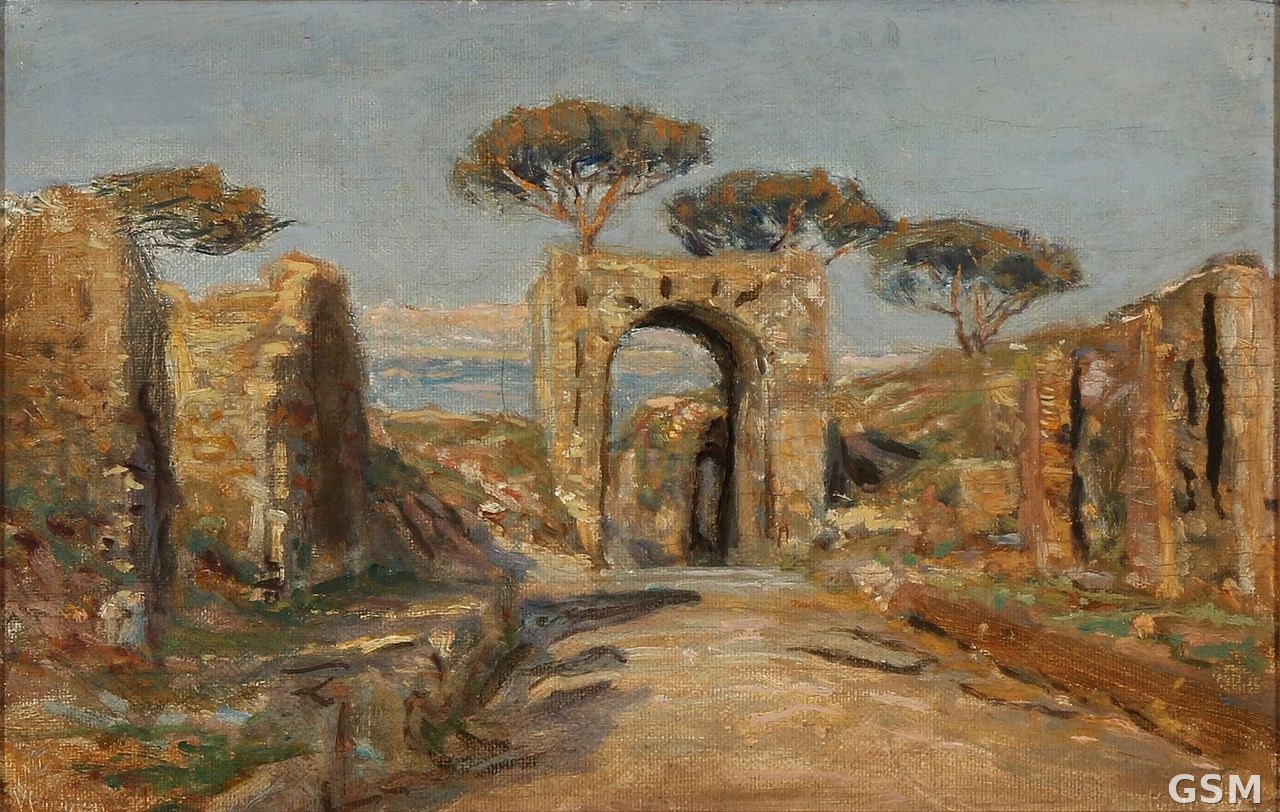
图片来源:图:Viggo Johansen 画作中所绘的 Pompeii Porta Nola 城门内侧。来源:Viggo Johansen,Wikimedia Commons,公共领域。 / Photo: The inside of the Porta Nola gate at Pompeii, painted by Viggo Johansen. Source: Viggo Johansen, Wikimedia Commons, public domain.
GSM Global · 本篇英文版 English edition of this story