东京大学与NTT用光做AI学习:计算量大减,性能追平复杂网络
今天的人工智能靠电流计算:电信号穿过数以亿计的晶体管,既耗电又发热。光的速度极快、又能同时携带多路信号,研究人员一直在尝试改用光来计算。东京大学与日本电信电话公司(NTT)的研究团队如今在学习方法上取得进展,相关论文发表于《自然·计算科学》。
研究团队同时简化了学习方法与网络设计:新的训练方法名为 SS-DFA(状态跳跃直接反馈对齐),几乎不查看网络内部的大量中间数值,只根据最终答案的误差来学习;网络结构则采用更简单的「单映射」框架。团队在计算机模拟与一台使用 200 米光纤环路的光学器件上做了测试,结果显示,这种方法用远少得多的计算量,就达到了复杂神经网络相当的性能,在部分测试中甚至更好;整合进现代网络架构时,计算资源需求约减少四成。
领衔这项研究的东京大学副教授中岛康平表示,团队把新的训练方法与更简单的网络架构结合成了一套整体方案。研究人员同时提醒,这项成果尚未在当今最大的语言模型与多模态模型上验证,只在相对基础的神经网络上做过测试;要把器件做小、做稳、量产,仍有路要走,节省电力目前也只是期望中的收益,而非已经证实的结果。
(来源:东京大学)
University of Tokyo and NTT Teach AI With Light, Slashing Computation
Today's AI calculates with electrical signals passing through vast numbers of transistors, using large amounts of electricity and generating heat. Light is very fast and can carry many signals at once, so researchers have long tried to calculate with light instead. A team at the University of Tokyo and NTT has now made progress on the learning side, in a study published in Nature Computational Science.
The researchers simplified both the learning method and the network design. Their training method, called SS-DFA (state-skipping direct feedback alignment), barely inspects the intermediate values inside the network and learns mainly from the final error; the network itself uses a simpler "single-map" architecture. The team tested the approach in computer simulations and on an optical device built around a 200-metre loop of optical fibre. The simplified design matched complex neural networks and in some tests outperformed them, while requiring far less computation; integrated into modern architectures, it cut computational resource needs by about 40 percent.
Associate Professor Kohei Nakajima of the University of Tokyo, who led the work, said the team combined the new training method with the simpler architecture into a single overall approach. The researchers caution that the method has not yet been tested on today's largest language or multimodal models, having been tried only in fairly basic neural networks, and that making the device smaller, more stable and mass-producible is still to come. Saving electricity is also a hoped-for benefit, not a proven result.
(Source: The University of Tokyo)
来源:东京大学
发布:GSM·美国(发布链接)
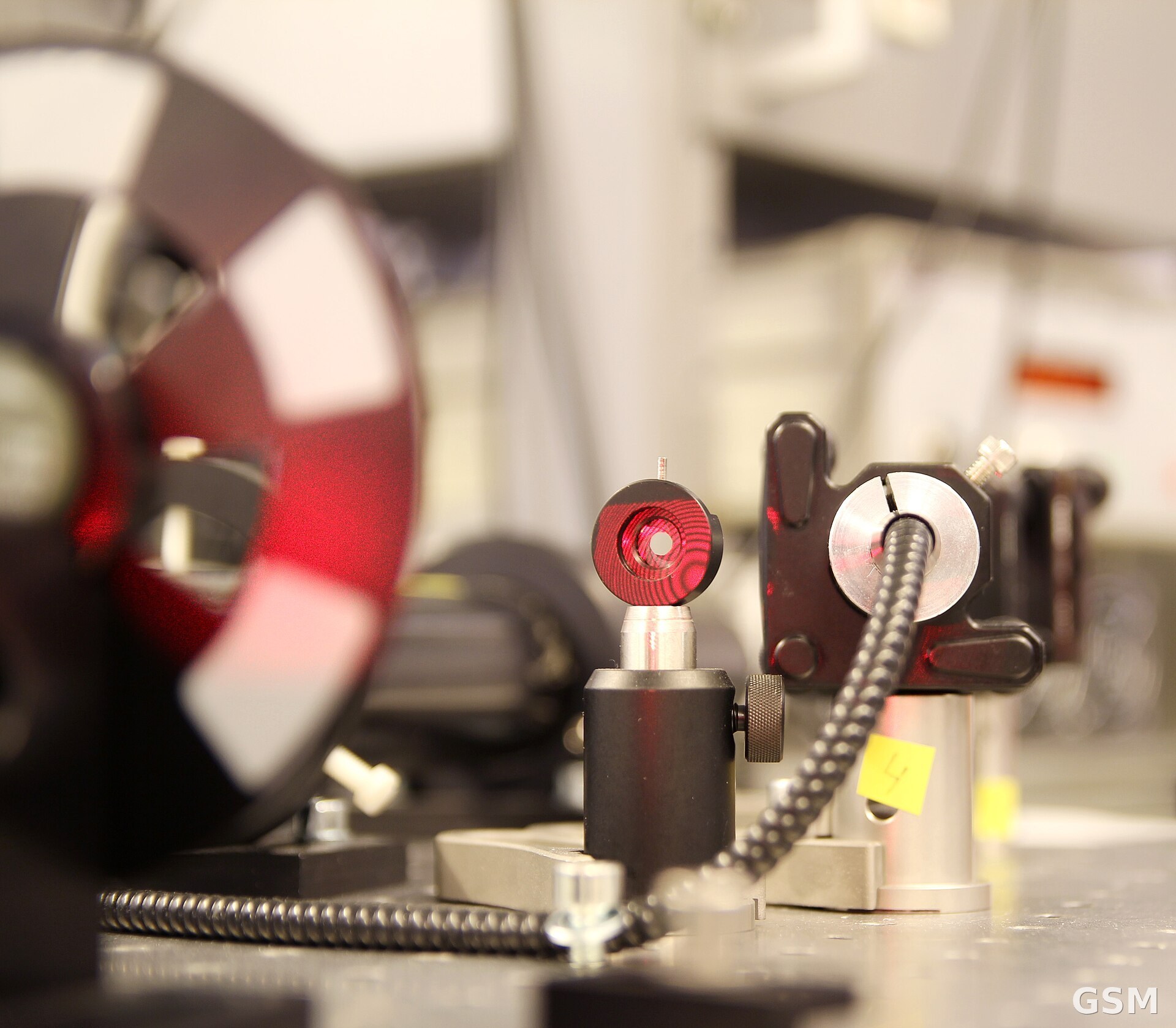
图片来源:图:传输激光的光纤(挪威科技大学激光物理实验室)。An optical fiber carrying a laser beam. (NTNU, Wikimedia Commons, CC BY 2.0)
GSM Global · 本篇英文版 English edition of this story