OpenAI发布湿实验室基准BioBasicsBench,GPT-6 Astra得66.7%
人工智能能不能读懂真实的实验室证据?OpenAI 与酶设计公司 Ligo 合作推出了一项新基准 BioBasicsBench,用 100 项任务考查 AI 智能体解读原始湿实验室证据的能力:凝胶图像、菌落平板、显微镜照片、测序读数与仪器导出数据。
在最高推理设置下,GPT-6 Astra 获得了 66.7% 的量表分,GPT-5.6 Sol 为 43.8%,评分基于 18,500 次尝试。OpenAI 表示,这项基准意在检验 AI 能否在真实科研场景中处理杂乱的实验数据,而非只在演示环境中作答。
不过,发布方同时列出了这项测试的局限:分数是 OpenAI 自己的评分,66.7% 是部分量表分、不是通过率;发布时没有公布人类基线,所测模型均为 OpenAI 自家模型、未测试其他公司的模型;数据集与评分标准在发布时未公开链接。
OpenAI Releases Wet-Lab Benchmark BioBasicsBench; GPT-6 Astra Scores 66.7%
Can AI read real laboratory evidence? OpenAI, working with enzyme-design company Ligo, has introduced BioBasicsBench, a benchmark of 100 tasks that tests whether AI agents can interpret raw wet-lab evidence: gel images, colony plates, microscopy, sequencing reads and instrument exports.
At the highest reasoning setting, GPT-6 Astra earned 66.7% of the available rubric credit, against 43.8% for GPT-5.6 Sol, across 18,500 graded attempts. OpenAI says the benchmark is meant to test whether AI can handle messy experimental data in real research settings, not just answer in a demo.
The release also carries limits: the scores are OpenAI's own; 66.7% is partial rubric credit, not a pass rate; no human baseline was published, all seven models tested were OpenAI's own and no other company's models were tested, and the dataset and rubrics were not publicly linked at launch.
来源:OpenAI
发布:GSM·美国(发布链接)
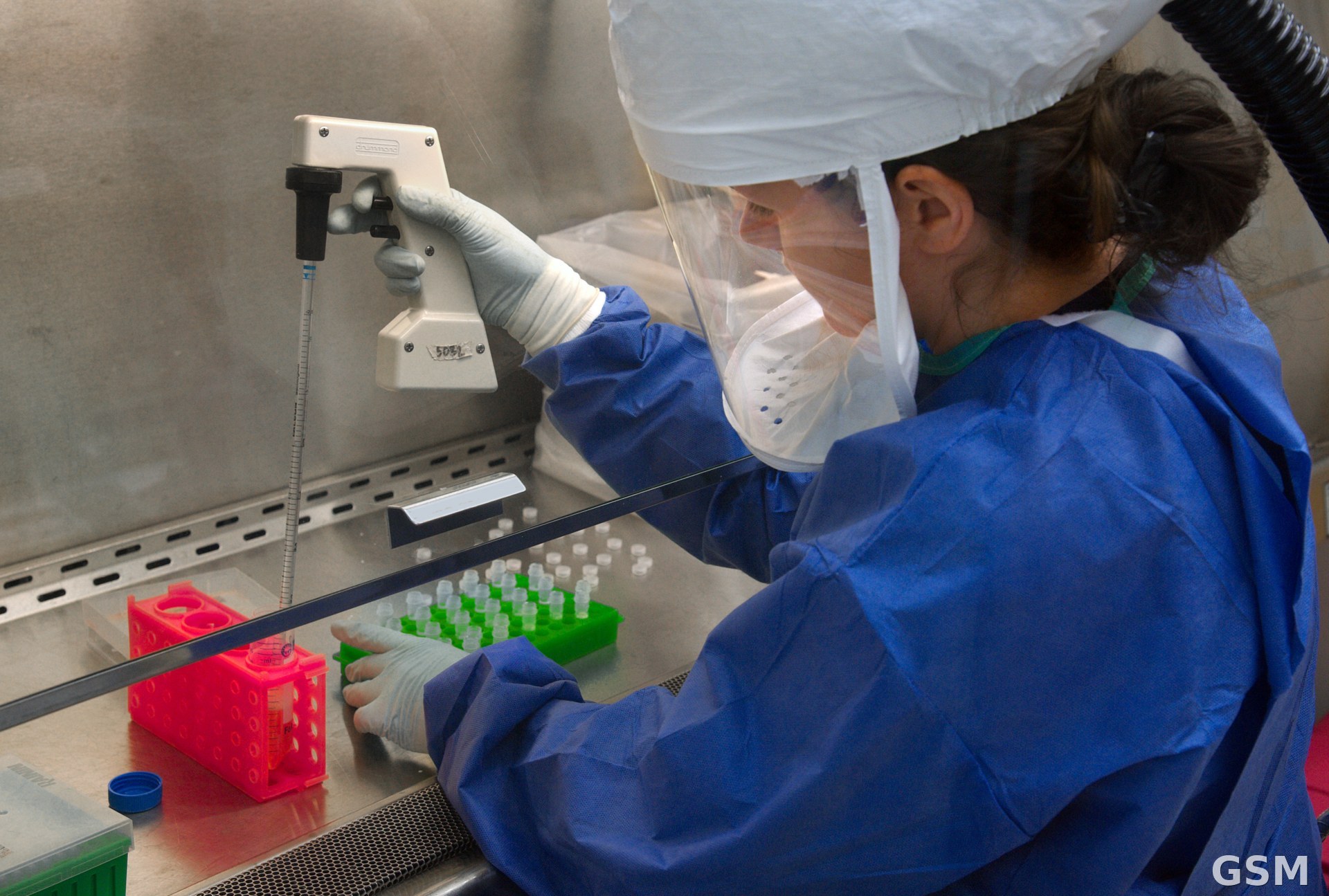
图片来源:图:实验室研究人员进行样本操作(美国疾控中心图片,公共领域)。A researcher at work in a laboratory. (CDC, public domain)
GSM Global · 本篇英文版 English edition of this story