《Nature Communications》11月16日论文:野生大豆 FD 等位基因缩短节间,支持高密度种植并提高产量
广州大学等机构的研究团队11月16日在《Nature Communications》发表论文,报告一个来自野生大豆的 FD 等位基因可以缩短大豆节间,使植株更适应高密度种植并提高产量。第一作者为 Hong Li 与 Doudou Chen,通讯作者包括 Zhihui Sun、Chao Fang、Fanjiang Kong 与 Lin Yue。
节间缩短是优化作物株型、适应密植的关键农艺性状,但在大豆中,能同时缩短节间并增产的位点一直稀缺。团队利用染色体片段代换系,鉴定出 REDUCED INTERNODE 2 位点,简称 RIN2。
RIN2 编码一个碱性亮氨酸拉链转录因子 FDc1,对节间长度起负调控作用。来自野生大豆的 RIN2 等位基因 RIN2ZYD06,正是团队此次分离并加以利用的版本。
论文标题与摘要显示,把这一野生大豆 FD 等位基因导入后,植株节间缩短,密植适应性增强,籽粒产量提高。作者把该等位基因作为大豆密植增产育种的一个可用遗传资源加以部署验证。
该研究由国家重点研发计划、国家自然科学基金与广东岭南现代农业实验室等资助。研究对象为大豆株型与产量性状,结论来自田间与遗传材料分析,距离品种推广仍须经过常规育种与审定程序。
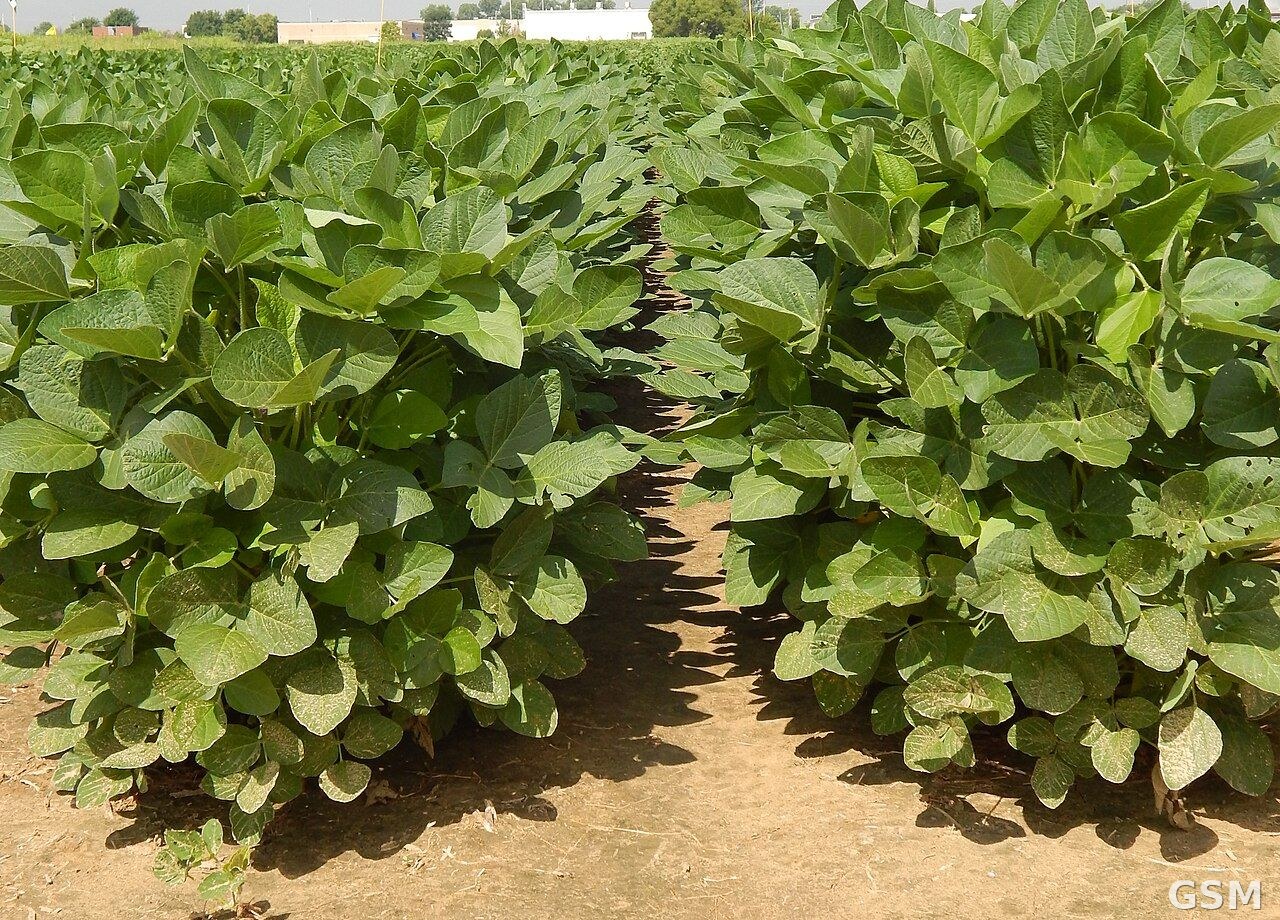
图中是田间生长的大豆植株,野生大豆 FD 等位基因研究的对象正是大豆株型与密植适应性。
Nature Communications Paper on November 16: A Wild Soybean FD Allele Shortens Internodes, Supporting High-Density Planting and Increased Yield
A team led by Guangzhou University and partner institutions published a paper on November 16 in Nature Communications reporting that an FD allele from wild soybean shortens soybean internodes, making plants better suited to high-density planting while increasing yield. Hong Li and Doudou Chen are co-first authors, and corresponding authors include Zhihui Sun, Chao Fang, Fanjiang Kong and Lin Yue.
Shortened internode length is a key agronomic trait that optimizes crop architecture and promotes adaptability to high-density planting, but loci that confer short internodes while increasing yield remain scarce in soybean. Using chromosome segment substitution lines, the team identified the REDUCED INTERNODE 2 locus, RIN2.
RIN2 encodes the basic leucine zipper transcription factor FDc1, which exerts a negative regulatory effect on internode length. The RIN2ZYD06 allele from wild soybean is the version the team isolated and deployed in this work.
Deploying the wild soybean FD allele shortened internodes, enhanced dense-planting adaptability and increased grain yield, the paper reports. The authors present the allele as a usable genetic resource for breeding soybeans suited to dense planting.
The work was supported by the National Key Research and Development Program of China, the National Natural Science Foundation of China and the Guangdong Laboratory for Lingnan Modern Agriculture, among others. The findings come from genetic materials and field analysis, and any cultivar use would still go through regular breeding and registration procedures.
发布:GSM·美国(发布链接)
图片来源:Wikimedia Commons, File:Soybean Plants in the Field (9624015808).jpg — Author: United Soybean Board. Licensing: CC BY 2.0.
GSM Global · 本篇英文版 English edition of this story