《The Astrophysical Journal》论文11月15日报道:ALMA在一个气体团块内分辨出三个不同演化阶段的恒星形成核
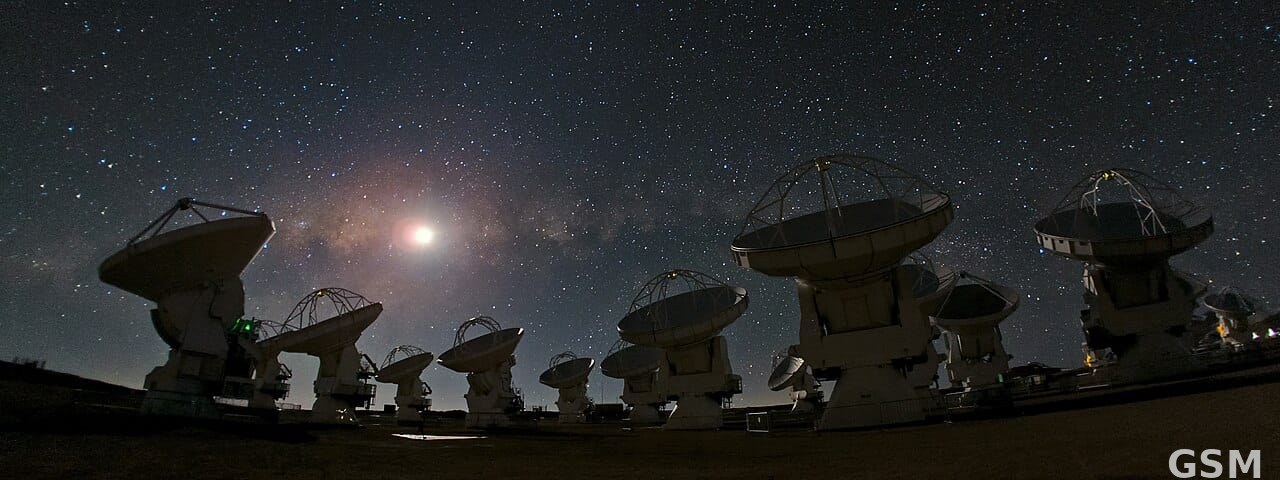
一项发表于《The Astrophysical Journal》的研究11月15日对外报道。中国科学院新疆天文台恒星形成与演化团组博士生 A. G. Tegegne 在导师 Jarken Esimbek 与 Andrey M. Sobolev 指导下,用阿塔卡马大型毫米/亚毫米波阵列(ALMA)的数据,研究了大质量恒星形成区 G40.282−0.219。
该区域距地球约3.4千秒差距,此前低分辨率观测只显示它是一个大质量年轻恒星天体。团队用 ALMA 1.3毫米波段数据,把它分辨为同一母团块内的三个致密核:MM1、MM2 与 MM3。
三个核的性质差异明显。MM1 质量最大,约24.6个太阳质量,但检出的分子谱线最少,未发现外流或脉泽;MM2 质量约8.4个太阳质量,驱动着一股强劲外流,其一氧化硅喷流速度约25公里/秒;MM3 质量最小,约5.2个太阳质量,却有最高的尘埃温度、最丰富的分子种类,并寄居着一个6.7吉赫兹二类甲醇脉泽。团队据此给出从最年轻的 MM1 到最演化的 MM3 的演化序列。
研究人员表示,只有综合质量、密度、温度等物理性质以及外流与喷流的有无、分子谱线的丰富程度和检出的脉泽类型,才能更准确地判定大质量恒星形成区致密核的演化阶段。
Astrophysical Journal Paper Reported November 15: ALMA Resolves Three Star-Forming Cores at Different Stages Inside One Gas Clump
A study published in The Astrophysical Journal was reported on November 15. A. G. Tegegne, a doctoral student in the star formation and evolution group at the Xinjiang Astronomical Observatory of the Chinese Academy of Sciences, working under supervisors Jarken Esimbek and Andrey M. Sobolev, used data from the Atacama Large Millimeter/submillimeter Array (ALMA) to study the massive star-forming region G40.282−0.219.
The region lies about 3.4 kiloparsecs from Earth, and earlier low-resolution observations showed only a massive young stellar object. Using ALMA data in the 1.3 mm band, the team resolved it into three dense cores within the same parental clump: MM1, MM2 and MM3.
The three cores differ markedly. MM1 has the largest mass, about 24.6 solar masses, but the fewest detected molecular spectral lines and no detected outflows or masers. MM2 has a mass of about 8.4 solar masses and drives a powerful outflow, with a silicon monoxide jet velocity of about 25 km/s. MM3 has the smallest mass, about 5.2 solar masses, yet the highest dust temperature, the richest variety of molecules, and a 6.7 GHz Class II methanol maser. The team accordingly places them in an evolutionary sequence from the youngest, MM1, to the most evolved, MM3.
The researchers say that only by comprehensively considering mass, density, temperature and other physical properties, together with the presence or absence of outflows and jets, the richness of molecular spectral lines and the types of masers detected, can the evolutionary stages of dense cores in massive star-forming regions be determined more accurately.
发布:GSM·美国(发布链接)
图片来源:Wikimedia Commons, File:ALMA and a Starry Night.jpg — Author: ESO/B. Tafreshi (twanight.org). Licensing: CC BY 4.0.
GSM Global · 本篇英文版 English edition of this story