Neuroscience 2026 年会11月14日发布:脑机接口用可变音高合成语音帮助瘫痪患者表达交流,一名完全闭锁患者独立沟通逾一年
在神经科学学会年会 Neuroscience 2026 上发布的新发现显示,脑机接口正帮助临床试验参与者恢复交流能力,这些参与者因疾病失去了说话或自主运动的能力。脑机接口记录人的脑信号,并将其转换为控制电脑、假肢或其它设备的指令。
加州大学戴维斯分校的 Maitreyee Wairagkar 报告,一种脑机接口使用能捕捉音高变化的合成语音,促进瘫痪患者进行有表现力的交流,提高了听者的理解程度,甚至让一名患者能够唱歌。
麻省总医院的 Daniel Rubin 报告,一名处于完全闭锁状态的个体使用一种从脑活动解码预期运动的脑机接口,独立沟通了超过一年。佐治亚理工学院和埃默里大学的 Chethan Pandarinath 报告,一种便携式脑转文字脑机接口能准确、高效、可靠地把脑活动解码为文字,甚至可以在 iPhone 上运行。
主持这场发布的密歇根大学生物医学工程师 Cynthia Chestek 从事用于假肢神经控制的植入式脑机接口研究。发布说明指出,这项技术仍以实验为主,但显示出为因肌萎缩侧索硬化症、中风和其它神经系统疾病失去功能的人恢复功能的希望。
Neuroscience 2026 Findings on 14 November: Brain-Computer Interfaces Restore Expressive Communication, Including a Year of Independent Communication for a Completely Locked-In Patient
New findings presented at Neuroscience 2026, the annual meeting of the Society for Neuroscience, show that brain-computer interfaces are helping restore communication in clinical trial participants who have lost the ability to speak or make voluntary movements. Brain-computer interfaces record a person's brain signals and translate them into commands to control computers, prosthetic limbs or other devices.
Maitreyee Wairagkar of the University of California, Davis, reported that a brain-computer interface used a synthetic voice capable of capturing pitch variations to facilitate expressive communication for paralyzed patients, improving listener comprehension and even allowing a patient to sing.
Daniel Rubin of Massachusetts General Hospital reported that an individual in a completely locked-in state was able to communicate independently for more than a year with a brain-computer interface that decodes intended movement from brain activity. Chethan Pandarinath of Georgia Institute of Technology and Emory University reported a portable brain-to-text interface that offers accurate, efficient and reliable decoding of brain activity into written words, even on an iPhone.
The session was moderated by Cynthia Chestek, a biomedical engineer at the University of Michigan who works on implantable brain-computer interfaces for neural control of prosthetic limbs. The release said the technology is still largely experimental but shows promise for restoring functions lost due to amyotrophic lateral sclerosis, stroke and other neurological disorders.
发布:GSM·美国(发布链接)
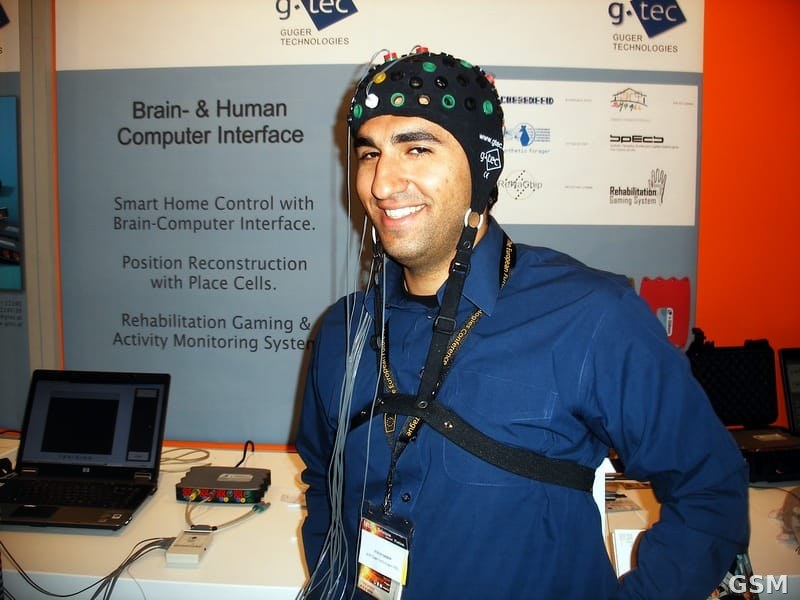
图片来源:Wikimedia Commons, File:Brain-Computer Interface (BCI) - FET09 Prague.jpg, CC BY-SA
GSM Global · 本篇英文版 English edition of this story