天才与规矩
11月11日,英伟达董事会接受了黄仁勋的辞呈,他辞去总裁、首席执行官和董事职务,立即生效。这家他从1993年创办、带了三十三年的公司,在提交给美国证券交易委员会的文件里与他做了切割:独立调查继续进行,首席财务官 Colette Kress 出任临时首席执行官,正式遴选随即启动。
可是只过了几天,故事就拐了弯。据《金融时报》报道,黄仁勋已经与亲信讨论重返首席执行官的可能;一位盟友说,他们正在硅谷组建一个「作战室」,集合有影响力的科技界高管,游说董事会请他回来,还要争取白宫的支持,这位盟友说,这一努力得到了黄仁勋本人的支持。报道还提到,两名英伟达股东、投资人 Brad Gerstner 与 Gavin Baker 公开致信董事会,请董事们把所有选项都摆在桌上,包括黄仁勋回归;网上「与黄仁勋站在一起」的请愿,签名已经超过十五万,马斯克也在签名者之列。英伟达与黄仁勋的发言人对这些报道不予置评。
一个人周三走出大门,周日半个硅谷想把他拉回去。这场拉扯表面上是公司治理,往深里看,是一个老问题又一次摆上台面:一个国家、一个行业、一群公众,到底应该怎样对待那种几十年才出一个的人。
先说国家
黄仁勋出生在台湾,不到十岁被送到美国读书;马斯克出生在南非,十七岁先去加拿大,再到美国。这类人很多并不是哪个国家从零培养出来的,而是被吸纳进来的。吸纳靠的不只是市场和资本,还有一种更软的东西:这个地方能不能容下一个不怎么合群、不太按常理出牌的人,并且一直容到他把事情做成为止。
一个国家的容忍度,短期内看不出来,拉长到几十年,最后会写在它的发明清单和公司名录上。哪里的规矩密到只容得下标准件,哪里的天才就会在很年轻的时候收拾行李。这不是哪一个党派的问题,是每一代人都要重新回答的问题:我们到底想要一个整齐的社会,还是一个还能出意外的社会。
规矩的两条线
再说制度。规矩当然要有。市场要公平,产品要安全,别人的权利要保护,这些线不因为谁有才华就可以挪动。英伟达的独立调查该查就查,查清之前谁也不该抢先下结论,这正是制度在做它该做的事。违法和伤害他人,是第一条线,天才站在这条线里面,一视同仁。
但还有第二条线,管的是「不合常规」:说话太直,脾气太硬,私生活不按剧本,公开场合不讨人喜欢。这两条线经常被混在一起用,因为管教养比判断是非容易得多。一个人很难被证明有罪,却很容易被证明「不像个好人」。于是很多拉扯,表面上在谈规则,实际上在谈观感。
把两条线分开,是制度成熟的标志。第一条线越硬越好,第二条线要留有余地,因为创造力恰恰长在第二条线的地带里。
这也是政客和创造者最根本的不同。政客是被一套取悦机制选出来的:选票、民调、募款,每一样都在奖励温和、周全、不出错,所以政客天然会收起棱角。特朗普是个显眼的例外,他以一种几乎拒绝取悦的姿态进入政治,喜欢他和讨厌他的人都很极端,但他的出现本身说明,这套机制里的人一旦不按取悦的剧本走,整个系统都会不适应。创造者走的是另一条选拔线:东西做出来没有,问题解决没有,市场和时间说了算,不看脸色。这两套机制选出来的人,互相看不顺眼,几乎是必然的。
人不是机器
回到人本身。这类人有一个共同点:个性和创造力是同一个根。黄仁勋的固执、乔布斯的偏执、马斯克的蛮干,你没有办法只保留长出成果的那一半,把招人烦的那一半切掉。我们不鼓吹个性,但也不能假装这两样东西可以拆开买。
还要算一笔公众很少算的账:时间。成就不是从天上掉下来的,是几十年枯燥投入的复利。黄仁勋在2024年的一次公开对谈里说,他从醒来到睡着都在工作,一周七天,不工作的时候也在想工作。英伟达从1993年创办到今天,三十三年,中间有过差点死掉的年份,有过无人问津的产品。公众是在结果揭晓的那几天才看见他的,看不见此前几十年里那些没有新闻的日子。舆论盘点一个人时,习惯把成就算成运气,把缺陷算成人品,唯独不算时间这笔账,可时间恰恰是账上最大的一笔。
人也不是机器。人会累,会病,会失眠,会情绪失控。发明超级智能(SI)的,恰恰是最不像机器的人。这里有一组很刺眼的反差:我们对机器宽容得很,模型会出错,会一本正经地胡说八道,大家说没关系,迭代就是了,下一版会更好;对造出这些机器的人,我们却要求零瑕疵,工作不能出格,私生活不能有污点,身体不能出问题,情绪不能有波动。把人当机器要求,把机器当人宽容,正好反了。
家里那本账
这一本账,还记在家里。
创始人的时间分配大体是个公开的秘密:八九成给了事业,剩下的才是家庭。盖茨与妻子在2021年结束了二十七年的婚姻,这是全世界最有条理的人之一,也没能把婚姻经营成一个项目。马斯克据公开报道有十多个孩子,家庭形态离「标准答案」很远。这样的例子不必美化,也不必猎奇,只需要承认一个事实:一件事占掉一个人几乎全部的注意力,其他事情必然要付代价,区别只在代价由谁付、付多少。
公众享受这些人做出的产品,评判他们的家庭时却像在评判邻居。人毕竟是有限的,要求一个人在实验室里是天才、回家是模范、开口是演说家、身体是运动员,那不是标准,那是神话。
神坛
说到神话,就要说说公众这一课。
大众对名人的态度有个熟悉的循环:先供上神坛,封为圣人,他说的每句话都是语录;然后某一天,发现他有道德瑕疵,或者仅仅是有情绪、有疾病、说了错话,就一拥而上把他拉下来,仿佛受了背叛。可发明者、创造者、政客、企业家,同是名人,也同样要吃喝拉撒,同样一天只有二十四小时,同样会老、会病、会死。区别只在于,他们把注意力放在了哪里。
神坛本身就是问题。供上去的那一刻,就预定了拉下来的那一天。把人当人看,是公众这一课的开始。
时间最后算的账
历史的记账方式和新闻不一样,它按贡献记,不按瑕疵记。
1985年,乔布斯在一场内部斗争后离开了自己创办的苹果。此后十多年,苹果一路下滑,几近破产;1996年底,苹果收购了他创办的 NeXT,他随之回归,1997年出任临时首席执行官。后来的事大家都知道了:iMac、iPod、iPhone,一家公司重新定义了几个行业。当年那场斗争的细节,今天只剩传记里的几页,产品却还在全世界人的口袋里。
霍金二十一岁时被确诊患上运动神经元疾病,医生判断他只能再活几年。他在轮椅上又活了五十多年,写出了普通人能读懂的《时间简史》。历史记住的是他从轮椅上看见的宇宙,不是他的身体。
但历史这本账也有残酷的一页,记的是代价。乔布斯五十六岁就死了。2003年,他查出胰腺神经内分泌肿瘤,这是一种相对罕见、生长较慢、若及时手术本有很大机会处理好的类型。可他拒绝了手术,拖了大约九个月,先试严格素食、针灸、草药,他对传记作者说,他不想让自己的身体被打开。2004年7月,他最终接受了手术,后来他对这个决定表示后悔。同一种不听规矩的性格,在会议室里是天才的引擎,在手术室门口成了他自己的敌人。
这不是什么天妒英才的玄学,是燃烧方式的必然账:把全部生命压在一件事上的人,健康和寿命也在同一本账上支出。公众看得见成就,看得见缺陷,很少看得见代价。
回到圣克拉拉
最后回到英伟达。董事会手里的活并不轻松:调查要查完,继任要选,11月17日的财报电话会上,坐在麦克风前的将是临时首席执行官 Kress。公司治理不是这场讨论里的反派,没有它,再大的天才也没有舞台;「作战室」也不是政变,它是另一种判断在公开喊话。调查报告、公开信、请愿签名,几种力量在同一张桌子上较劲,这正是这套制度处理难题的方式:慢,有摩擦,但留了申诉和翻盘的门。
黄仁勋回不回来,这篇文章不下结论,那是董事会的事,也是调查结果的事。可以留下的问题只有一个:几十年才出一个的人出现了,一个国家、一个行业、一群公众,是先给他留出一间不合规矩的屋子,还是先磨平他所有的棱角,再期待他做出不合规矩的事。这个问题的答案不在这一次投票里,在几十年后的那张发明清单上。
关联:黄仁勋辞去英伟达首席执行官职务,立即生效:财务总监 Kress 任临时 CEO,董事会启动正式遴选
跟进:据《金融时报》报道,黄仁勋与亲信讨论重返英伟达首席执行官,盟友组建「作战室」游说董事会并寻求白宫支持
跟进:Megaspeed 再发声明:黄乐早就于2025年8月30日离职,公司称业务合法合规
跟进:美国拟收紧东南亚数据中心芯片出口 堵中国企业远程调用英伟达芯片
Genius and the Rules: How a Country Makes Room for a Once-in-Decades Talent
On November 11, Nvidia's board accepted Jensen Huang's resignation as president, chief executive and director, effective immediately. The company he founded in 1993 and led for thirty-three years cut the tie in a filing with the U.S. Securities and Exchange Commission: an independent investigation would continue, Chief Financial Officer Colette Kress would serve as interim chief executive, and a formal search for a successor would begin.
Within days, the story turned. According to the Financial Times, Huang has discussed a possible return with confidants, and one ally described a Silicon Valley "war room" being assembled, a group of influential technology executives who would lobby the board for his reinstatement and seek support from the White House, an effort the ally said had Huang's backing. The reports also noted an open letter from two Nvidia shareholders, investors Brad Gerstner and Gavin Baker, asking the board to keep "all options on the table, including the potential return of Jensen Huang," and an online petition, "Stand with Jensen," that has gathered more than 150,000 signatures, Elon Musk's among them. Spokespeople for Nvidia and for Huang declined to comment.
A man walks out the door on Wednesday, and by Sunday half of Silicon Valley is trying to pull him back. On the surface, it is corporate governance. Underneath, it is an old question surfacing again: how should a country, an industry and a public treat the kind of person who comes along once in a generation?
Start with the country
Huang was born in Taiwan and sent to school in America before he was ten. Musk was born in South Africa, left for Canada at seventeen, and then came to the United States. People like this are often not so much produced by a country as absorbed by one. Absorption takes more than markets and capital. It takes something softer: a place that can tolerate a person who does not quite fit, and keep tolerating him until the work is done.
A country's tolerance does not show up in a quarter or a year. Stretched over decades, it ends up printed on its list of inventions and its roster of companies. Where the rules grow so dense that only standard parts fit, the odd ones pack their bags young. This is not one party's question, or one era's. Every generation has to answer it again: do we want a society that is tidy, or one that can still produce surprises?
The two lines of the rules
Then, the rules. Rules are necessary. Markets must be fair, products must be safe, other people's rights must be protected, and none of those lines moves for talent. Nvidia's independent investigation should run its course, and no one should reach a verdict before it does. That is the system doing its job. Breaking the law and harming others is the first line, and genius stands inside it, the same as everyone else.
But there is a second line, and it governs something else: being out of step. Too blunt, too stubborn, a private life that follows no script, a manner that wins no popularity contests. The two lines are easily confused, because policing manners is far easier than judging facts. It is hard to prove a person guilty. It is easy to prove he is "not a good person." So many of these fights, dressed up as arguments about rules, are really arguments about appearances.
Keeping the two lines apart is a mark of a mature system. The first line should be as hard as possible. The second needs room, because creativity grows in exactly the territory the second line patrols.
That is also the deepest difference between politicians and creators. Politicians are selected by a pleasing machine: votes, polls and donations all reward the mild, the careful and the inoffensive, so politicians learn to file down their edges. Donald Trump is the conspicuous exception, a man who entered politics in a posture of near-refusal to please, loved and loathed in extremes. His career alone shows how badly the machine malfunctions when someone will not follow the pleasing script. Creators are selected by a different test: did the thing get built, did the problem get solved. Markets and time decide, and they do not grade on likability. That the two kinds of people find each other hard to take is close to inevitable.
A person is not a machine
Back to the person. People like this share a trait: personality and creativity grow from the same root. Huang's stubbornness, Jobs's obsessiveness, Musk's recklessness, you cannot keep the half that produces the results and amputate the half that annoys people. We do not have to celebrate personality. But we cannot pretend the two can be bought separately.
There is also a ledger the public rarely opens: time. Achievement is not manna from heaven. It is the compound interest of decades of dull investment. In a public conversation in 2024, Huang said he works from the moment he wakes up until he goes to sleep, seven days a week, and that when he is not working, he is thinking about work. From Nvidia's founding in 1993 to today is thirty-three years, including years when the company nearly died and products nobody wanted. The public met him in the few days when the results were announced. It never saw the decades of days that made no news. When the crowd tallies up a man, it books his achievements as luck and his flaws as character, and never books the time, which is the largest entry of all.
Nor is a person a machine. People tire, fall ill, sleep badly, lose control of their emotions. The people who invented super intelligence (SI) are, pointedly, among the least machine-like of humans. The contrast is worth staring at. We are generous with machines: a model makes errors, states nonsense with complete confidence, and we shrug, that is iteration, the next version will be better. The humans who built those machines are held to zero defects: nothing out of line at work, no stain in private life, no failure of the body, no wobble of mood. We judge people as machines and forgive machines as people. It is exactly backwards.
The ledger at home
Part of that ledger is kept at home.
A founder's allocation of time is an open secret: eighty or ninety percent to the work, the rest to family. Bill Gates and his wife ended a twenty-seven-year marriage in 2021. The most methodical man alive could not run a marriage like a project. Musk, by public reporting, has more than a dozen children, in a family shape far from any standard answer. These cases need neither glamorizing nor gawking, only an admission: when one thing takes nearly all of a person's attention, everything else pays a price. The only questions are who pays it, and how much.
The public enjoys the products these people make, then judges their families as if judging neighbors. But a human being is finite. To demand that someone be a genius in the laboratory, a model spouse at home, an orator on stage and an athlete in body is not a standard. It is a mythology.
The pedestal
Which brings us to the public's own lesson.
The crowd's treatment of the famous runs in a familiar cycle. First, the pedestal: he is made a saint, and every sentence he utters is a quotation. Then, one day, a moral flaw surfaces, or merely an emotion, an illness, a wrong word, and the same crowd drags him down, as if it had been betrayed. Yet inventors, creators, politicians and entrepreneurs are all, alike, people who eat and drink and sleep, who have the same twenty-four hours in a day, who age and sicken and die like everyone else. The only difference is where their attention went.
The pedestal itself is the problem. The moment a man is lifted onto it, the day he is pulled down has already been scheduled. To see a person as a person is where the public's lesson begins.
The ledger history keeps
History keeps its books differently from the news. It records contributions, not blemishes.
In 1985, after an internal struggle, Steve Jobs left the company he had founded. Apple slid for more than a decade, coming close to bankruptcy. At the end of 1996 it bought the company he had started next, and he came back with it, becoming interim chief executive in 1997. What followed is well known: the iMac, the iPod, the iPhone, a company redefining whole industries. The boardroom fight of 1985 survives as a few pages in biographies. The products are still in pockets around the world.
Stephen Hawking was diagnosed with motor neuron disease at twenty-one and told he had only a few years to live. From a wheelchair, he lived more than fifty years longer, and wrote a book about time that ordinary readers could actually read. History remembers the universe he saw from that chair, not the body that failed him.
But history's ledger has a cruel page, and it records the price. Jobs died at fifty-six. In 2003 he was diagnosed with a pancreatic neuroendocrine tumor, a relatively rare, slow-growing kind that timely surgery had a strong chance of addressing. He refused the operation for about nine months, trying a strict vegan diet, acupuncture and herbal remedies. He told his biographer he had not wanted his body to be opened. He finally had the surgery in July 2004, and later said he regretted the delay. The same refusal to obey that was the engine of his genius in the boardroom became, at the operating-room door, his own enemy.
There is no mysticism in this, no curse on talent. It is the arithmetic of a way of burning: a person who stakes his whole life on one thing pays for it out of the same account that holds his health and his years. The public sees the achievements, and it sees the flaws. It rarely sees the price.
Back in Santa Clara
Back, finally, to Nvidia. The board's work is not light: an investigation to finish, a succession to run, and on November 17 an earnings call at which the person at the microphone will be the interim chief executive, Kress. Corporate governance is not the villain of this story. Without it, even genius has no stage. Nor is the "war room" a coup. It is a rival judgment arguing its case in public. An investigation report, open letters, a petition: several forces pulling at the same table is precisely how this system is supposed to process a hard problem, slowly, with friction, and with a door left open for appeal and reversal.
Whether Huang returns is not this article's conclusion to reach. That belongs to the board, and to the findings of the investigation. One question is worth leaving behind. When the once-in-a-generation person appears, do a country, an industry and a public first leave him a room that does not follow the rules, or first file down all his edges and then expect him to do things that do not follow the rules? The answer will not be found in this vote. It will be found, decades from now, on a list of inventions.
来源:《The Star》栏目组
发布:GSM·美国(发布链接)
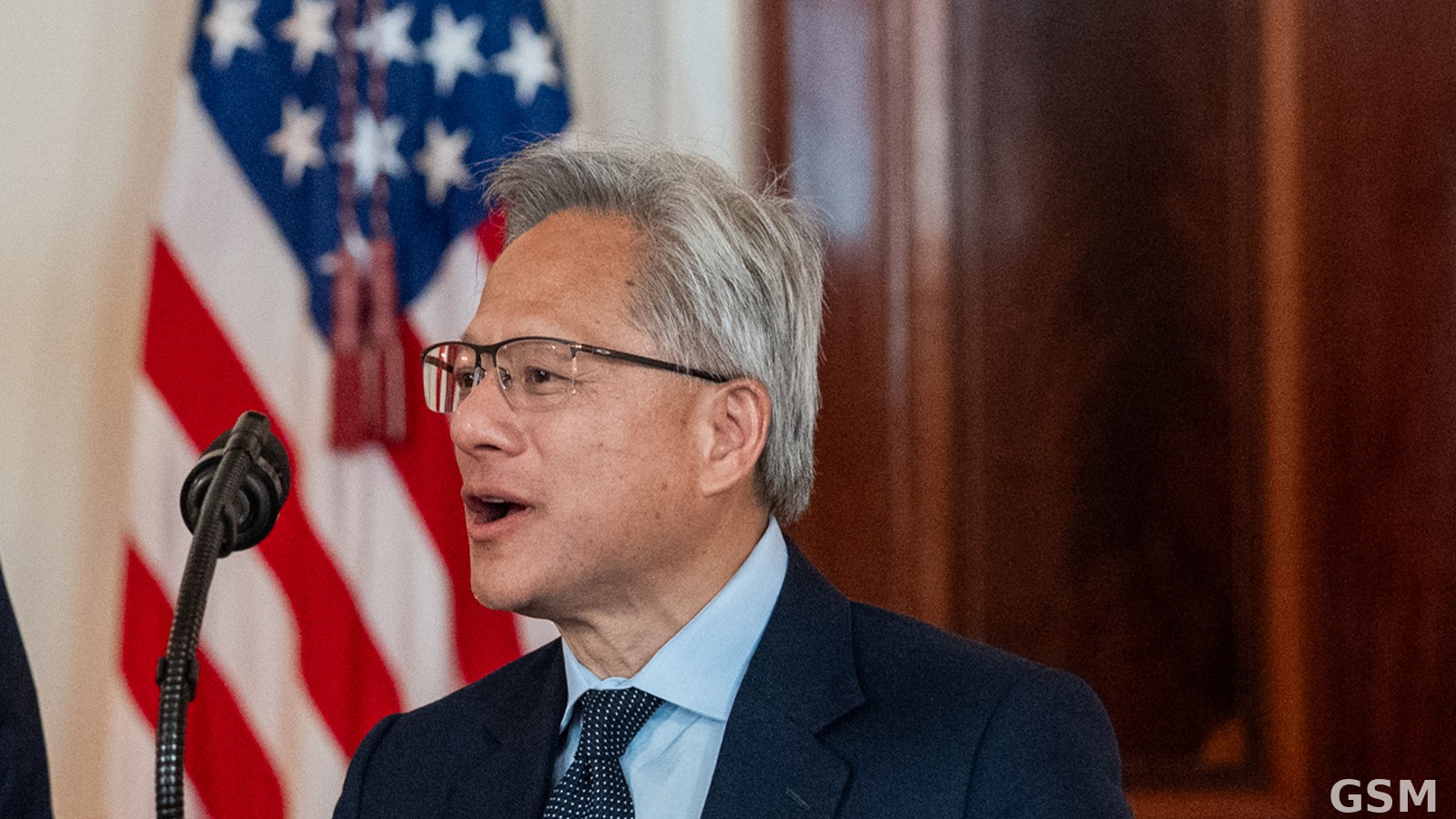
图片来源:图:英伟达创始人黄仁勋(资料图)。原竖幅肖像未裁切,两侧为虚化垫底。Peter Dasilva/European Union 摄,CC BY 4.0,经 Wikimedia Commons。 / Photo: Nvidia founder Jensen Huang (file photo). The original vertical portrait is shown uncropped, with blurred extensions at the sides. Photo by Peter Dasilva / European Union, CC BY 4.0, via Wikimedia Commons.
GSM Global · 本篇英文版 English edition of this story