《Nature Communications》11月15日论文:根际 pH 介导热信号调控拟南芥根系生长,质膜氢泵受 TOT3 与 TOI5 激酶控制
一项11月15日发表于《Nature Communications》的研究以模式植物拟南芥为对象,报告根际 pH 是热信号机制的一个关键组分,通过活性氧介导的细胞周期调控,决定根系在不同温度下的生长反应。论文作者包括 Aneesh S. Lale、Atish Bansod 与 Rahul A. Bhosale 等。
高温事件使空气与土壤温度升高,对全球农业构成重大威胁,但植物根系如何感知土壤温度并调整生长,机制此前并不清楚。该研究把分生区与过渡区的 pH 变化作为观察核心。
研究发现,在适度偏高的温度下,这些区域的碱化使超氧阴离子水平上升,促进细胞分裂与根系生长。温度更高时,情形反转,酸化加剧与过氧化氢积累抑制生长。
提高外部 pH 可以缓冲这种酸化,降低过氧化氢水平,并赋予植株耐热性。作者报告,这一 pH 介导的耐热效应在土壤条件下同样有效。
热诱导的 pH 变化由质膜氢离子 ATP 酶控制,而这类质膜氢泵又受激酶 TOT3 与 TOI5 调控。作者表示,这条连接 pH、活性氧与根系热形态建成的通路,为在气候变暖背景下提高植物韧性提供了新的认识。
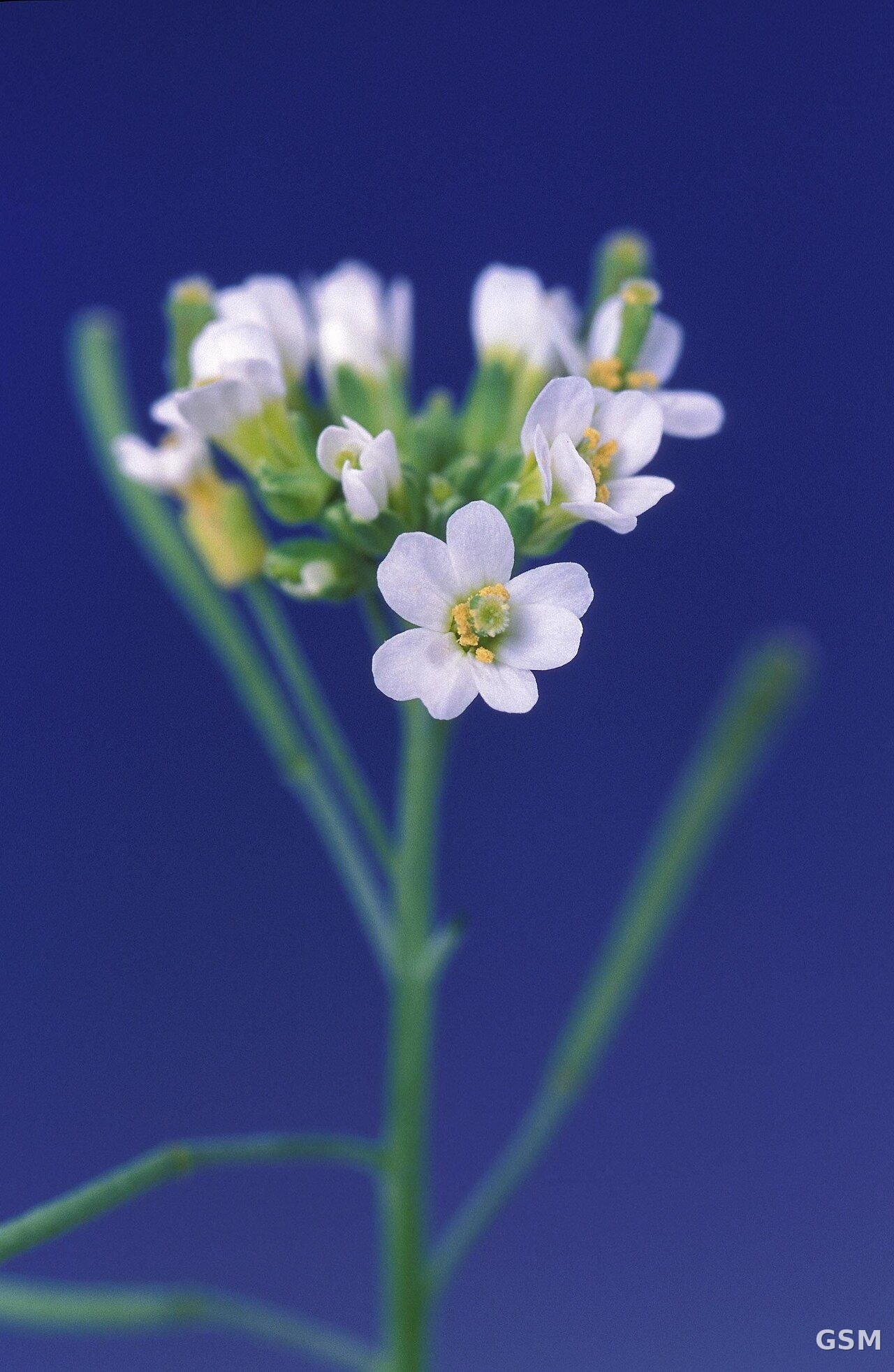
图中是拟南芥的花,该模式植物正是本研究考察根系热信号的对象。
Nature Communications Paper on November 15: Rhizospheric pH-Mediated Thermo-Signalling Coordinates Arabidopsis Root Growth, With Plasma Membrane Proton Pumps Controlled by the Kinases TOT3 and TOI5
A study published on November 15 in Nature Communications, using the model plant Arabidopsis thaliana, reports that rhizospheric pH is a key component of a thermo-signalling mechanism that regulates temperature-dependent root responses through reactive oxygen species mediated control of cell cycle dynamics. The authors include Aneesh S. Lale, Atish Bansod and Rahul A. Bhosale.
Heat stress events pose a major threat to global agriculture due to elevated air and soil temperatures, but how plant roots sense soil temperature and adjust growth has remained unclear. The study focused on pH shifts in the meristematic and transition zones of the root.
At moderately high temperatures, alkalization of these zones increases superoxide levels, promoting cell division and root growth. At higher temperatures the pattern reverses, with increased acidification and hydrogen peroxide accumulation inhibiting growth.
Elevating external pH buffers this acidification, reduces hydrogen peroxide levels and confers heat resistance. The authors report that this pH-mediated heat resistance is also effective under soil conditions.
The heat-induced pH shifts are controlled by plasma membrane H-plus ATPases, which are in turn under the control of the kinases TOT3 and TOI5. The findings link pH, reactive oxygen species and root thermomorphogenesis, with implications for improving plant resilience in warming climates, the authors say.
发布:GSM·美国(发布链接)
图片来源:Wikimedia Commons, File:Arabidopsis thaliana flower.jpg — Author: Peggy Greb, U.S. Department of Agriculture. Licensing: Public domain.
GSM Global · 本篇英文版 English edition of this story