Quantinuum 把理化学研究所 Reimei 升级至 H2 系统:与 SoftBank 另签协议探索量子计算连接数据中心
日本,Quantinuum 11月11日通过提交给监管机构的 8-K 文件披露,该公司与日本理化学研究所(RIKEN)扩大合作,安装在理化学研究所的量子计算机 Reimei 已完成从 H1 系统到 System Model H2 的升级。
Reimei 在 JHPC-Quantum 项目下运行,该项目由日本新能源产业技术综合开发机构(NEDO)资助,NEDO 隶属日本经济产业省。文件称,升级进一步增强了量子计算与高性能计算混合平台的能力,使研究人员能处理此前 H1 系统难以应对的更复杂问题。
理化学研究所计算科学研究中心量子与高性能计算混合平台部门负责人佐藤三久在文件中表示,升级后的系统将帮助合作方攻克规模更大、更复杂的科学问题。
文件列出两个已在进行的项目。其一利用 JHPC-Quantum 的 GPU 超级计算机 ROQUO,以 Reimei 生成的量子数据训练模型做磁性模拟,早期结果显示其预测准确度可能高于只用经典模拟训练的模型。其二把 Reimei、理化学研究所的超级计算机「富岳」与运行在 ROQUO 上的英伟达进化式智能体结合,模拟一种复杂的光活性生物分子。两项工作均服务于理化学研究所的「AI for Science」计划,相关英文名称为该计划专名。
另一份单独协议由 Quantinuum、理化学研究所与 SoftBank 三方签署,三方将评估基础设施准备情况,研究量子计算与数据中心直接连接、支撑商用量子与经典混合计算服务的可行性。SoftBank 产品研发副总裁小林丈则在文件中表示,目标是推进「Quantum AI Datacenter」建设,把量子计算与高性能计算能力开放给日本各地企业,该英文名称为其项目专名。
文件还提到,Quantinuum 与理化学研究所计划吸收日本的大学与本土零部件供应商参与开发一台容错量子计算机,项目以「Made with Japan」为名;文件称相关研究与美国 Genesis Mission 下一项规模10亿美元的拟议合作相衔接。
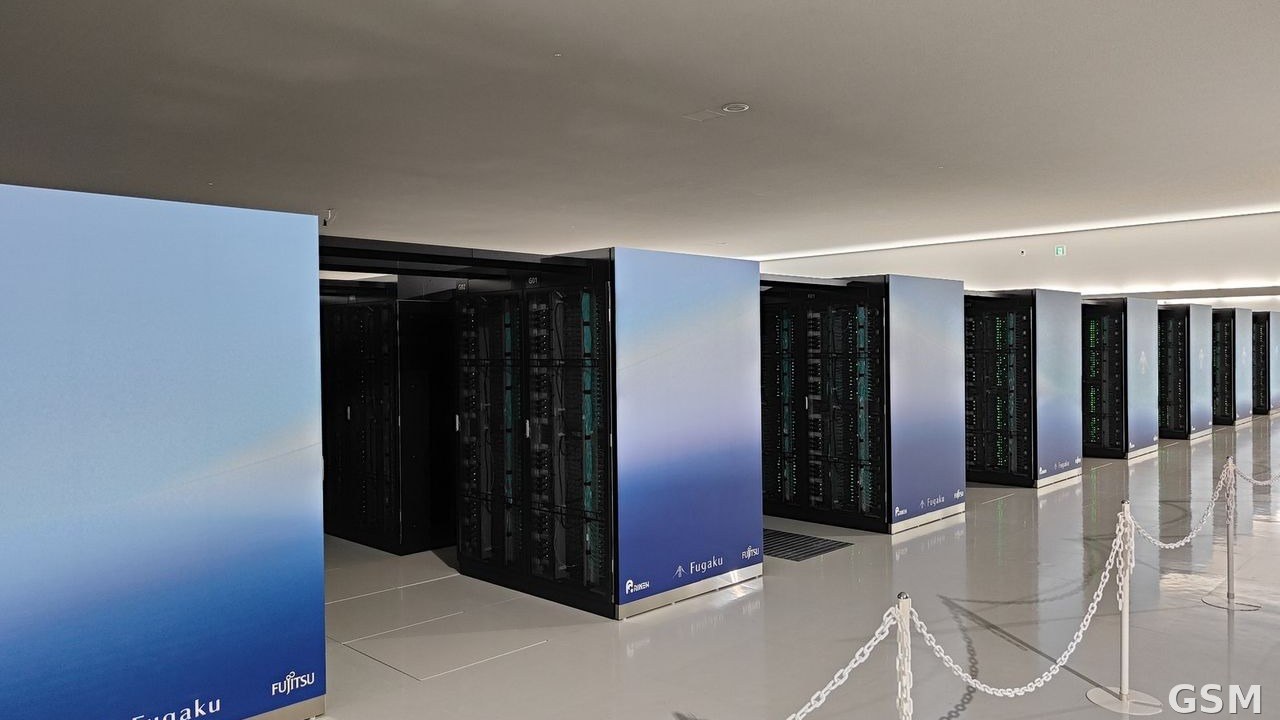
图中是位于理化学研究所计算科学研究中心的超级计算机「富岳」机房
Quantinuum Upgrades RIKEN's Reimei to System Model H2, Signs Separate Pact With SoftBank on Quantum Links to Data Centers
JAPAN. Quantinuum disclosed in an 8-K filing on November 11 that it has expanded its partnership with RIKEN, and that the Reimei quantum computer installed at RIKEN has completed its upgrade from the H1 system to Quantinuum's System Model H2.
Reimei is operated under the JHPC-Quantum project, funded by NEDO, which reports to Japan's Ministry of Economy, Trade and Industry (METI). According to the filing, the upgrade further enhances the capabilities of the quantum-HPC hybrid computing platform, enabling researchers to study more complex quantum systems.
Dr. Mitsuhisa Sato, head of the Quantum-HPC Hybrid Platform Division at the RIKEN Center for Computational Science, was quoted in the filing as saying the upgraded system will allow partners to tackle more complex and large-scale scientific problems that were difficult to handle with the previous H1 system.
The filing describes two research projects already underway. The first uses RIKEN's JHPC-Quantum GPU supercomputer ROQUO to train a model on quantum data generated by Reimei for magnetism simulations, with early results suggesting it can produce more accurate predictions than models trained solely on classical simulations.
The second project combines Reimei, RIKEN's Fugaku supercomputer, and NVIDIA's evolutionary AI agent running on ROQUO to simulate a complex photoactive biomolecule. The filing states both projects support RIKEN's AI for Science initiative.
Under a separate agreement, Quantinuum, RIKEN, and SoftBank Corp. will assess infrastructure readiness and examine how connected systems could support commercial quantum-classical hybrid computing services in Japan. SoftBank's Takenori Kobayashi, Vice President and Head of Product Research and Development, was quoted as stating the goal is to advance development of a Quantum AI Datacenter that connects quantum computing with high-performance computing and makes these capabilities accessible to companies across Japan.
The filing also notes that Quantinuum and RIKEN intend to involve Japanese universities and domestic component suppliers in the development of a fault-tolerant quantum computer described as Made with Japan, and states the research aligns with a planned partnership worth $1 billion under the U.S. Genesis Mission.
来源:Quantinuum
发布:GSM·美国(发布链接)
图片来源:图:位于理化学研究所计算科学研究中心的超级计算机「富岳」机房。来源:Barsaka2, CC0,维基共享资源。 / Photo: The Fugaku supercomputer hall at the RIKEN Center for Computational Science. Credit: Barsaka2, CC0, via Wikimedia Commons.
GSM Global · 本篇英文版 English edition of this story