新加坡国立大学氨裂解催化剂再生策略使制氢逾2000小时:活性超商用铂碳催化剂10倍
新加坡国立大学研究团队在《自然·合成》刊出的研究中报告,一种催化剂再生策略使电化学氨裂解制氢在实验室中持续运行逾2000小时。氨被视为储运氢的载体,电化学氨裂解用电把氨转化为氮气与氢气,难点在于铂基催化剂表面会逐渐氧化并被氮物种堵塞,活性随之下降。
团队由新加坡国立大学物理系与化学系教授Chen Wei领衔,与该校化学系助理教授Ou Pengfei、中国电子科技大学教授Fan Lei合作,制成名为Pt/Fe-NC的催化剂,即把铂纳米颗粒负载于含原子级分散铁位点的氮掺杂碳上。研究称,载体的电子转移抑制铂氧化并加速限速的脱氢步骤,铁氮位点促进水解离,帮助把堵塞铂表面的氮物种氢化清除。在受试条件下,新催化剂的氨氧化活性为商用铂碳催化剂的10倍以上。论文题为Catalyst regeneration enables durable electrochemical ammonia cracking for H2 production,数字对象标识为10.1038/s44160-026-01201-6,第一作者为Rui Jiang。
为延长运行寿命,团队把周期性电流切换、间歇酸洗与补氨结合。采用该策略后,制氢在较低电流下持续逾2000小时,在较高电流下持续500小时,两项测试均在80摄氏度下进行。团队成员Jiang Rui表示,水辅助再生方法帮助防止氮堵塞铂表面,使催化剂能更长时间保持活性。研究者同时说明,该技术仍需在更大规模上进一步评估。
A Catalyst Regeneration Strategy Sustains Hydrogen Production From Ammonia for More Than 2,000 Hours: Activity More Than 10 Times a Commercial Catalyst, in Nature Synthesis
Researchers at the National University of Singapore reported in Nature Synthesis a catalyst-regeneration strategy that sustained electrochemical ammonia cracking for hydrogen production for more than 2,000 hours in laboratory tests. Ammonia is a promising way to store and transport hydrogen, and electrochemical cracking uses electricity to convert ammonia into nitrogen and hydrogen, but platinum-based catalysts gradually lose effectiveness as their surfaces oxidize and become blocked by nitrogen.
The team, led by Professor Chen Wei of the NUS Department of Physics and Department of Chemistry, with Assistant Professor Ou Pengfei of NUS Chemistry and Professor Fan Lei of the University of Electronic Science and Technology of China, built a catalyst called Pt/Fe-NC, comprising platinum nanoparticles supported on nitrogen-doped carbon containing atomically dispersed iron sites. The study said electron transfer from the support suppresses platinum oxidation and accelerates the rate-determining dehydrogenation step, while the iron-nitrogen sites promote water dissociation and help clear poisoning nitrogen species from the platinum surface. Under the tested conditions, the new catalyst showed more than 10 times the ammonia oxidation activity of a commercially available platinum-on-carbon catalyst. The paper, by Rui Jiang and co-authors, carries digital object identifier 10.1038/s44160-026-01201-6.
To extend operating life, the team combined periodic reversal of the electrical current with occasional acid washing and ammonia replenishment. Using this strategy, hydrogen production was sustained for over 2,000 hours at a low electrical current and for 500 hours at a substantially higher current, with both tests conducted at 80 degrees Celsius. Team member Jiang Rui said the water-assisted regeneration approach helps prevent nitrogen from blocking the platinum surface, allowing the catalyst to remain active for longer. The researchers noted that further research is needed to evaluate the technology at larger scales.
来源:新加坡国立大学
发布:GSM·美国(发布链接)
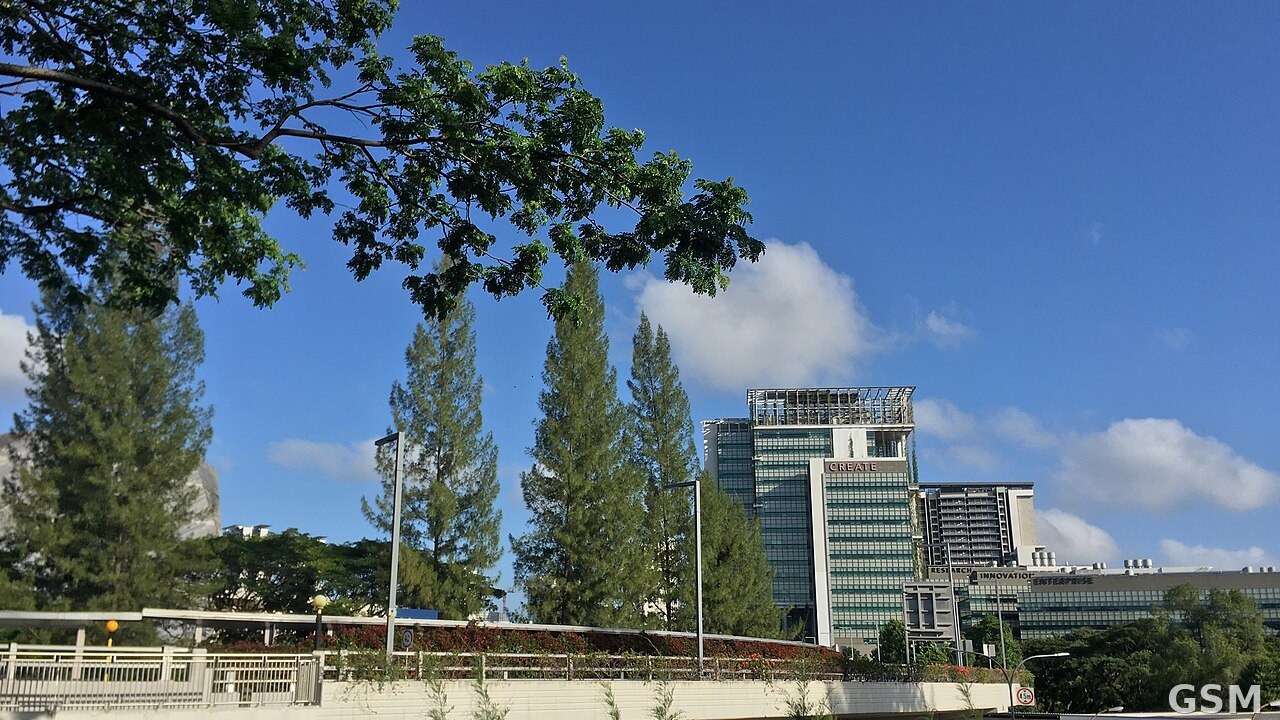
图片来源:新加坡国立大学肯特岗校区。/The Kent Ridge Campus of the National University of Singapore.(Joshua Rommel Hayag Vargas,CC BY-SA 4.0,Wikimedia Commons)
GSM Global · 本篇英文版 English edition of this story