新墨西哥州纳瓦霍水库六周上涨近60英尺 水位达2019年8月以来最高
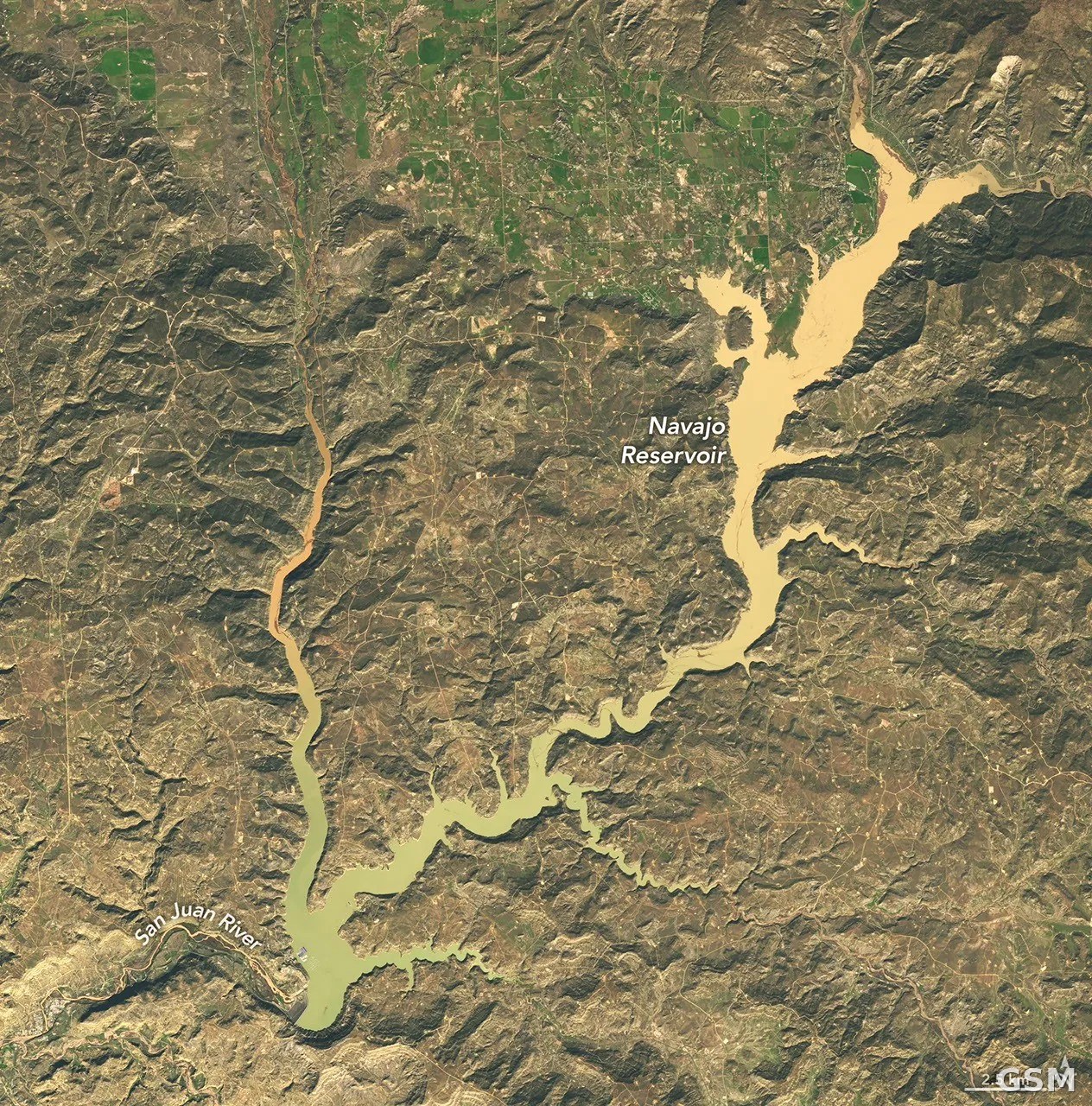
美国国家航空航天局地球观测站11月11日发布的“每日影像”显示,新墨西哥州第二大水库纳瓦霍水库的水位在暴雨后迅速上涨。陆地卫星9号搭载的陆地成像仪于9月20日和11月7日拍摄的对比影像显示,在此期间,位于新墨西哥州北部和科罗拉多州南部交界处的水库水位上涨了近60英尺,约合18米。美国陆军工程兵团的数据显示,11月7日水库水位达到2019年8月以来的最高水平,为该日期平均蓄水量的108%,而9月20日时仅为平均蓄水量的60%。10月下旬至11月初接连两轮强降雨席卷美国西南部四角地区,圣胡安河等河流暴涨。科罗拉多州帕戈萨斯普林斯镇受灾尤其严重,首轮降雨达5.05英寸,圣胡安河10月23日达到主要洪水位,11月1日再次接近1911年创下的历史最高水位。美国干旱监测机构11月3日的总结指出,西南部和大盆地的短期干旱已经结束。
Rains Lift New Mexico's Navajo Reservoir Nearly 60 Feet to Highest Level Since August 2019
NASA's Earth Observatory released satellite imagery on November 11 showing the water level of Navajo Reservoir, New Mexico's second-largest reservoir, rising rapidly after heavy rains.
Comparison images taken by the Operational Land Imager aboard Landsat 9 on September 20 and November 7 show the reservoir — which straddles northern New Mexico and southern Colorado — rising nearly 60 feet (about 18 meters) over that span. U.S. Army Corps of Engineers data show the reservoir reached its highest level since August 2019 on November 7, at 108 percent of its average capacity for that date, up from just 60 percent on September 20.
Two consecutive rounds of intense rainfall swept the Four Corners region of the U.S. Southwest from late October into early November, sending the San Juan River and other rivers surging. The town of Pagosa Springs, Colorado, was hit especially hard: 5.05 inches of rain fell in the first round, the San Juan River reached major flood stage on October 23, and on November 1 it rose again to near the record level set in 1911.
The U.S. Drought Monitor's November 3 summary noted that short-term drought has ended across the Southwest and the Great Basin.
来源:NASA地球观测站
发布:GSM·美国(发布链接)
图片来源:图:纳瓦霍水库2026年11月7日卫星影像,水位升至2019年8月以来最高。NASA Earth Observatory 影像(Michala Garrison 作图,美国地质调查局 Landsat 数据),公共领域。Photo: Navajo Reservoir on Nov. 7, 2026. NASA Earth Observatory image by Michala Garrison, using Landsat data from the U.S. Geological Survey, public domain.
GSM Global · 本篇英文版 English edition of this story