有芯片的猫找回率是没芯片的20多倍:兽医协会说芯片不是定位器、登记电话要常更新
美国兽医协会(AVMA)期刊发表的一项研究,统计了全美收容所里7,700多只流浪动物的去向,结果很能说明问题:没有芯片的狗只有21.9%回了家,有芯片的狗找回率是52.2%;猫的差距更大,没芯片的猫只有1.8%能回家,有芯片的猫达到38.5%,是前者的20多倍。
芯片本身很简单:一颗米粒大小的电子芯片装在玻璃小管里,由兽医用针头注射到宠物肩胛骨之间的皮下,不需要手术和麻醉,芯片没有电池,靠扫描仪发出的无线电波激活,读出一个独一无二的编号。AVMA 特别提醒,芯片不是 GPS,不能定位宠物的位置,也存不了病历,芯片里只有这一个编号,剩下的全靠编号背后的登记数据库。
研究里最扎心的一条是:有芯片却没能回家的宠物,多数不是芯片坏了,而是登记信息不对。搬家、换手机号、领养后没把登记转到自己名下,收容所扫出编号也联系不到人。AVMA 的宠物饲养指南因此把「确保宠物有正规身份标识、并及时更新数据库里的登记信息」列为养宠的基本功,芯片和项圈吊牌要一起用,吊牌让人第一眼能打电话,芯片是吊牌丢了之后的最后一道保险。
不记得芯片是哪家公司的,可以用美国动物医院协会(AAHA)的通用芯片查询工具,输入编号就能查到登记公司。每年8月15日是 AVMA 和 AAHA 设立的「查芯片日」,就是提醒主人每年至少核对一次登记里的电话和地址。芯片管一辈子,但登记信息得跟上你现在的生活。(来源:美国兽医协会)
Microchipped Cats Come Home at More Than 20 Times the Rate: AVMA Says a Chip Is Not a GPS, and the Registry Phone Number Has to Stay Current
A study published in the Journal of the American Veterinary Medical Association followed more than 7,700 stray animals entering shelters across the United States, and the gap it found is stark: only 21.9 percent of dogs without a microchip were returned to their owners, compared with 52.2 percent of microchipped dogs. For cats the difference is larger still: 1.8 percent of unchipped cats made it home, against 38.5 percent of microchipped cats, more than 20 times the rate.
The chip itself is simple. A small electronic chip enclosed in a glass cylinder, about the size of a grain of rice, is injected by a veterinarian under the skin between the shoulder blades, with no surgery or anesthesia. The chip has no battery; a scanner passed over the area activates it with radio waves and reads out a unique identification number. AVMA stresses that a microchip is not a GPS device and cannot track a pet's location, and it stores no medical records, only that number. Everything else depends on the registry database behind the number.
The study's most useful finding is why chipped pets still fail to get home: in most of those cases the registry information was wrong or missing. A move, a new phone number, or an adoption where the registration was never transferred leaves a shelter holding a number that reaches nobody. AVMA's pet ownership guidelines therefore list keeping a pet properly identified, with registration information in the associated databases kept up to date, as a basic duty of ownership. A chip and a collar tag work together: the tag lets a finder call immediately, and the chip is the backup that survives a lost collar.
Owners who cannot remember which company holds their pet's registration can use the American Animal Hospital Association's universal microchip lookup tool to find the registry from the chip number. AVMA and AAHA also mark Check the Chip Day every August 15 as a reminder to verify the phone number and address on file at least once a year. The chip lasts the pet's whole life; the contact details have to keep up with yours. (Source: American Veterinary Medical Association)
来源:美国兽医协会
发布:GSM·美国(发布链接)
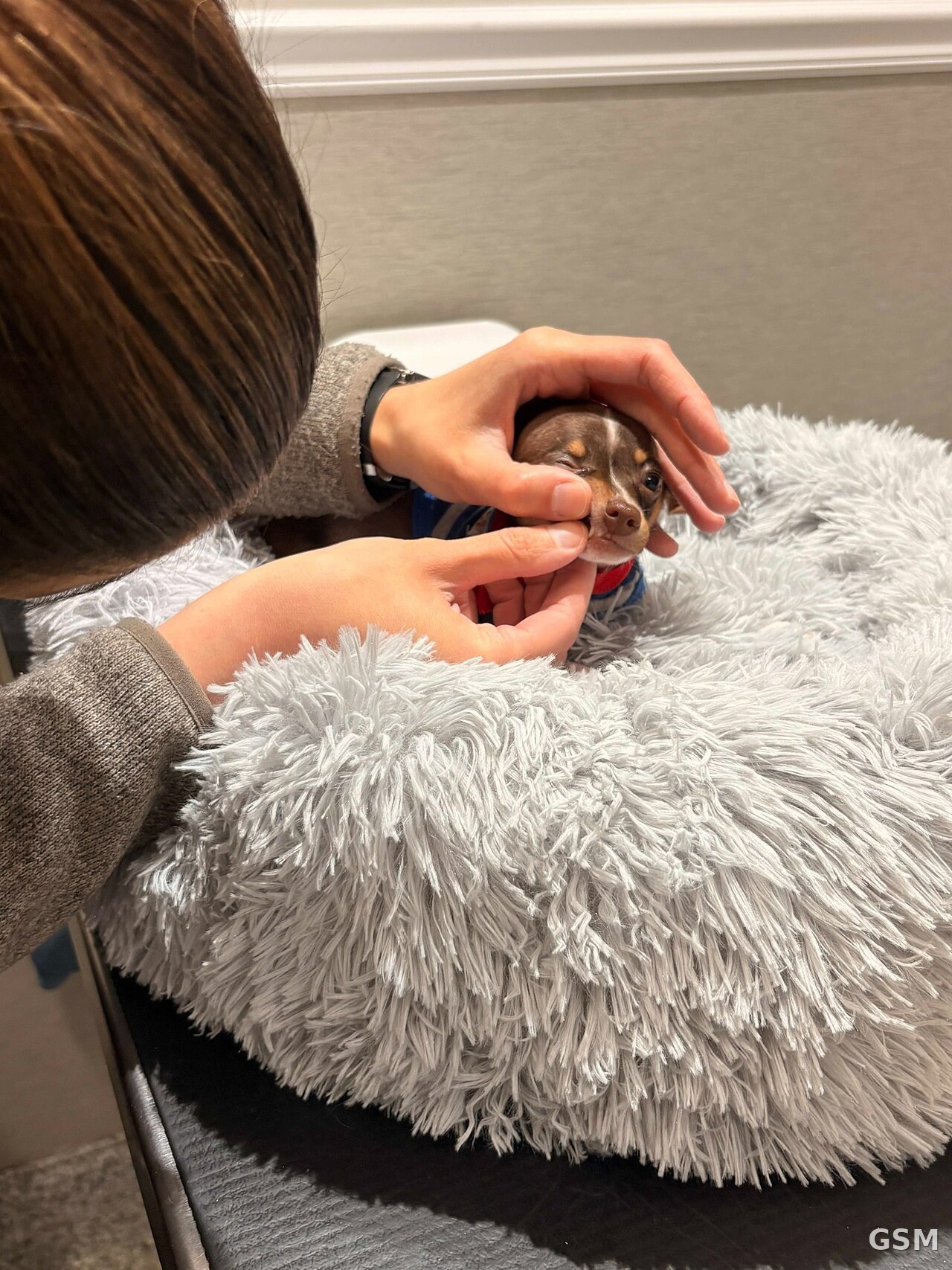
图片来源:Wikimedia Commons 摄影,CC BY 4.0:兽医诊所里的小型犬(示意:芯片植入与信息登记在诊所或收容所办理)
GSM Global · 本篇英文版 English edition of this story