丹麦海泽高出土约2000年前神庙:约49英尺乘53英尺、建于公元前50年至公元50年间、中央设6英尺见方陶土台
丹麦中日德兰博物馆近日公布,考古人员在丹麦海泽高遗址发现一座约2000年前的神庙。最新一轮发掘于今年8月开始,海泽高位于埃斯特鲁普霍尔姆附近、斯克恩河以北,博物馆称其为丹麦在基督诞生前后时期最大的聚落。
发掘由中日德兰博物馆与霍森斯博物馆、莫斯格考古博物馆的研究人员共同进行。证据显示,这处设防聚落曾是铁器时代的地区权力中心,出土了奢侈品、凯尔特部落的武器以及罗马作坊的声望物品,聚落在基督诞生前夕的一段时间里繁荣。
神庙是本轮发掘最重要的发现,平面约49英尺乘53英尺,建筑曾被烧毁。烧土层之下,发掘者找到两个神庙阶段的痕迹。正中央有一座6英尺见方的抬高陶土台,晚期阶段在原址建了一座装饰过的火塘,部分盖住早期火塘,晚期神庙比早期向北移了约30英寸,其余几乎相同。墙面灰泥碎片显示墙壁曾刷成白色。
博物馆说,初步结果显示神庙在基督诞生前后数十年间使用,外观可能是一座近方形的高耸塔状建筑,外有柱廊,火塘占据内部空间。神庙在被有意烧毁前已被仔细清空,出土物很少,但有两颗制作精良的玻璃珠,可能产自中东或埃及。
考古策展人马丁·温特·奥勒森说,这座异教神庙建于公元前50年至公元50年间,基督教在近1000年后才传入斯堪的纳维亚,而海泽高当时已了解凯尔特与罗马的建筑传统。他说,该遗址地处要冲,控制着纵贯日德兰半岛的最重要道路,有武器与防御工事显示的军事化,也有政治精英、纪念性建筑、手工业与贸易,还是祭祀活动的中心。现有证据显示,海泽高只使用了三代人便消失。
Archaeologists Uncover a Temple of About 2,000 Years Ago at Hedegård, Denmark: Roughly 49 by 53 Feet, Built Between 50 BC and AD 50, With a 6-Foot Clay Platform at Its Center
The Museum of Central Jutland has unveiled the discovery of a temple of about 2,000 years ago at Hedegård in Denmark. The latest excavation began last August. Hedegård, located near Ejstrupholm north of the Skjern River, has been identified by the museum as Denmark's largest settlement from the time around the birth of Christ.
Working with researchers from Museum Horsens and Moesgaard Museum, archaeologists found evidence of a vast fortified settlement that once served as a regional power center during the Iron Age. The settlement has yielded luxury goods, weapons from Celtic tribes, and prestige items from Roman workshops, and the evidence shows it flourished in the period leading up to the birth of Christ.
The temple measured roughly 49 by 53 feet and had once burned down. Beneath the burn layer, excavators found traces of two temple phases. At the exact center was a 6 by 6 foot raised clay platform. In the younger phase, an ornamented hearth was built there, partially covering the earlier hearth, and the younger temple was shifted about 30 inches north compared with the older one but was otherwise nearly identical. Plaster fragments suggest the walls were once painted white.
The museum said preliminary results suggest the temple functioned in the decades around the birth of Christ, appearing as a tall, almost square, tower-like building with an outer colonnade, with the hearth dominating the interior. The temple was carefully cleared before being deliberately burned, leaving few finds, but two exceptional glass beads were discovered, likely produced in the Middle East or Egypt.
Archaeology curator Martin Winther Olesen identified the temple as a pagan structure built between 50 BC and AD 50, noting that Christianity did not reach Scandinavia until almost 1,000 years later and that Hedegård had extensive foreign relations, including knowledge of Celtic and Roman architectural traditions. He said the site is strategically located on the most important road up through Jutland, with militarization in its weapons and fortification, a political elite, monumental construction, crafts and trade, and a center for the practice of the cult. Evidence suggests Hedegård was in use for only three generations before it disappeared.
来源:丹麦考古发掘团队
发布:GSM·美国(发布链接)
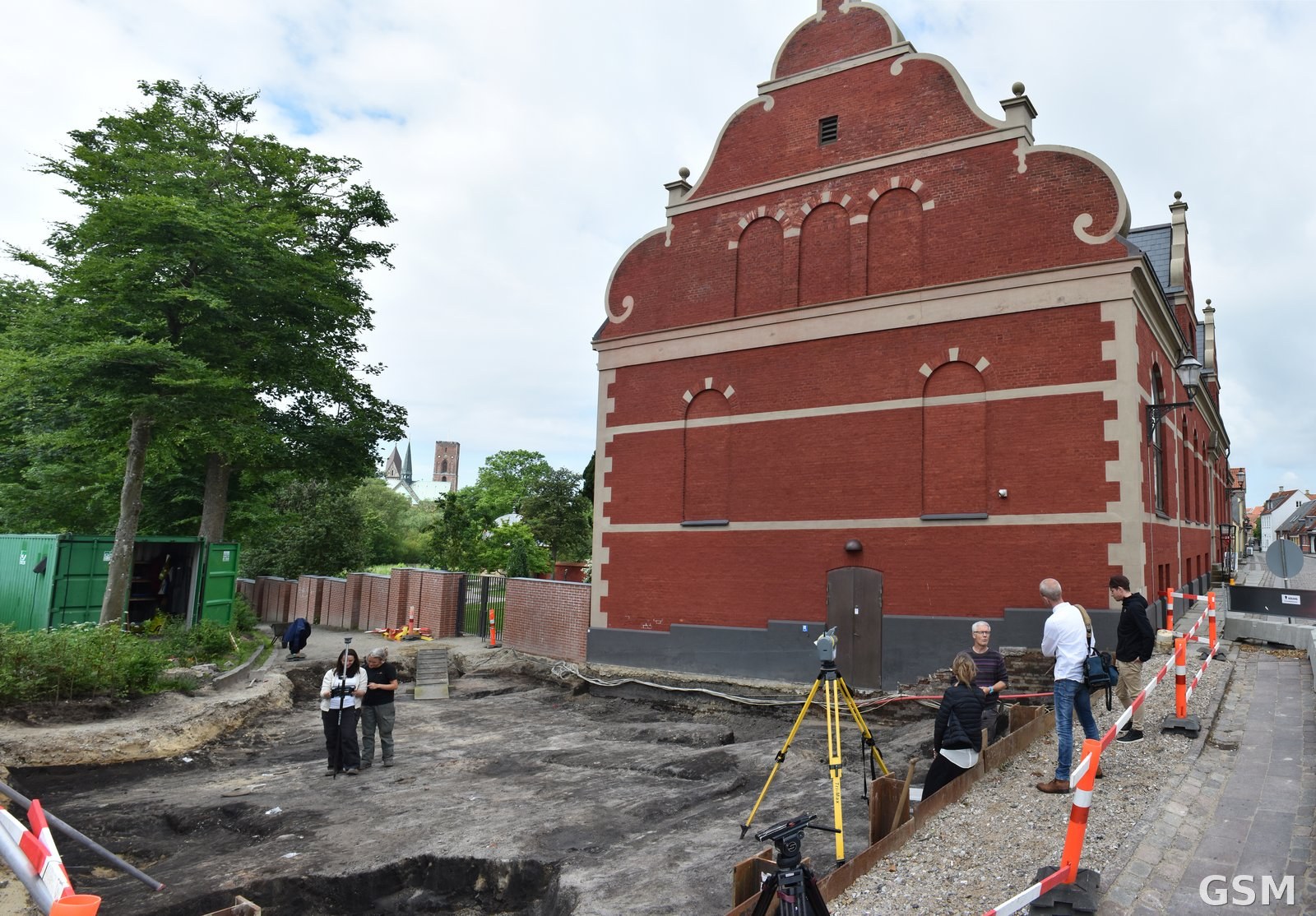
图片来源:图:图中是丹麦里伯一处古建筑遗址的考古发掘现场,为丹麦考古发掘的通用画面,非海泽高遗址现场。Thomas Dahlstrøm Nielsen,CC BY-SA 4.0,经Wikimedia Commons。 / Photo: file photo. Thomas Dahlstrøm Nielsen, CC BY-SA 4.0, via Wikimedia Commons.
GSM Global · 本篇英文版 English edition of this story