【视频】NASA钱德拉望远镜揭开巨星周期爆发之谜:隐藏伴星每113天撕扯一次物质
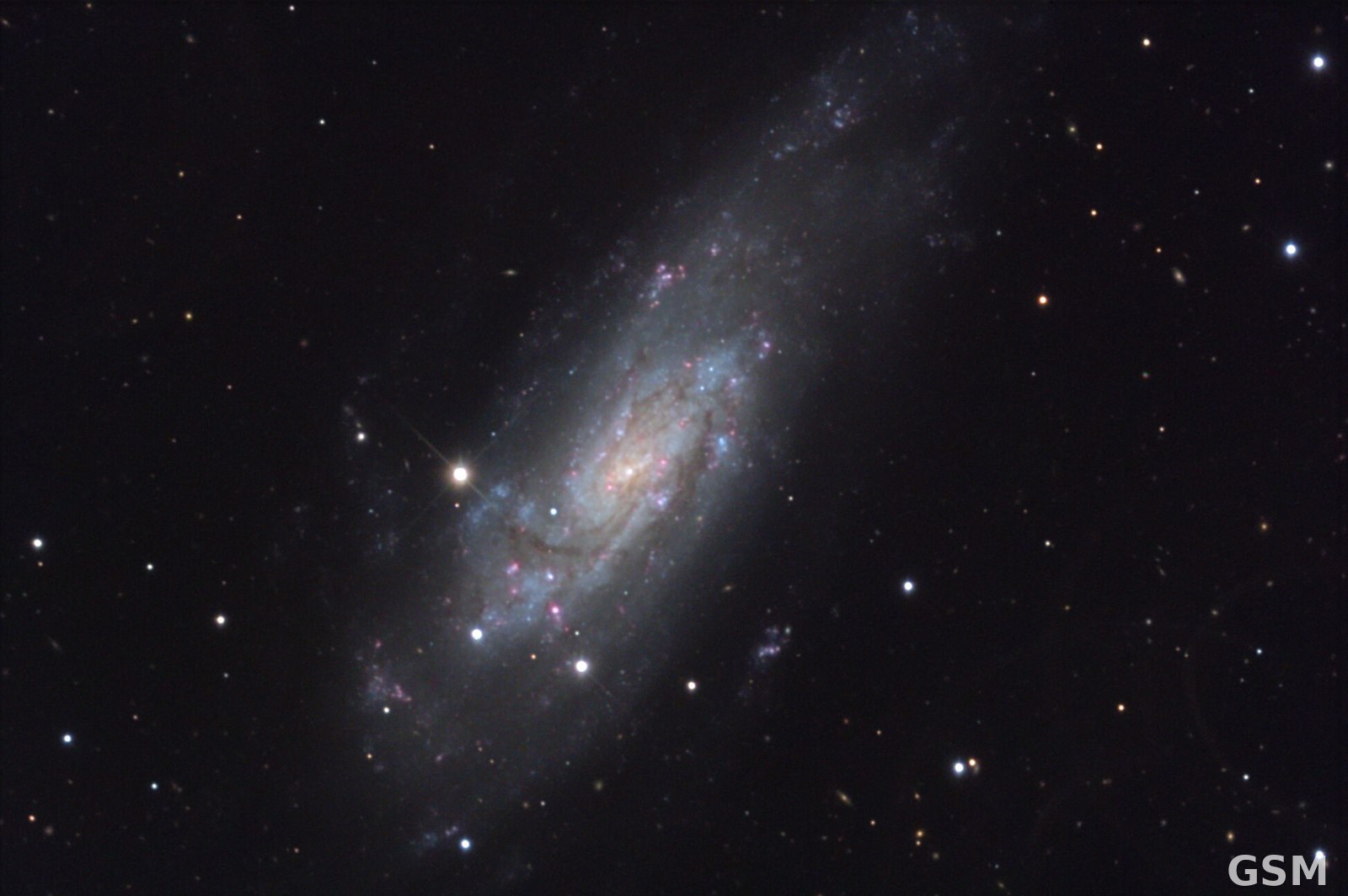
美国航空航天局(NASA)11月9日发布消息说,钱德拉X射线望远镜的最新观测揭开了一颗巨星周期性爆发的成因。位于螺旋星系NGC 4559、距地球约3,000万光年的大质量恒星AT 2016blu身旁,藏着一颗此前未被发现的伴星。它可能是一颗恒星级黑洞,也可能是一颗中子星,每113天从这颗巨星身上撕扯一次物质,触发一次大爆发。钱德拉项目官方频道同步发布了讲解视频。
AT 2016blu是一颗高光度蓝变星,质量至少是太阳的33倍。这类恒星极不稳定,亮度变化剧烈。AT 2016blu的单次爆发亮度一度堪比超新星爆炸,却又反复发生,因此被天文学家称为「超新星冒名者」。2012年至2026年间,光学望远镜至少记录到它27次爆发,间隔约113天,规律始终未解。
研究团队由弗吉尼亚大学的Mojgan Aghakhanloo领衔。团队先用光学望远镜算准爆发时点,再通过钱德拉的「机会目标」计划,在2026年3月的一次爆发期实施定向观测。结果显示,它当时的X射线亮度至少是2001年至2002年钱德拉存档数据的100倍。
这是天文学家首次在此类爆发恒星身上探测到X射线,也是首次发现这类恒星与黑洞或中子星伴星成对出现。按亮度计,AT 2016blu足以列为极亮X射线源的候选体,这类天体成因至今未完全清楚,已知成员有的含中子星,有的含黑洞。
研究团队给出的图景是:伴星沿椭圆形轨道绕AT 2016blu运行,每113天抵近一次,引力把巨星外层物质拉走。被夺走的物质以接近光速绕伴星旋转,被加热到发出明亮的X射线,地面望远镜看到的周期性增亮由此而来。
这项研究的光学数据来自Katzman自动成像望远镜、拉斯坎布雷斯天文台与美国变星观测者协会,30多位业余天文爱好者参与了监测。论文已发表于《天体物理学杂志》。钱德拉望远镜由NASA马歇尔航天飞行中心管理,史密森天体物理天文台的钱德拉X射线中心负责其科学运行与飞行运行。
(来源:美国航空航天局)
[Video] NASA's Chandra Finds the Hidden Companion Behind a Giant Star's 113-Day Outbursts
NASA announced on November 9 that its Chandra X-ray Observatory has found what triggers the repeated outbursts of a giant, unstable star. The star, AT 2016blu, sits in the spiral galaxy NGC 4559, about 30 million light-years from Earth, and it has a previously hidden companion: a stellar-mass black hole or a neutron star that pulls material off the giant star every 113 days, setting off each eruption. The Chandra program's official channel released a narrated tour video with the findings.
AT 2016blu is a luminous blue variable, a hot, massive star known for dramatic swings in brightness, with a mass at least 33 times that of the Sun. Its outbursts rival the light output of a supernova, yet the star survives and erupts again, earning it the label "supernova impostor." Between 2012 and 2026, optical telescopes recorded at least 27 bursts, spaced about 113 days apart.
The team, led by Mojgan Aghakhanloo of the University of Virginia, used optical monitoring to predict an eruption, then triggered Chandra observations in March 2026 through the observatory's Target of Opportunity program. Chandra found the system at least 100 times brighter in X-rays than in archival Chandra data from 2001 and 2002, before the known eruptions began.
It is the first X-ray detection of one of this class of erupting stars, and the first time such a star has been found with a black hole or neutron star companion. AT 2016blu is bright enough to qualify as a candidate ultra-luminous X-ray source, a rare class of objects thought to contain neutron stars in some cases and black holes in others.
In the team's picture, the companion travels an oval-shaped orbit and, at each closest approach 113 days apart, gravitationally strips material from the giant star. The captured gas orbits at near light speed and heats up until it shines brightly in X-rays, producing the repeating cycle astronomers have watched for over a decade.
Optical data came from the Katzman Automatic Imaging Telescope, Las Cumbres Observatory and the American Association of Variable Star Observers, with more than 30 amateur astronomers contributing. The paper appears in The Astrophysical Journal. NASA's Marshall Space Flight Center manages the Chandra program, and the Smithsonian Astrophysical Observatory's Chandra X-ray Center controls science and flight operations.
(Source: NASA)
来源:美国航空航天局
发布:GSM·美国(发布链接)
图片来源:图:螺旋星系NGC 4559,恒星AT 2016blu即位于该星系之中。Wikimedia Commons 图片(CC BY 4.0,美国国家光学天文台NOAO资料图)。 / Photo: The spiral galaxy NGC 4559, host galaxy of the star AT 2016blu. Image via Wikimedia Commons (CC BY 4.0, NOAO).
GSM Global · 本篇英文版 English edition of this story