每个宝宝都要防重症RSV:孕期32到36周打疫苗,或出生后打长效抗体,二选一即可
呼吸道合胞病毒(RSV)对小婴儿最危险,而现在防护办法已经成形。美国疾病控制与预防中心(CDC)说,所有宝宝都应通过两种办法之一防住重症 RSV:妈妈在孕期接种 RSV 疫苗,或者宝宝出生后接种 RSV 抗体,多数宝宝只需要其中一种。眼下正值秋冬,CDC 给的时间表对新手父母正合用。
走孕期路线的是辉瑞的 Abrysvo 疫苗,在孕32到36周接种,美国大部分地区安排在9月到次年1月。疫苗大约需要两周形成抗体并传给宝宝,保护能覆盖出生后约6个月,正是宝宝最脆弱的阶段。已在之前怀孕时打过这支疫苗的人,CDC 目前不建议再次怀孕时再打,而是让宝宝出生后走抗体路线。
走抗体路线的是两种长效抗体,nirsevimab 和 clesrovimab,给妈妈孕期没打疫苗的、8个月以下宝宝接种,打完立即起效,保护至少5个月。出生月份决定时间:10月到次年3月出生的宝宝,最好在出生后一周内接种;季节前出生的,在 RSV 季节开始前不久接种。RSV 一般在12月到1月达峰。
还有一小群孩子要在第二个 RSV 季节前再补一剂 nirsevimab:8到19个月、因早产患慢性肺病的孩子、严重免疫缺陷的孩子、重症囊性纤维化的孩子,以及美国原住民儿童。费用方面,nirsevimab 在联邦儿童疫苗计划(VFC)覆盖范围内,符合条件的孩子可免费接种,多数私人保险和 Medicaid、CHIP 也覆盖 RSV 免疫,具体以保险条款为准。(来源:美国疾病控制与预防中心)
Every Baby Needs Protection From Severe RSV: A Vaccine at 32 to 36 Weeks of Pregnancy, or a Long-Acting Antibody After Birth
Respiratory syncytial virus (RSV) is most dangerous to young infants, and the Centers for Disease Control and Prevention (CDC) says every baby should be protected from severe RSV by one of two immunization options: a maternal RSV vaccine given during pregnancy, or an RSV antibody given to the baby. Most babies do not need both, and the autumn and winter timing in CDC's schedule is written for parents deciding right now.
The pregnancy option is Pfizer's Abrysvo vaccine, given during weeks 32 through 36 of pregnancy, in September through January in most of the United States. It takes about 2 weeks for protection to develop and pass to the baby, and the protection lasts for approximately the baby's first 6 months, the period of highest risk. People who already received a maternal RSV vaccine in a previous pregnancy are not currently advised by CDC to take another dose; their babies should receive the antibody after birth instead.
The antibody option uses one of two long-acting antibodies, nirsevimab or clesrovimab, for babies younger than 8 months whose mothers did not receive the maternal vaccine. The antibody provides immediate protection that lasts at least 5 months. Timing depends on the birth month: babies born during October through March should get the dose within 1 week after birth, and babies born earlier in the year should get it shortly before the RSV season, which typically peaks between December and January.
A small group of children aged 8 to 19 months at increased risk should also receive nirsevimab shortly before their second RSV season: children born prematurely who have chronic lung disease, children with severe immunocompromise, children with severe cystic fibrosis, and American Indian and Alaska Native children. On cost, nirsevimab is covered by the federal Vaccines for Children program for eligible children, and most private insurance and Medicaid and CHIP coverage includes the RSV immunizations. (Source: Centers for Disease Control and Prevention)
来源:美国疾病控制与预防中心
发布:GSM·美国(发布链接)
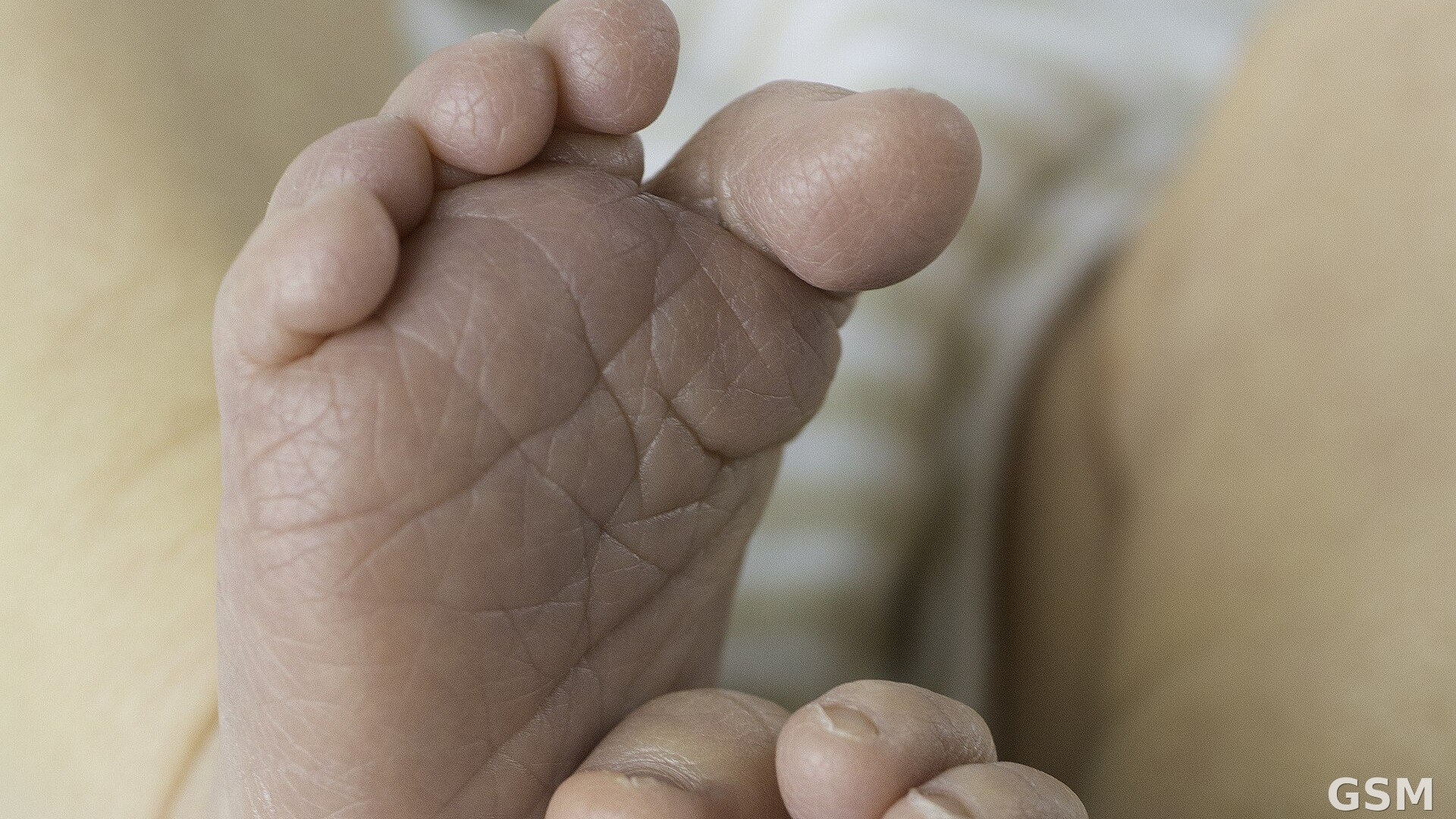
图片来源:图:新生儿的小脚。疾控中心建议,每个宝宝在第一个 RSV 季节前都要有防护。Wikimedia Commons 图片(公共领域,Evan-Amos 摄)。 / Photo: The feet of a newborn baby. CDC recommends that every baby be protected before the first RSV season. Image via Wikimedia Commons (public domain, by Evan-Amos).
GSM Global · 本篇英文版 English edition of this story