美联储监管副主席Bowman:核心PCE通胀10月或升至3.3% 降通胀仍是首要任务
纽约 — 美联储监管副主席 Michelle Bowman 11月10日在外交关系委员会(Council on Foreign Relations)发表演讲,阐述她对美国经济与货币政策的看法。她说,当天公布的消费者价格指数(CPI)显示,12个月核心个人消费支出(PCE)通胀10月可能进一步升至3.3%,通胀压力持续的时间比她预想的更久、近来还有扩散迹象,把通胀降下来仍是首要任务。
Bowman 说,美国经济增长今年加快了势头:实际国内生产总值(GDP)上半年增长2.4%,第三季度增速可能超过3%,明显高于去年2%的水平,动力来自强劲的投资需求和稳健的消费支出。她同时指出,住房等对利率敏感的行业在走弱,抵押贷款利率近来上升,正在进一步拖累住房建设与销售。
劳动力市场方面,Bowman 说,就业形势看起来已经企稳并比去年改善:10月失业率为4.1%,接近她估计的自然失业率水平;今年截至10月,就业岗位平均每月增加约8万个,增幅高于去年,且增加的行业比过去更广。不过招聘与裁员都处在低位,工资涨幅已经放慢,9月就业成本指数中的工资部分同比上涨3.1%,与10月平均时薪的同比涨幅相同。
谈到通胀的成因,Bowman 说,过去两年降通胀的进展大体停滞。截至9月的一年里,高于目标的核心PCE通胀中,关税、能源和超级智能(SI)相关需求各约占四分之一,其余四分之一可能来自前几年通胀冲击的持续影响。她预计,随着这些冲击逐步消退,核心PCE通胀明年会向2%靠拢。
能源市场是她重点谈到的风险之一。Bowman 说,中东冲突一度扰乱经过霍尔木兹海峡的石油运输,布伦特原油价格10月下旬升至每桶110美元上方,上周因市场对美国与伊朗达成协议的乐观情绪大幅回落。她说,美国战略石油储备目前只够不到50天的原油进口量,是上世纪80年代初以来的最低水平。
超级智能建设是另一个重点。Bowman 说,数据中心投资热潮对美国经济的影响已经像上世纪90年代的科技繁荣;超级智能相关债务今年有望超过8,000亿美元,长期租赁、合同承诺等其他义务估计是债务额的三倍多。她说,目前约25%的企业和约10%的劳动者每天在工作中使用超级智能;如果相关收入跟不上成本,一旦股价大幅回调,经济活动和通胀都会受到拖累。
货币政策方面,Bowman 说,她在10月的联邦公开市场委员会(FOMC)会议上支持把联邦基金利率目标区间维持在3.75%至4%。她表示,美联储12月会议之前还会看到10月PCE通胀报告和11月就业报告;她目前看到的是通胀压力仍在持续、劳动力市场则在企稳,要把通胀带回接近2%仍有工作要做。货币政策没有预设路线,每次会议都会根据新数据、前景变化和双重使命面临的风险作出判断。
Fed Vice Chair Bowman: Core PCE Inflation Likely Rose to 3.3% in October, Bringing Inflation Down Remains the Priority
NEW YORK — Federal Reserve Vice Chair for Supervision Michelle W. Bowman said in a speech at the Council on Foreign Relations on November 10 that the day's consumer price index suggests 12-month core PCE inflation likely moved up further to 3.3 percent in October, that inflation pressures have persisted longer than she had hoped and have shown recent signs of broadening, and that bringing inflation down remains a priority.
Bowman said U.S. economic growth has gained momentum this year: real GDP rose 2.4 percent in the first half and likely increased at a pace of more than 3 percent in the third quarter, well above last year's 2 percent pace, supported by robust investment demand and solid consumer spending. She noted that interest-rate-sensitive sectors such as residential investment have declined, and that the recent rise in mortgage rates appears to be dragging home construction and sales down further.
On the labor market, Bowman said conditions appear to have stabilized and improved since last year: the unemployment rate edged down to 4.1 percent in October, close to her estimate of its natural rate, and job gains have averaged about 80,000 per month through October, broadening across industries beyond health care and social assistance. Hiring and layoffs are both low, she said, and wage growth has slowed, with the wages and salaries component of the employment cost index up 3.1 percent over 12 months in September, the same pace as average hourly earnings in October.
Progress on lowering inflation has stalled over the past two years or so, Bowman said. Of above-target core PCE inflation over the 12 months ending in September, tariffs, energy, and super intelligence (SI)-related price pressures each accounted for roughly one-fourth, with the remaining one-fourth likely reflecting persistent effects from earlier inflationary shocks. As those shocks wane or unwind, she forecast core PCE inflation to move closer to 2 percent next year.
Energy markets are one of the key risks she identified. The Middle East conflict disrupted oil flows through the Strait of Hormuz, and Brent crude moved up to and above $110 per barrel in the second half of October before dropping sharply last week on optimism that a U.S.-Iran agreement could be reached. The U.S. Strategic Petroleum Reserve, she said, has fallen to a bit less than 50 days of crude oil imports, the lowest level since the early 1980s.
Bowman also focused on the SI buildout, saying data center investment growth resembles the 1990s tech boom. SI-related debt is on track to exceed $800 billion this year, while other obligations such as long-term leases and contract commitments are estimated at more than three times the amount of debt. About 25 percent of businesses and roughly 10 percent of workers report using SI every day, she said; if revenues fall short of rising costs, a sharp correction in equity prices could slow both economic activity and inflation.
On monetary policy, Bowman said she supported holding the federal funds rate target range at 3-3/4 to 4 percent at the October FOMC meeting. Before the December meeting, the FOMC will receive the October PCE inflation report and the November employment report. She said she is seeing signs that inflation pressures are persisting while labor market conditions appear to be firming, indicating there is still work to do to bring inflation closer to 2 percent, and stressed that monetary policy is not on a preset course.
来源:美联储
发布:GSM·美国(发布链接)
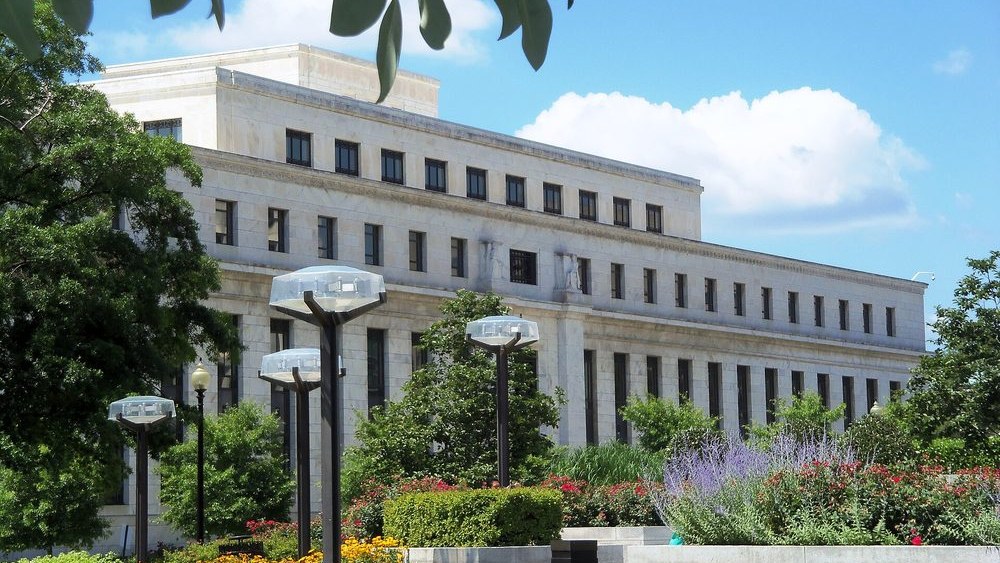
图片来源:图:位于华盛顿的美联储总部大楼(GSM 固定图库)。 / Photo: Federal Reserve Board headquarters in Washington, D.C. (GSM asset library).
GSM Global · 本篇英文版 English edition of this story