《自然·通讯》11月7日论文:模型覆盖全球10,883个生产地点与7种情景,管道、港口与海岸通道决定合成能源载体贸易成本
《自然·通讯》11 月 7 日发表 Langenmayr、Schuler、Slednev 与 Fichtner 的论文《绘制未来能源之旅:合成能源载体全球运输建模》。研究构建了一个空间解析的启发式模型,把氢气生产成本与港口、管道和航运路线,以及合成、裂解与重整过程结合起来,为可再生氢及相关燃料找出成本低廉的全球供应路线与关键进口走廊。
研究规模方面,模型覆盖全球 10,883 个潜在生产地点,在 7 种不同情景下计算从各出口地到德国、日本、中国、印度与美国这五个预期主要进口方的最优运输路线与成本,目标年份为 2030 年;考察的合成能源载体共 7 种,包括氢气、氨、甲醇、合成天然气、费托粗油以及两种液态有机氢载体,运输方式包括船舶、卡车以及既有与新建管道。
主要结论方面,作者写道,基础设施与低廉的氢气生产成本同样重要:与可改造管道相连的出口地区,即便可再生能源潜力只是中等,仍具竞争力,因为既有管道避免了转换环节的成本;欧洲、北非与中亚因此保持竞争力。偏远出口方的竞争力则取决于港口可用性与海岸通道。载体分工方面,气态氢主导短距离管道路线,也用于短途卡车运输(500 公里以内);液态氢可覆盖最长约 2,250 公里的公路运输后再转海运;氨凭借较低的合成与转换成本用于海运贸易;甲醇与合成甲烷在长距离多式联运链条中占优;液态有机氢载体要有低成本热源才具竞争力。论文为同行评审正式发表论文,结论为模型情景结果,不代表已建成的贸易安排。
Nature Communications Paper of November 7: A Model of 10,883 Production Locations and Seven Scenarios Finds Pipelines, Ports and Coastal Access Decide Synthetic Energy Carrier Trade Costs
A paper published in Nature Communications on November 7 by Langenmayr, Schuler, Slednev and Fichtner, titled "Mapping Future Energy Journeys Through Modeling the Global Transport of Synthetic Energy Carriers," develops a spatially resolved heuristic combining hydrogen production costs with ports, pipelines and shipping routes, as well as synthesis, cracking and reformation processes, to identify cost-efficient global supply routes and key import corridors for renewable hydrogen and related fuels.
The model covers 10,883 globally distributed production locations and seven scenarios, calculating the most cost-efficient transport routes and costs from export locations to five prospective importers — Germany, Japan, China, India and the United States — for the target year 2030. It examines seven synthetic energy carriers, including hydrogen, ammonia, methanol, synthetic natural gas, Fischer-Tropsch crude and two liquid organic hydrogen carriers, across shipping, trucking and existing and newly built pipelines.
The authors find that infrastructure is as important as low hydrogen production costs: export regions connected through retrofit-ready pipelines remain economically competitive despite only moderate renewable energy potentials, because existing pipeline infrastructure avoids conversion costs, which keeps Europe, North Africa and Central Asia competitive. For remote exporters, competitiveness depends on port availability and coastal access. On carrier choice, gaseous hydrogen dominates short pipeline routes and short-range trucking under 500 km; liquid hydrogen covers up to about 2,250 km of road transport with subsequent shipping; ammonia is preferred for maritime trade on low synthesis and conversion costs; methanol and synthetic methane lead on long multimodal chains; and liquid organic hydrogen carriers require low-cost heat availability to compete. The paper is peer-reviewed and formally published; its findings are model scenario results, not built trade arrangements.
来源:《自然·通讯》
发布:GSM·美国(发布链接)
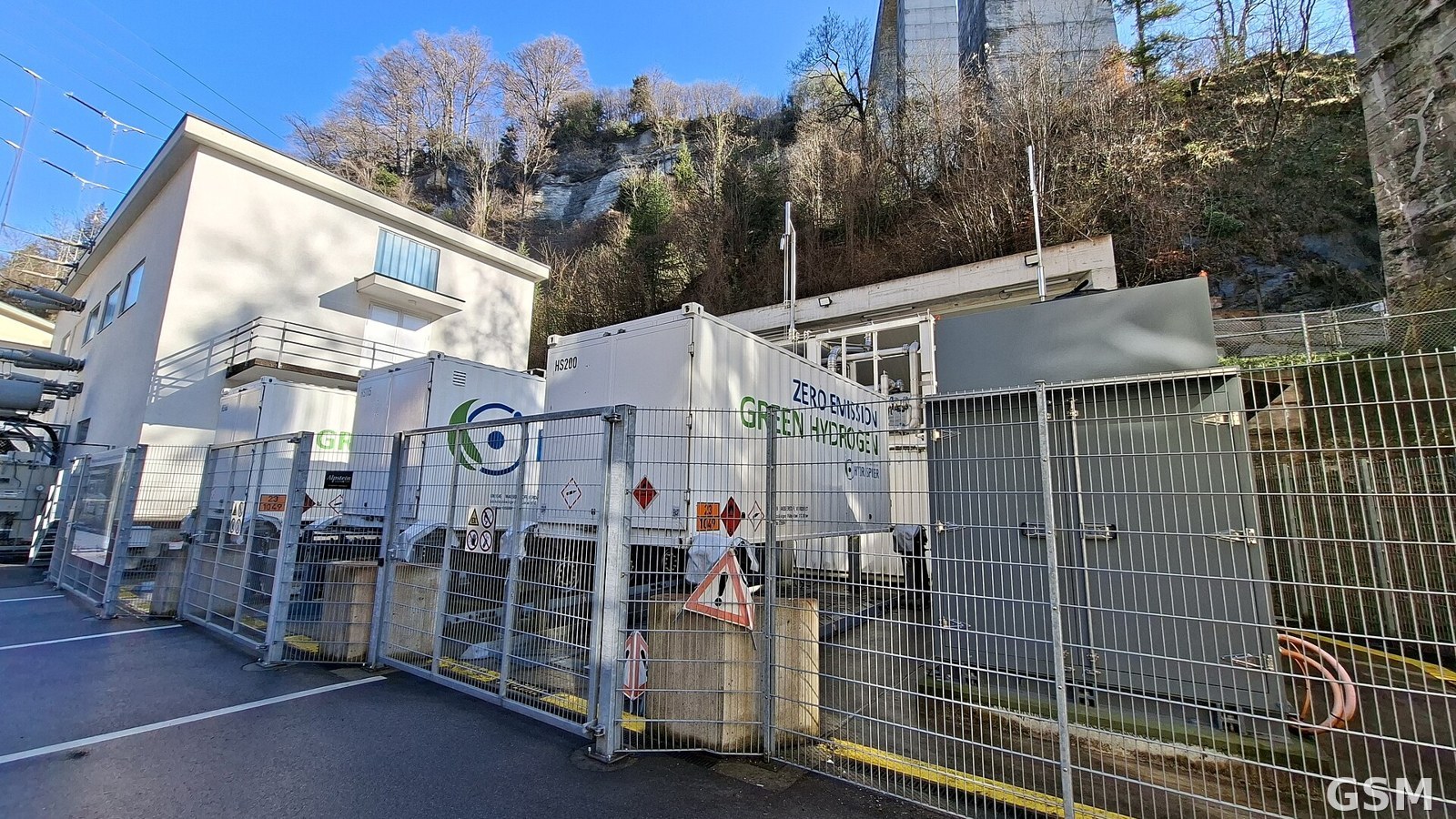
图片来源:图:绿色氢能生产设施。Asurnipal 摄,CC BY-SA 4.0,经 Wikimedia Commons。 / Photo: A green hydrogen production plant. Photo by Asurnipal, CC BY-SA 4.0, via Wikimedia Commons.
GSM Global · 本篇英文版 English edition of this story