美国职业移民绿卡排期:漫长的等待
一、同一张表,两条队
每个月的中旬,美国国务院签证办公室发布一份签证公告。公告里有两张表:表 A 决定绿卡何时能批准,表 B 决定何时可以递交调整身份申请。对排队的申请人来说,这两张表就是全部的消息。
2026 年 11 月的公告里,EB-5 投资移民一栏出现了这样的对照:三类预留签证—乡村地区、高失业区、基础设施项目—对所有国家全部是 Current,即无排期;而非预留类别里,中国出生申请人的最终裁决日停在 2016 年 12 月 1 日。同一类别,同一张表,两条队相差约十年。
这不是 EB-5 独有的现象。同一份公告里,中国出生申请人的 EB-1 最终裁决日为 2023 年 8 月 1 日,EB-2 为 2021 年 10 月 1 日,EB-3 为 2022 年 1 月 22 日。全球其他国家(除所列国家外)的 EB-1 是 Current,EB-2 为 2025 年 4 月 1 日,EB-3 为 2024 年 6 月 15 日。
二、每年十四万张,每国百分之七
排期的根源写在《移民与国籍法》里。职业移民全球年度配额至少 140,000 张,另加上一财年未用完的亲属移民配额。2026 财年,职业移民配额为 186,317 张,其中 46,317 张来自 2025 财年未用完的亲属配额。
任何单一国家一年内可获的亲属加职业移民配额合计不得超过两类总配额的 7%。2026 财年,这个上限是 25,620 张。换算到职业移民一侧,一国每年在 EB 类别的大致起步份额约为 9,800 张。国籍按出生地认定,而非现持国籍。
配额在五个类别间分配:EB-1、EB-2、EB-3 各占全球 EB 配额的 28.6%,EB-4 与 EB-5 各占 7.1%。EB-1 与 EB-2 每年各约 40,040 张(按 140,000 张基数计)。
上限不是绝对封顶。法律规定,每季度某类别出现其他国家用不完的名额时,可不计国别上限分配给排队申请人。排期能走,靠的就是这个溢出机制。
优先日一般为劳工证递交日或 I-140 递交日。申请人的优先日须早于表 A 的最终裁决日,签证号码才可用;表 B 只决定何时可以递交申请,递交不等于批准。2026 年 11 月,职业移民申请人须用表 B 递交 I-485。
三、七年走了六年九个月
EB-2 中国的排期历史,可以用每年 10 月公告的最终裁决日连成一条线:2019 年 10 月,2015 年 1 月 1 日;2021 年 10 月,2018 年 7 月 1 日;2023 年 10 月,2019 年 6 月 8 日;2026 年 10 月,2021 年 10 月 1 日。七年间,表 A 从 2015 年 1 月 1 日走到 2021 年 10 月 1 日,约 6 年 9 个月。
这条线不是匀速前进的。2021 财年与 2022 财年是溢出的大年:疫情导致亲属移民大量未用,EB 配额分别升至 262,288 张与 281,507 张,约为平时的两倍。印度 EB-2 在 2022 财年一年用掉 59,431 张签证,而 2020 财年仅 2,599 张,2023 财年回落至 4,301 张。排期在 2021 至 2022 年大步前进,2023 年后倒退。
新财年开局也不保证前进。2019 年 9 月公告时 EB-2 中国已到 2017 年 1 月 1 日,2019 年 10 月开 2020 财年时反而退回 2015 年 1 月 1 日,约两年倒退—这是财年配额重置时的常见波动。
目前,EB-3 中国跑在 EB-2 中国前面:2026 年 11 月,EB-3 中国表 A 为 2022 年 1 月 22 日,比 EB-2 中国领先约 4 个月;表 B 为 2024 年 4 月 1 日,比 EB-2 中国领先约 15 个月。两条队的领先地位历史上互有翻转。
四、队到底有多长
「队有多长」有三个不同的统计口径,数字不同是因为统计对象不同。
第一个口径是移民局的「已批待号」:已批准、等候签证号码的主申请人。2026 年 6 月数据,总数 856,662 件(仅主申请人,不含配偶子女),其中印度 491,773 件,占 57.4%。分 EB-2 看,共 391,296 件,其中印度 356,360 件,占 91.1%,中国 34,936 件,占 8.9%。同一条队,印度申请人的数量是中国的约十倍。
第二个口径是移民局的 I-485 待审库存:在美已递交调整身份、等排期的申请人。2026 年 1 月报告,EB-1、EB-2、EB-3 待审 I-485 共 164,522 件,其中中国 16,255 件,占 9.9%,印度 66,691 件,占 40.5%。
第三个口径是国务院国家签证中心的等候名单:走海外领事程序的申请人。截至 2023 年 11 月 1 日,职业移民等候总数 260,660 人,较上年增长 55.0%。
智库 NFAP 按 2025 年 12 月数据估算,含家属在内的 EB-1、EB-2、EB-3 积压总人数为 1,264,495 人,其中印度 996,599 人,占 79%。
五、排期落到人身上
对中国留学生来说,排期是一条链:OPT、H-1B、绿卡。2024/25 学年,全美留学生 1,177,766 人,其中中国 265,919 人,比上年下降 4%;中国籍学生 OPT 人数 61,981 人,约占中国在美留学生总数的 23%。
H-1B 年度配额 85,000 个,身份一般最长 6 年。AC21 法案提供超期续签:劳工证或 I-140 递交满 365 天,可一年一续;I-140 已批准、但因国别排期拿不到签证号,可三年一续。
排队家庭的子女面临超龄问题。《儿童身份保护法》规定,子女的 CSPA 年龄按签证可用的当日实际年龄减去申请待审天数计算,未满 21 岁且在签证可用后一年内采取行动,可保留子女身份。2023 年 2 月 14 日,移民局改口按表 B 计算签证「可用」日;2025 年 8 月 8 日政策警报、8 月 15 日生效,改回只认表 A,且 I-140 须已批准。2023 年 2 月 14 日至 2025 年 8 月 14 日间递交的 I-485 仍按旧口径审理。
另外两件事也在同一时期发生。2025 年 9 月 19 日总统公告对部分身在美国境外的新 H-1B 受益人附加 100,000 美元缴费要求;2026 年 6 月 8 日,麻省联邦地区法院撤销了执行该要求的指南,7 月 24 日第一巡回上诉法院驳回政府的中止请求。截至 2026 年 9 月至 10 月,该费用未在收取。2026 年 10 月 8 日,劳工部暂停了涉及 8 家科技公司的新劳工证申请与待审申请,依据为涉嫌招聘欺诈或故意虚假陈述。劳工证是 EB-2 与 EB-3 绿卡的第一步。
六、排期日到了,也不等于能面谈
2026 年 8 月 24 日至 25 日,国务院指示全球使领馆暂停或改期移民签证面谈,原因是领事官员接受公共负担培训。截至 2026 年 11 月初,多数使领馆仍未恢复面谈,国务院未宣布统一重启日期,各馆按完成培训与认证的进度逐个恢复。排期日到了也不等于能面谈—人在海外走领事程序的申请人,面谈暂停会推迟签证签发。
另一件事已经了结。2026 年 1 月 14 日宣布、1 月 21 日生效的 75 国移民签证暂停,于 2026 年 8 月 21 日被纽约南区联邦地区法院裁定违法并撤销;8 月 28 日,国务院向法院确认不再执行。43,000 多起仅因暂停而作的拒签将按时间顺序重审;政府已向第二巡回上诉法院上诉。
七、收束:下一张表
立法层面,取消职业移民国别上限的 EAGLE Act 于 2026 年在第 119 届国会众议院重新提出,现处司法委员会,通过概率低。其前身 S.386 法案于 2019 年提出,随第 116 届国会于 2021 年 1 月届满而失效,从未成为法律。
回到那张表。2026 年 12 月签证公告预计 11 月中旬发布,中国 EB-1、EB-2、EB-3 的表 A 与表 B 是否移动,EB-5 预留类别是否继续无排期,都在那张表上。
The U.S. Employment-Based Green Card Backlog: The Long Wait
1. One table, two lines
Around the middle of each month, the U.S. Department of State's Visa Office publishes a Visa Bulletin. It contains two charts: Chart A decides when a green card can be approved, and Chart B decides when an adjustment-of-status application may be filed. For applicants in line, those two charts are the whole news.
The November 2026 Bulletin carries a striking contrast in the EB-5 investor category: the three reserved visa classes — rural areas, high-unemployment areas, and infrastructure projects — are Current for all countries, meaning no backlog; while in the unreserved class, the final action date for applicants born in China stands at December 1, 2016. Same category, same chart, two lines about ten years apart.
This is not unique to EB-5. In the same Bulletin, the final action dates for applicants born in China are August 1, 2023 for EB-1, October 1, 2021 for EB-2, and January 22, 2022 for EB-3. For the rest of the world (except the listed countries), EB-1 is Current, EB-2 is April 1, 2025, and EB-3 is June 15, 2024.
2. 140,000 a year, 7 percent per country
The roots of the backlog are written in the Immigration and Nationality Act. The worldwide annual employment-based (EB) quota is at least 140,000, plus unused family-based numbers from the prior fiscal year. In fiscal year 2026, the EB quota is 186,317, including 46,317 unused family-based numbers from fiscal year 2025.
No single country may receive more than 7 percent of the combined family-based and employment-based quotas in a year. In fiscal year 2026, that cap is 25,620. Translated to the employment-based side, a country's starting share in the EB categories is roughly 9,800 visas a year. Nationality is determined by place of birth, not current citizenship.
The quota is divided among five categories: EB-1, EB-2, and EB-3 each receive 28.6 percent of the worldwide EB quota, and EB-4 and EB-5 each receive 7.1 percent. EB-1 and EB-2 each receive about 40,040 visas a year (on a 140,000 base).
The cap is not an absolute ceiling. The law provides that when a category has numbers unused by other countries in a quarter, those numbers may be allocated to applicants in line without regard to the per-country limit. The line moves because of this spillover mechanism.
A priority date is generally the date a labor certification was filed or an I-140 petition was filed. An applicant's priority date must be earlier than the Chart A final action date for a visa number to be available; Chart B only determines when an application may be filed, and filing is not approval. In November 2026, employment-based applicants must use Chart B to file Form I-485.
3. Six years and nine months in seven years
The history of the EB-2 backlog for China can be drawn as a line of October Bulletin final action dates: January 1, 2015 in October 2019; July 1, 2018 in October 2021; June 8, 2019 in October 2023; October 1, 2021 in October 2026. Over seven years, Chart A moved from January 1, 2015 to October 1, 2021 — about six years and nine months.
The line did not move at a steady pace. Fiscal years 2021 and 2022 were spillover years: the pandemic left large numbers of family-based visas unused, lifting the EB quota to 262,288 in fiscal year 2021 and 281,507 in fiscal year 2022, roughly double the usual level. India-born EB-2 applicants used 59,431 visas in fiscal year 2022, compared with 2,599 in fiscal year 2020 and 4,301 in fiscal year 2023. The dates advanced in large steps in 2021 and 2022, then retrogressed after 2023.
A new fiscal year does not guarantee forward movement. In the September 2019 Bulletin, EB-2 for China had reached January 1, 2017; when fiscal year 2020 opened in October 2019, it fell back to January 1, 2015 — a retrogression of about two years, a common fluctuation when the fiscal-year quota resets.
At present, EB-3 for China runs ahead of EB-2 for China: in November 2026, EB-3 Chart A for China is January 22, 2022, about four months ahead of EB-2 for China, and Chart B is April 1, 2024, about fifteen months ahead. Which of the two lines leads has flipped back and forth over time.
4. How long is the line
"How long is the line" has three different official and think-tank measures, and the numbers differ because they count different things.
The first measure is USCIS's count of approved petitions awaiting a visa number: principal applicants whose petitions are approved and who are waiting for a number. As of June 2026, the total was 856,662 (principal applicants only, excluding spouses and children), including 491,773 from India, or 57.4 percent. In EB-2, the total was 391,296, of which 356,360 were from India (91.1 percent) and 34,936 from China (8.9 percent). In the same line, the number of India-born applicants is about ten times the number of China-born applicants.
The second measure is USCIS's I-485 pending inventory: applicants already in the United States who have filed for adjustment of status and are waiting for a date. In the January 2026 report, pending EB-1, EB-2, and EB-3 I-485 applications totaled 164,522, including 16,255 from China (9.9 percent) and 66,691 from India (40.5 percent).
The third measure is the State Department's National Visa Center waiting list: applicants going through consular processing abroad. As of November 1, 2023, the employment-based waiting list totaled 260,660 people, up 55.0 percent from a year earlier.
The National Foundation for American Policy, using December 2025 data, estimates the EB-1, EB-2, and EB-3 backlog including family members at 1,264,495 people, including 996,599 from India (79 percent).
5. What the backlog does to people
For Chinese students, the backlog is a chain: OPT, H-1B, green card. In the 2024/25 academic year, international students in the United States totaled 1,177,766, including 265,919 from China, down 4 percent from the prior year; 61,981 Chinese students were on OPT, about 23 percent of the Chinese student total.
The H-1B annual cap is 85,000, and H-1B status generally lasts no more than six years. The American Competitiveness in the 21st Century Act (AC21) provides extensions beyond that: one year at a time once a labor certification or I-140 has been pending for 365 days, and three years at a time once an I-140 is approved but no visa number is available because of the per-country backlog.
Children of applicants in line face the age-out problem. Under the Child Status Protection Act, a child's CSPA age is the actual age on the day a visa becomes available, minus the days the petition was pending; a child under 21 who acts within one year of a visa becoming available can keep child status. On February 14, 2023, USCIS changed its reading so that a visa was considered "available" on the Chart B (Dates for Filing) date; a policy alert on August 8, 2025, effective August 15, 2025, reverted to Chart A only, and requires the I-140 to be approved. I-485 applications filed between February 14, 2023 and August 14, 2025 are still adjudicated under the prior reading.
Two other developments arrived in the same period. A presidential proclamation of September 19, 2025 imposed a $100,000 fee on certain new H-1B beneficiaries outside the United States; on June 8, 2026, the U.S. District Court for the District of Massachusetts vacated the guidance implementing the fee, and on July 24, 2026, the First Circuit denied the government's request for a stay. As of September to October 2026, the fee was not being collected. On October 8, 2026, the Department of Labor suspended new and pending labor certification applications involving eight technology companies, on the basis of suspected recruitment fraud or willful misrepresentation. Labor certification is the first step of an EB-2 or EB-3 green card.
6. A current date does not mean an interview
On August 24–25, 2026, the State Department instructed U.S. embassies and consulates worldwide to pause or reschedule immigrant visa interviews while consular officers underwent public-charge training. As of early November 2026, most posts had not resumed interviews, and the State Department had announced no uniform restart date; posts resume one by one as training and certification are completed. A current date does not mean an interview — for applicants going through consular processing abroad, the interview pause delays visa issuance.
A separate matter has already ended. The pause on immigrant visas for 75 countries, announced January 14, 2026 and effective January 21, 2026, was ruled unlawful and vacated by the U.S. District Court for the Southern District of New York on August 21, 2026; on August 28, the State Department confirmed to the court that it would no longer enforce it. More than 43,000 refusals made solely because of the pause will be re-adjudicated in chronological order; the government has appealed to the Second Circuit.
7. Close: the next bulletin
On the legislative side, the EAGLE Act, which would eliminate the per-country cap on employment-based green cards, was reintroduced in the House of Representatives in the 119th Congress in 2026 and now sits in the Judiciary Committee, with a low probability of passage. Its predecessor, the S.386 Fairness for High-Skilled Immigrants Act, was introduced in 2019 and died when the 116th Congress expired in January 2021, never becoming law.
Back to the chart. The December 2026 Visa Bulletin is expected in mid-November. Whether Chart A and Chart B move for China-born EB-1, EB-2, and EB-3 applicants, and whether the EB-5 reserved categories remain Current, will all be in that bulletin.
来源:美国国务院签证公告与移民局数据
发布:GSM·美国(发布链接)
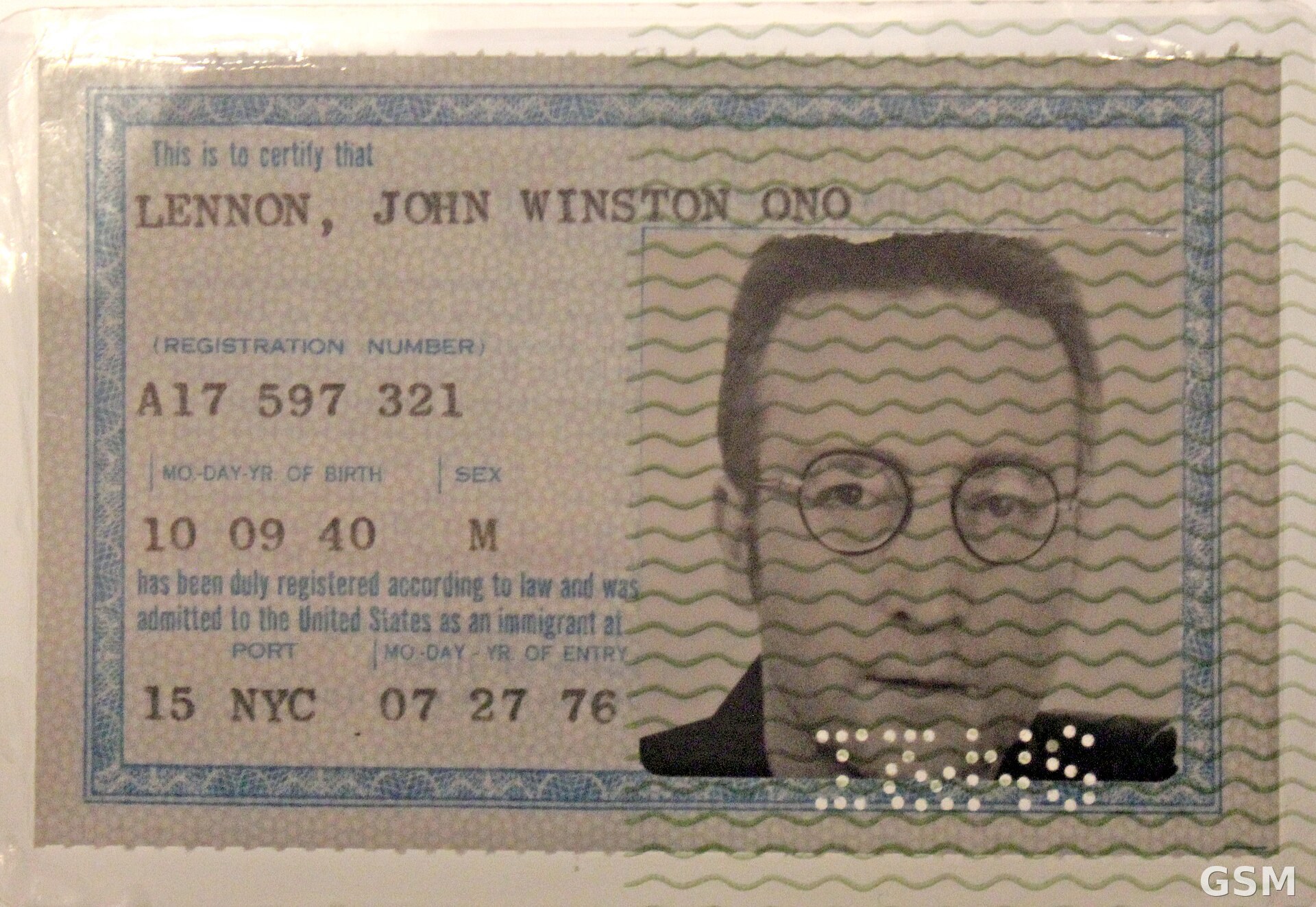
图片来源:图:美国永久居民卡(绿卡)实物。Wikimedia Commons,公共领域。 / Photo: A U.S. permanent resident card (green card). Wikimedia Commons, public domain.
GSM Global · 本篇英文版 English edition of this story