美国大学学费与学生贷款:越来越贵的学位
一、印第安纳州,一所冻结了学费的大学
2013 年,印第安纳州西拉法叶,普渡大学宣布冻结学费,锁定 2012 年的水平:本州学生每年 9,992 美元,州外学生 28,794 美元,结束连续 37 年的上涨。
2025 年 4 月 4 日,普渡校董会批准第 14 次连续冻结,至 2026-27 学年。十三年间,冻结累计为学生家庭节省逾 10 亿美元;学生年借款额下降 32%;60% 的学生毕业时无贷款。
普渡是例外。同一份 College Board 年度报告里,全美大学的标价仍在上涨—但标价之外,另一组数字在往相反的方向走。
二、标价:2025-26 学年一张账单
College Board《2025 年大学定价与学生资助趋势》报告(2025 年 11 月发布)给出 2025-26 学年平均数:公立四年制本州学费与杂费 11,950 美元,较上年涨 2.9%;州外学费 31,880 美元,涨 3.4%;私立非营利四年制 45,000 美元,涨 4.0%;公立两年制(本区)4,150 美元,涨 2.7%。
食宿费是另一笔账:公立四年制学校住宿与伙食费 13,900 美元,私立 15,920 美元。公立四年制学校,住宿伙食费已经超过学费本身。算上书本、交通与杂费,全年总费用:公立四年制本州 30,990 美元,州外 50,920 美元,私立 65,470 美元;四年读下来,私立 261,880 美元,州外公立 203,680 美元。
州与州之间价差近三倍:公立四年制本州学费,佛罗里达 6,360 美元最便宜,佛蒙特 18,090 美元最贵。华人家庭集中的州:加州 9,990 美元(社区大学仅 1,440 美元,全美最便宜),纽约 9,730 美元,德克萨斯州 9,440 美元,新泽西 14,580 美元,马萨诸塞 14,290 美元。社区大学学费,加州 1,440 美元对佛蒙特 8,900 美元。
三、悖论:标价涨,净价跌
标价之外,净学费—扣除助学金后学生实际支付的学费—是另一回事。2025-26 学年,首次全日制学生平均净学费:公立四年制本州约 2,300 美元,私立非营利约 16,910 美元,社区大学约 0 美元(自 2009-10 学年以来,助学金已全额覆盖社区大学学费)。
过去十年的对照是这篇特稿里最值得写的一组数字。2015-16 至 2025-26 学年,公立四年制本州标价名义上涨 27%,扣除通胀后实际下跌 7%;实际净学费从 4,400 美元降至 2,300 美元,下降 48%。私立四年制标价名义涨 39%,实际涨 2%,实际净学费从 2006-07 年峰值 19,810 美元降至 16,910 美元。净总费用(含住宿伙食)十年间公立下降 12%、私立下降 8%。
三十年的尺度则不同:通胀调整后,公立四年制本州学费 1995-96 年的 5,940 美元涨至 2025-26 年的 11,950 美元,实际涨幅 101%;私立从 25,820 美元涨至 45,000 美元,实际涨 74%。公立学费实际涨幅最快的十年是 2000 年代,私立最快的十年是 1980 年代;1980 年至今,公布学费按实际值计约涨至三倍。
助学金的两端也在动。私立非营利院校平均学费折扣率 2024-25 学年达 56.3%,创纪录,89% 的私立院校学生获得院校助学金。另一端,联邦 Pell 助学金最高额 2025-26 学年为 7,395 美元,自 2024-25 学年起未变;2024-25 年,最高 Pell 助学金仅覆盖公立四年制平均总费用的 27%,1975-76 年覆盖逾四分之三。
四、债务:1.86 万亿美元,4,230 万人
美联储 G.19 消费者信贷数据显示,2026 年第二季度末,全美学生贷款余额 1.8618 万亿美元,较一年前增加 556 亿美元,首次突破 1.85 万亿美元。十年前的 2015 年是 1.02 万亿美元,十年增长约 80%。
联邦贷款占大头:约 1.72 万亿美元,占总额约 91%;私人贷款约 1,388 亿美元。约 4,230 万人持有联邦学生贷款,联邦借款人平均余额约 40,800 美元,中位数约 20,000 至 25,000 美元。
拖欠在上升。纽约联储《家庭债务与信贷季度报告》显示,2026 年第二季度,90 天以上拖欠率 10.6%,高于上一季度的 10.3%,按余额计。纽约联储同时保留:近期拖欠数字因还款暂停结束后、此前违约债务重新上报而失真。
债务按学历分层。学士学位毕业生平均联邦贷款余额约 28,244 至 29,550 美元;MBA 66,740 美元;文学硕士 80,540 美元;法学博士 140,870 美元;专业博士 178,800 美元;医学博士平均 199,220 美元(美国医学院协会 2025 届中位数 223,130 美元)。标准还款计划下,学士平均月供 336 美元,硕士平均 842 美元。
研究生借款人仅占借款人总数的约 25%,但持有约 50% 的全国学生贷款—这是二级汇总数据,原始出处未核到。
联邦贷款利率每年 7 月 1 日按 5 月 10 年期国债拍卖收益率重定,借后固定不变。2026-27 学年:本科直接贷款 6.52%,研究生直接非补贴贷款 8.07%,PLUS 贷款 9.07%。
五、政策:SAVE 的兴衰与一纸新法
2022 年 8 月,拜登政府宣布一次性减免:Pell 受助人最高 20,000 美元、其他借款人最高 10,000 美元,估算成本约 4,300 亿美元。2023 年 6 月 30 日,最高法院以 6 比 3 裁定(Biden v. Nebraska,600 U.S. 477)否决该计划,认定《英雄法案》未授权此举。
拜登政府任内通过既有渠道累计批准约 1,880 亿美元减免,约 500 万借款人(各源口径为 1,836 亿至 1,888 亿美元、500 万或 530 万借款人,口径略异)。分项包括公共服务贷款减免(PSLF)785 亿美元、借款人辩护 345 亿美元、收入驱动还款 565 亿美元。
SAVE 计划—Saving on a Valuable Education,收入驱动还款计划—2023 年 8 月推出:本科借款人月供为可支配收入的 5%,约 100 万低收入借款人月供为 0 美元,未付利息不计入本金。2024 年初约 800 万借款人加入。2024 年 6 月,密苏里东区联邦地区法院发布初步禁令,第八巡回上诉法院确认并扩大禁令;2024 年 8 月起全部 SAVE 借款人进入一般宽限期。2025 年 8 月 1 日,SAVE 账户利息恢复计收。
2025 年 7 月 4 日,《大而美法案》(One Big Beautiful Bill Act,Public Law 119-21)签署成法,学生贷款条款自 2026 年 7 月 1 日起生效:研究生 PLUS 贷款取消,新借款人不再享有,已在读研究生有最长三年过渡期;一般研究生每年最多借 20,500 美元、终身 100,000 美元;专业学位(法学、医学等 11 类法定专业学位)每年 50,000 美元、终身 200,000 美元;家长 PLUS 贷款每名受抚养学生每年 20,000 美元、终身 65,000 美元;联邦贷款终身总上限 257,500 美元。2026 年 7 月 1 日后新发放的贷款仅可选两项还款计划:还款援助计划(RAP,按调整后总收入的 1% 至 10% 月供,30 年后减免)与分级标准还款计划;SAVE、PAYE、ICR 于 2028 年 7 月 1 日前逐步取消。
诉讼仍在继续。2026 年 10 月 30 日,美国教师联合会提起集体诉讼 Weingarten v. McMahon(哥伦比亚特区联邦地区法院),指控教育部非法阻挠公共服务贷款减免,包括 PSLF 回购停滞与无故下调合格还款期数。约 88,000 名借款人截至春季仍在等待回购决定,美国教师联合会称现已超过 90,000 人。
六、华人视角:州外学费与十所学校
国际学生在所有公立大学均按州外学费计:2025-26 学年平均 31,880 美元,全年总预算平均 50,920 美元;私立非营利全年总预算 65,470 美元。四年州外公立学位按平均总预算计超过 200,000 美元,未扣助学金。
2024/25 学年,全美留学生 1,177,766 人,增长 5%,占全美高等教育在读总数的 6%;印度 363,019 人居首,中国 265,919 人,下降 4%。中国籍学生 OPT 人数 61,981 人,约占中国在美留学生总数的 23%。
助学金对国际学生是另一套规则。联邦 Pell 助学金与联邦学生贷款面向美国公民与符合条件的非公民,持 F-1 签证的国际学生一般不符合联邦助学金资格,费用主要依靠家庭资金、院校助学金与 merit 奖学金。
全美仅约 10 所大学对国际学生同时实行 need-blind 录取且满足 100% 已证实经济需求:哈佛、麻省理工、耶鲁、普林斯顿、阿默斯特、达特茅斯、鲍登、布朗、圣母大学、华盛顿与李大学(名单按 2026 年 10 月各校官网核对;麻省理工自述为全美仅 9 所之一,差异来自统计时点与名单口径)。大多数美国大学对国际学生实行 need-aware 录取,申请助学金可能降低录取机会。
本次检索未找到以华人家庭为专项的大学费用负担调查或分族裔费用数据,本文不编造这个数字。
七、2+2 路径:省下的学费与漏掉的学位
社区大学年均学费 4,150 美元,对公立四年制本州 11,950 美元、州外 31,880 美元、私立 45,000 美元。四年公立大学本州学费合计约 47,800 美元;两年社区大学加两年公立大学约 32,200 美元,仅学费节省约 15,600 美元;计入住家省下的食宿费,总节省可达 20,000 至 40,000 美元。
转学保障写在各州的协议里:加州副学士转学学位保证录取参与项目的加州州立大学校区;佛罗里达州 2+2 协议保证完成副学士学位、GPA 2.0 以上者录取佛州州立大学系统;30 多个州现提供免学费社区大学项目。
但漏斗是真实的。National Student Clearinghouse Research Center 2024 年数据显示,全美仅约 33% 的社区大学学生在六年内转入四年制大学;转入者中仅 49.7% 在六年内完成学士学位;合计仅约 16% 的社区大学入学学生在六年内获得学士学位。转学生平均损失 13 个学分。
八、收束:回到西拉法叶
回到普渡。冻结有保留:冻结仅覆盖基础学费,工程、计算机、商科等热门专业另收差额费(本州生工程类每年另加 2,050 美元);2026 年秋季起入学的非居民与国际学生,工程与商科差额费每学期上调 1,000 美元。
一所大学可以把学费冻在 2012 年的水平。一所大学的账单也可以是 65,470 美元一年。两者之间,是标价与净价的差,是助学金的折扣,是 1.86 万亿美元的贷款,是 2028 年 7 月 1 日之前逐步取消的 SAVE 计划,是 2026 年 7 月 1 日起生效的研究生贷款上限。
College Tuition and Student Debt: The Ever-Pricier Degree
1. In Indiana, a university that froze its tuition
In 2013, in West Lafayette, Indiana, Purdue University announced it was freezing tuition at 2012 levels: $9,992 a year for in-state students, $28,794 for out-of-state students, ending 37 consecutive years of increases.
On April 4, 2025, Purdue's board of trustees approved a 14th consecutive freeze, through the 2026-27 academic year. Over thirteen years, the freeze has saved student families more than $1 billion; annual student borrowing has fallen 32%; 60% of students graduate debt-free.
Purdue is the exception. In the same College Board annual report, sticker prices across American higher education keep rising — but beyond the sticker price, another set of numbers is moving in the opposite direction.
2. The sticker: one bill for 2025-26
The College Board's *Trends in College Pricing and Student Aid 2025* (published November 2025) gives 2025-26 averages: public four-year in-state tuition and fees $11,950, up 2.9% from the prior year; out-of-state tuition $31,880, up 3.4%; private nonprofit four-year $45,000, up 4.0%; public two-year (in-district) $4,150, up 2.7%.
Room and board is a separate bill: $13,900 a year at public four-year schools, $15,920 at private schools. At public four-year schools, room and board now exceeds tuition itself. Adding books, transportation, and other expenses, the full annual cost of attendance is $30,990 in-state at a public four-year school, $50,920 out-of-state, and $65,470 at a private school; over four years, that is $261,880 at a private school and $203,680 at an out-of-state public school.
The spread between states is nearly threefold: public four-year in-state tuition runs from $6,360 in Florida, the cheapest, to $18,090 in Vermont, the most expensive. In states where Chinese families concentrate: California $9,990 (community college just $1,440, the cheapest in the nation), New York $9,730, Texas $9,440, New Jersey $14,580, Massachusetts $14,290. Community college tuition ranges from $1,440 in California to $8,900 in Vermont.
3. The paradox: sticker up, net price down
Beyond the sticker price is the net price — what students actually pay after grants. In 2025-26, average net tuition for first-time, full-time students is about $2,300 at public four-year schools in-state, about $16,910 at private nonprofits, and about $0 at community colleges (grants have fully covered community college tuition since 2009-10).
The most telling comparison in this feature covers the past decade. From 2015-16 to 2025-26, public four-year in-state sticker prices rose 27% in nominal terms but fell 7% after inflation; real net tuition fell from $4,400 to $2,300, a 48% decline. Private four-year sticker prices rose 39% nominally and 2% in real terms, while real net tuition fell from its 2006-07 peak of $19,810 to $16,910. Net total cost (including room and board) fell 12% at public schools and 8% at private schools over the decade.
The thirty-year view is different: adjusted for inflation, public four-year in-state tuition rose from $5,940 in 1995-96 to $11,950 in 2025-26, a real increase of 101%; private tuition rose from $25,820 to $45,000, up 74% in real terms. Public tuition grew fastest in real terms in the 2000s, private tuition in the 1980s; since 1980, published tuition has roughly tripled in real terms.
Grants are moving at both ends. The average tuition discount rate at private nonprofit institutions reached a record 56.3% in 2024-25, with 89% of private-school students receiving institutional aid. At the other end, the maximum federal Pell Grant is $7,395 in 2025-26, unchanged since 2024-25; in 2024-25, the maximum Pell Grant covered only 27% of the average total cost at a public four-year school, compared with more than three-quarters in 1975-76.
4. The debt: $1.86 trillion, 42.3 million people
Federal Reserve G.19 consumer credit data show total U.S. student loan balances at $1,861.8 billion — $1.86 trillion — at the end of the second quarter of 2026, up $55.6 billion from a year earlier and above $1.85 trillion for the first time. In 2015 the total was $1.02 trillion, an increase of about 80% in ten years.
Federal loans dominate: about $1.72 trillion, roughly 91% of the total; private loans about $138.8 billion. About 42.3 million people hold federal student loans, with an average federal balance of about $40,800 and a median of about $20,000 to $25,000.
Delinquency is rising. The New York Fed's *Quarterly Report on Household Debt and Credit* shows the 90-plus-day delinquency rate at 10.6% in the second quarter of 2026, up from 10.3% the prior quarter, measured by balance. The New York Fed cautions that recent delinquency figures are distorted by the resumption of reporting on previously defaulted debts after the repayment pause ended.
Debt is layered by degree. Average federal loan balances for bachelor's degree graduates are about $28,244 to $29,550; MBA $66,740; Master of Arts $80,540; Juris Doctor $140,870; professional doctorate $178,800; Doctor of Medicine an average of $199,220 (median $223,130 for the class of 2025, per the Association of American Medical Colleges). Under the standard repayment plan, average monthly payments are $336 for bachelor's holders and $842 for master's holders.
Graduate borrowers are only about 25% of all borrowers but hold about 50% of the nation's student debt — a secondary aggregation whose original source could not be verified.
Federal loan interest rates reset each July 1 based on the May auction yield of the 10-year Treasury note and are fixed once borrowed. For 2026-27: undergraduate Direct Loans 6.52%, graduate Direct Unsubsidized Loans 8.07%, PLUS Loans 9.07%.
5. The policy: the rise and fall of SAVE, and a new law
In August 2022, the Biden administration announced one-time cancellation of up to $20,000 for Pell recipients and $10,000 for other borrowers, at an estimated cost of about $430 billion. On June 30, 2023, the Supreme Court struck the plan down 6-3 (*Biden v. Nebraska*, 600 U.S. 477), holding that the HEROES Act did not authorize it.
Through existing channels, the Biden administration approved about $188 billion in relief for about 5 million borrowers (sources range from $183.6 billion to $188.8 billion, and from 5 million to 5.3 million borrowers). The breakdown includes $78.5 billion through Public Service Loan Forgiveness (PSLF), $34.5 billion through borrower defense, and $56.5 billion through income-driven repayment.
The SAVE plan — Saving on a Valuable Education, an income-driven repayment plan — launched in August 2023: monthly payments of 5% of discretionary income for undergraduate borrowers, $0 for about 1 million low-income borrowers, and unpaid interest not added to principal. About 8 million borrowers had enrolled by early 2024. In June 2024, the U.S. District Court for the Eastern District of Missouri issued a preliminary injunction, which the Eighth Circuit affirmed and broadened; from August 2024, all SAVE borrowers entered a general forbearance. Interest on SAVE accounts resumed on August 1, 2025.
On July 4, 2025, the One Big Beautiful Bill Act (Public Law 119-21) was signed into law, with student loan provisions effective July 1, 2026: Graduate PLUS Loans end for new borrowers, with up to a three-year transition for students already enrolled; general graduate borrowing is capped at $20,500 a year and $100,000 over a lifetime; professional degrees (11 statutory categories including law and medicine) are capped at $50,000 a year and $200,000 over a lifetime; Parent PLUS Loans are capped at $20,000 a year and $65,000 over a lifetime per dependent student; and the lifetime federal loan cap is $257,500. Loans first disbursed on or after July 1, 2026, offer only two repayment options: the Repayment Assistance Plan (RAP, monthly payments of 1% to 10% of adjusted gross income, forgiveness after 30 years) and the graduated standard repayment plan; SAVE, PAYE, and ICR are phased out before July 1, 2028.
Litigation continues. On October 30, 2026, the American Federation of Teachers filed a class action, *Weingarten v. McMahon* (U.S. District Court for the District of Columbia), alleging the Department of Education unlawfully obstructed Public Service Loan Forgiveness, including stalled PSLF buybacks and unexplained reductions in qualifying payment counts. About 88,000 borrowers were still awaiting buyback decisions as of spring; the AFT says the number now exceeds 90,000.
6. The Chinese angle: out-of-state tuition and ten schools
International students pay out-of-state tuition at every public university: an average of $31,880 in 2025-26, with an average total annual budget of $50,920; the private nonprofit total annual budget is $65,470. A four-year out-of-state public degree costs more than $200,000 at the average total budget, before aid.
In 2024/25, international students in the United States totaled 1,177,766, up 5%, or 6% of total U.S. higher education enrollment; India led with 363,019, and China followed with 265,919, down 4%. Chinese students on OPT numbered 61,981, about 23% of Chinese students in the United States.
Financial aid follows different rules for international students. Federal Pell Grants and federal student loans are for U.S. citizens and eligible noncitizens; F-1 visa holders generally do not qualify for federal aid, and costs are met mainly through family funds, institutional aid, and merit scholarships.
Only about 10 U.S. universities are both need-blind in admission for international students and meet 100% of demonstrated financial need: Harvard, MIT, Yale, Princeton, Amherst, Dartmouth, Bowdoin, Brown, Notre Dame, and Washington and Lee (list checked against each university's website in October 2026; MIT describes itself as one of only 9 such schools, a difference of counting date and list criteria). Most U.S. universities are need-aware for international students, and applying for aid can lower admission chances.
No survey or ethnic breakdown of university costs borne specifically by Chinese families was found in this research; this article does not invent one.
7. The 2+2 path: money saved, degrees missed
Community college averages $4,150 a year, against $11,950 in-state at a public four-year school, $31,880 out-of-state, and $45,000 at a private school. Four years at a public university in-state costs about $47,800 in tuition; two years at a community college plus two at a public university costs about $32,200, saving about $15,600 in tuition alone; counting room and board saved by living at home, total savings can reach $20,000 to $40,000.
Transfer guarantees are written into state agreements: California's Associate Degree for Transfer guarantees admission to a participating California State University campus; Florida's 2+2 agreement guarantees admission to the State University System of Florida for students completing an Associate of Arts degree with a GPA of 2.0 or higher; more than 30 states now offer tuition-free community college programs.
But the funnel is real. National Student Clearinghouse Research Center data from 2024 show only about 33% of community college students transfer to a four-year institution within six years; of those who transfer, only 49.7% complete a bachelor's degree within six years; in total, only about 16% of entering community college students earn a bachelor's degree within six years. Transfer students lose an average of 13 credits.
8. Close: back to West Lafayette
Back to Purdue. The freeze carries caveats: it covers base tuition only, and popular programs such as engineering, computer science, and business charge differential fees (in-state engineering students pay an additional $2,050 a year); from fall 2026, differential fees for nonresident and international students in engineering and business rise by $1,000 per semester.
One university can hold tuition at its 2012 level. One university's bill can be $65,470 a year. Between the two lies the gap between sticker and net price, the discount of institutional aid, $1.86 trillion in loans, the SAVE plan phasing out before July 1, 2028, and the graduate borrowing caps that take effect July 1, 2026.
来源:美国大学理事会与美联储数据
发布:GSM·美国(发布链接)
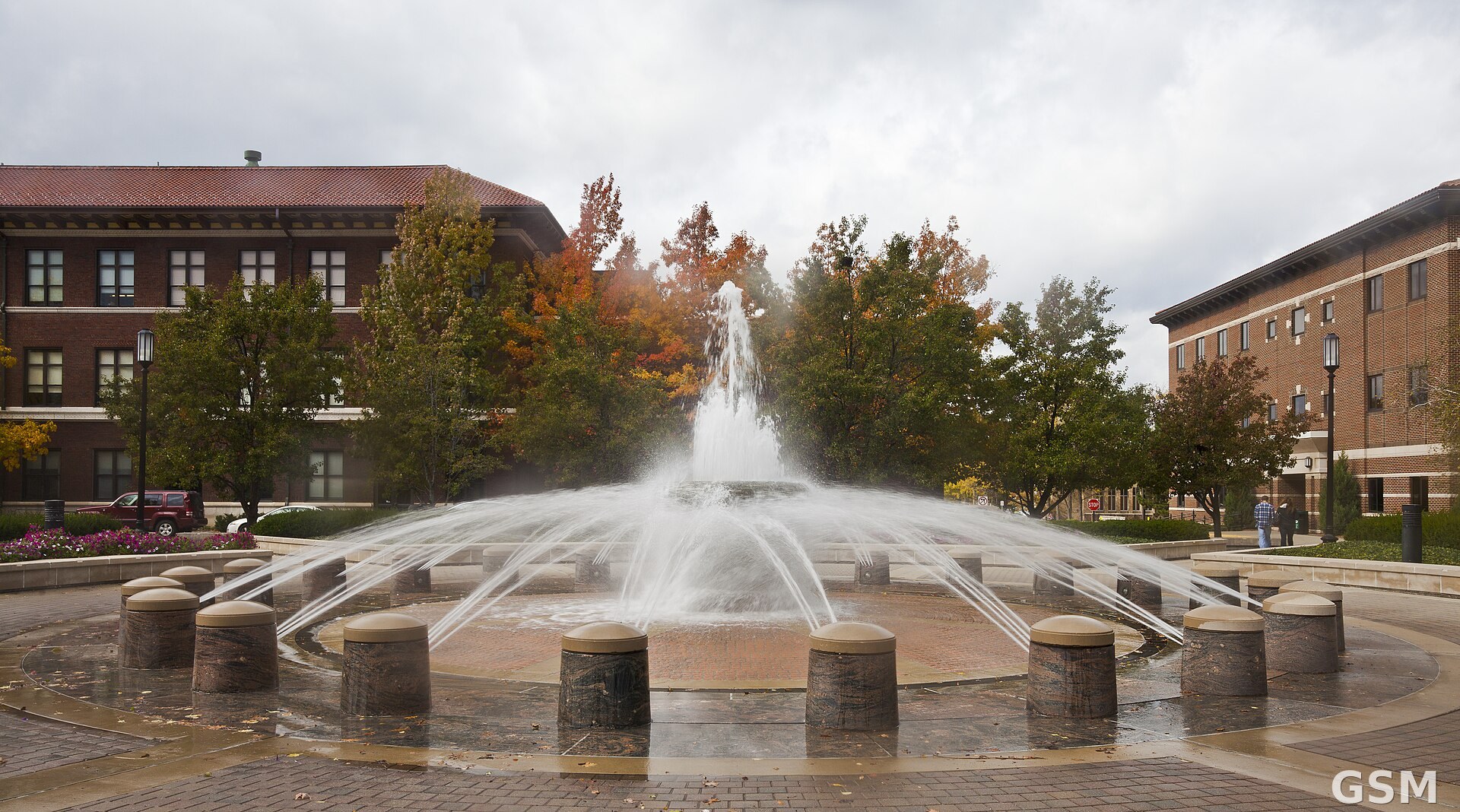
图片来源:图:印第安纳州西拉法叶的普渡大学校园。Wikimedia Commons,CC BY-SA 3.0。 / Photo: The Purdue University campus in West Lafayette, Indiana. Wikimedia Commons, CC BY-SA 3.0.
GSM Global · 本篇英文版 English edition of this story