F-1留学生在美国打工规则:校内工时、CPT实习与OPT的界线在哪里
不少留学生希望在读书期间兼职或实习补贴生活,但F-1签证对工作的限制很严,未经授权打工可能直接导致学生身份失效。按国土安全部「在美留学」(Study in the States)平台的官方说明,F-1学生合法的赚钱途径主要有三条:校内打工、课程实践培训(CPT)和选择性实践培训(OPT),三者的规则完全不同。
校内打工门槛最低:不需要向移民局申请,只要学校指定校方官员(DSO)确认即可,新生最早可在开学前30天开始工作;在校期间每周不得超过20小时,假期且下学期继续注册时可以全职。图书馆、食堂、书店以及在校园内为学生提供服务的商户,是最常见的校内岗位。
CPT是与所学专业直接相关、且构成课程组成部分的校外实习或工作,必须在开始前由DSO在SEVIS系统中授权并标注在I-20上,对应的是某一个具体雇主和时段;一般要求先全日制就读满一个学年,个别要求立即实习的研究生项目除外。要特别小心的是:在同一教育层级累计满12个月的全职CPT,会使学生失去毕业后申请OPT的资格,兼职CPT则不受此限。
OPT允许学生在与专业直接相关的岗位工作,每个更高教育层级可获得12个月:DSO先在SEVIS中推荐,再由USCIS审批并发放工卡(EAD),没有工卡不能开始工作;STEM专业毕业生在符合条件时可再延长24个月。遇到严重经济困难的学生,另有校外工作的申请通道,同样需要USCIS批准。留学顾问的共同提醒是:任何拿不准的工作,先问学校的国际学生办公室,不要先上工再补手续。(来源:美国国土安全部)
Work Rules for F-1 Students: On-Campus Hours, CPT Internships and Where OPT Fits
Many international students hope to work part-time or intern while studying, but F-1 rules are strict, and unauthorized employment can cost a student their status. According to the Department of Homeland Security's Study in the States guidance, F-1 students have three main lawful routes to earn money: on-campus employment, Curricular Practical Training (CPT) and Optional Practical Training (OPT), each with very different rules.
On-campus employment has the lowest barrier: no application to USCIS is needed, only confirmation by the school's designated school official (DSO), and new students may start as early as 30 days before classes begin. During the school term the limit is 20 hours per week; full-time work is allowed during breaks if the student will register for the following term. Libraries, dining halls, bookstores and businesses providing services to students on campus are the most common employers.
CPT covers off-campus internships or jobs that are an integral part of the curriculum and directly related to the student's major; it must be authorized by the DSO in SEVIS and printed on the I-20 before work begins, for one specific employer and period, and generally requires one full academic year of enrollment first, with an exception for graduate programs that require immediate practical training. One caution matters most: accumulating 12 months of full-time CPT at the same education level makes a student ineligible for post-completion OPT, while part-time CPT does not.
OPT allows work directly related to the major for 12 months per higher education level: the DSO recommends it in SEVIS, USCIS adjudicates it and issues an Employment Authorization Document (EAD), and work cannot begin without the EAD in hand. Graduates in qualifying STEM fields may extend OPT by 24 months. Students facing severe economic hardship have a separate off-campus route, which also requires USCIS approval. Advisors repeat one rule: when in doubt about a job, ask the school's international student office first, never start work and hope to fix the paperwork later. (Source: U.S. Department of Homeland Security)
来源:美国国土安全部
发布:GSM·美国(发布链接)
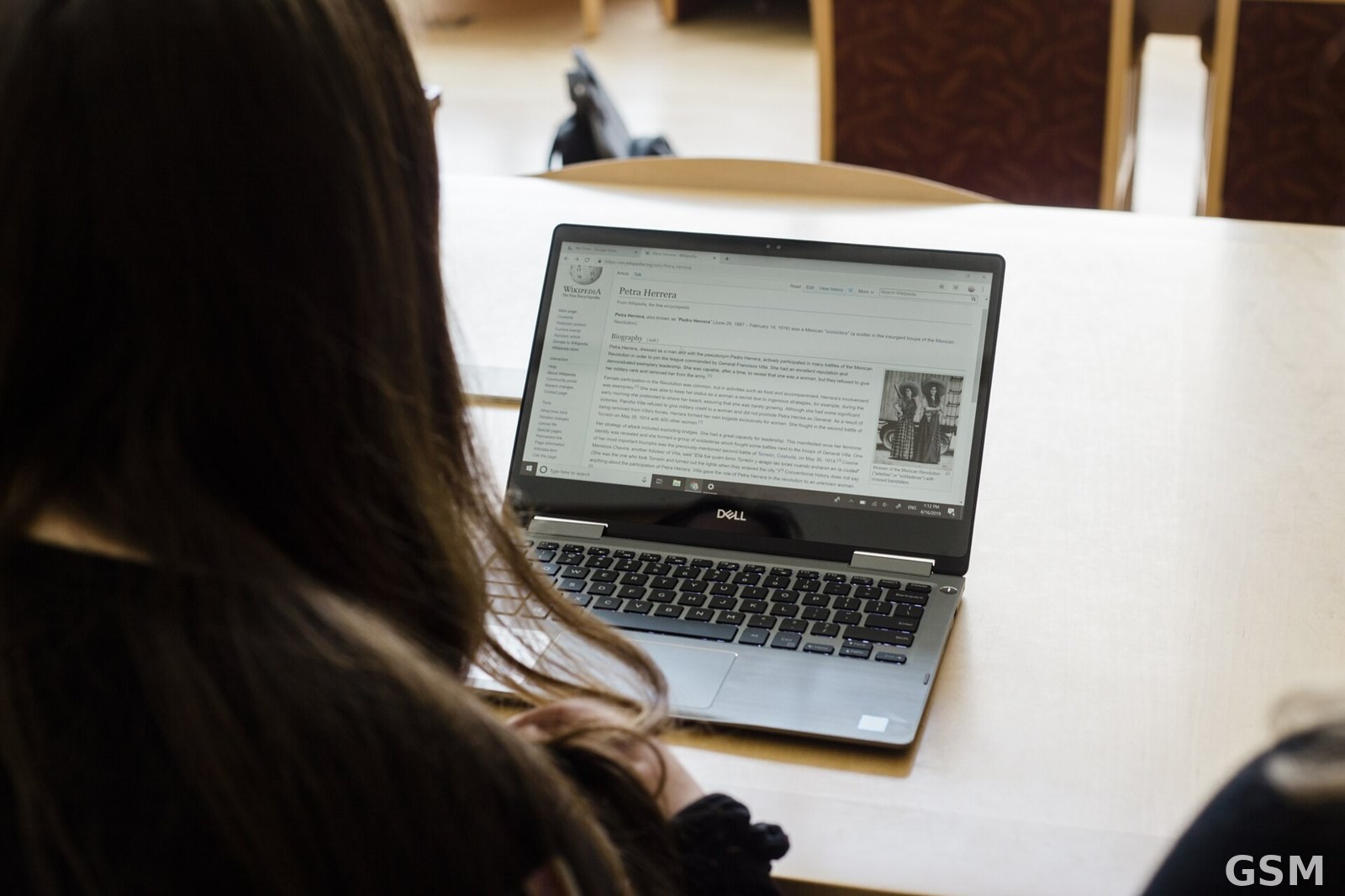
图片来源:图片来源:大学生在图书馆学习工作(Kallie Hagel 摄,Wikimedia Commons,CC BY-SA 4.0) / Image: A university student studying in a library, by Kallie Hagel, Wikimedia Commons (CC BY-SA 4.0)
GSM Global · 本篇英文版 English edition of this story