华盛顿大学研究:永久夏令时或致美国学童多出至少20亿次天黑上学
美国华盛顿州西雅图消息,华盛顿大学研究人员 2026 年 11 月 4 日发布的一项研究警告:若美国实行永久夏令时,美国学童将多出至少 20 亿次天黑上学。该研究 10 月 29 日发表于《当代生物学》(Current Biology),研究人员发现,学龄行人在天黑的早晨遭遇致命车祸的可能性约为日出后的两倍。
研究团队考察了 19 个已批准永久夏令时措施的州中的 14 个州,结合各校入学人数、每所学校的上课时间与地理坐标,测算在永久夏令时制度下学生需在日出前上学的频次,并与现行一年两次拨表的做法对比。结果显示,仅华盛顿州一州,永久夏令时就将多出近 3,500 万次天黑上学;其余 13 州中增幅最大的是佐治亚州,约 7,100 万次。研究者将 14 州结果外推至全国,估算永久夏令时将比现行制度多出至少 20 亿次日出前上学;研究者同时表示,由于推算假设学生约在 8 时离家、而不少学生实际离家更早,这一数字可能大幅低估实际影响。
永久夏令时将使冬季日出时间推迟一小时,11 月至次年 3 月的早晨更黑。美国众议院今年夏天已通过取消每年秋季拨回标准时间的立法,19 个州(含华盛顿州)已批准支持永久夏令时的措施,若联邦法案成为法律将在这些州生效;但该立法目前仍卡在参议院,学校上课时间是主要争议点之一。研究资深作者、华盛顿大学生物学教授奥拉西奥·德拉伊格莱西亚称,《阳光保护法案》之所以叫这个名字,是因为傍晚多了一小时光线,“但你会从早晨拿走这一小时”,他戏称该法案可叫“阳光破坏法案”。
研究还指出,受影响最大的社区是位于时区西缘的学校——因当地日出本就较晚,例如华盛顿州福克斯(Forks)——以及上课时间较早的学区。密西西比州与亚拉巴马州的学校平均在 8 时前开课,现行制度下每州约有 200 万次天黑上学,永久夏令时下将升至每州 2,000 万次以上。研究者还指出,失去早晨阳光可能干扰人体自然昼夜节律、影响健康,对成长中的儿童尤其值得关注;青少年生物钟通常较晚,推迟高中上课时间本有利于睡眠,而永久夏令时减少早晨阳光可能削弱这一收益。德拉伊格莱西亚认为,以推迟上课时间来补偿天黑早晨的做法会产生连锁反应,最终无异于让所有人重新对齐太阳时间——“按定义,这就是标准时间”。
(来源:华盛顿大学)
University of Washington Study: Permanent Daylight Saving Time Could Add at Least 2 Billion Dark School Commutes for U.S. Children
SEATTLE, Washington — A University of Washington study released on November 4, 2026, warns that permanent daylight saving time could force American children to make at least 2 billion additional school commutes in darkness. The findings, published on October 29 in the journal Current Biology, showed that fatal crashes involving school-aged pedestrians were roughly twice as likely during dark mornings as after sunrise.
The research team examined 14 of the 19 states that have already approved permanent daylight saving time measures, combining school enrollment figures, individual school start times and geographic coordinates to determine how frequently students would need to travel to school before sunrise, and compared the total with the current practice of changing clocks twice a year. In Washington state alone, permanent daylight saving time would produce nearly 35 million additional school commutes in darkness; among the other 13 states, Georgia showed the largest increase at approximately 71 million additional dark trips. Extending the findings nationwide, the researchers calculated at least 2 billion more trips to school before sunrise than under the current system, while noting that the figure may substantially underestimate the actual impact because the projection assumed students generally leave home around 8 a.m., while many leave earlier.
Permanent daylight saving time would push sunrise an hour later during the winter months, leaving mornings darker from November through March. The U.S. House of Representatives approved legislation this past summer eliminating the annual return to standard time in the fall; 19 states, including Washington, have already approved measures supporting the change, which would take effect in those states if the federal bill becomes law. The legislation remains stalled in the Senate, with school start times a major concern. Senior author Horacio de la Iglesia, a professor of biology at the University of Washington, said the bill "is called the 'Sunshine Protection Act' because you get an extra hour of light at the end of the day. But you will take that hour from the morning. You could call it the Sunshine Destruction Act."
The communities most affected would be schools near the western boundaries of time zones, including Forks, Washington, where sunrise already occurs relatively late, and districts that begin classes early in the morning. In Mississippi and Alabama, schools begin on average before 8 a.m.; under the current system each state has approximately 2 million school trips in darkness, rising to more than 20 million trips per state under permanent daylight saving time. Losing access to morning sunlight could interfere with the body's natural daily rhythms and affect health, especially for growing children, the researchers said; adolescents' biological clocks typically shift later, so delaying high school start times is beneficial, and permanent daylight saving time could undermine some of those gains by making morning sunlight less accessible. De la Iglesia argued that starting school later to compensate would ripple through daily life and essentially realign everybody to solar time, which, "by definition, is Standard Time."
(Source: University of Washington)
来源:华盛顿大学
发布:GSM·美国(发布链接)
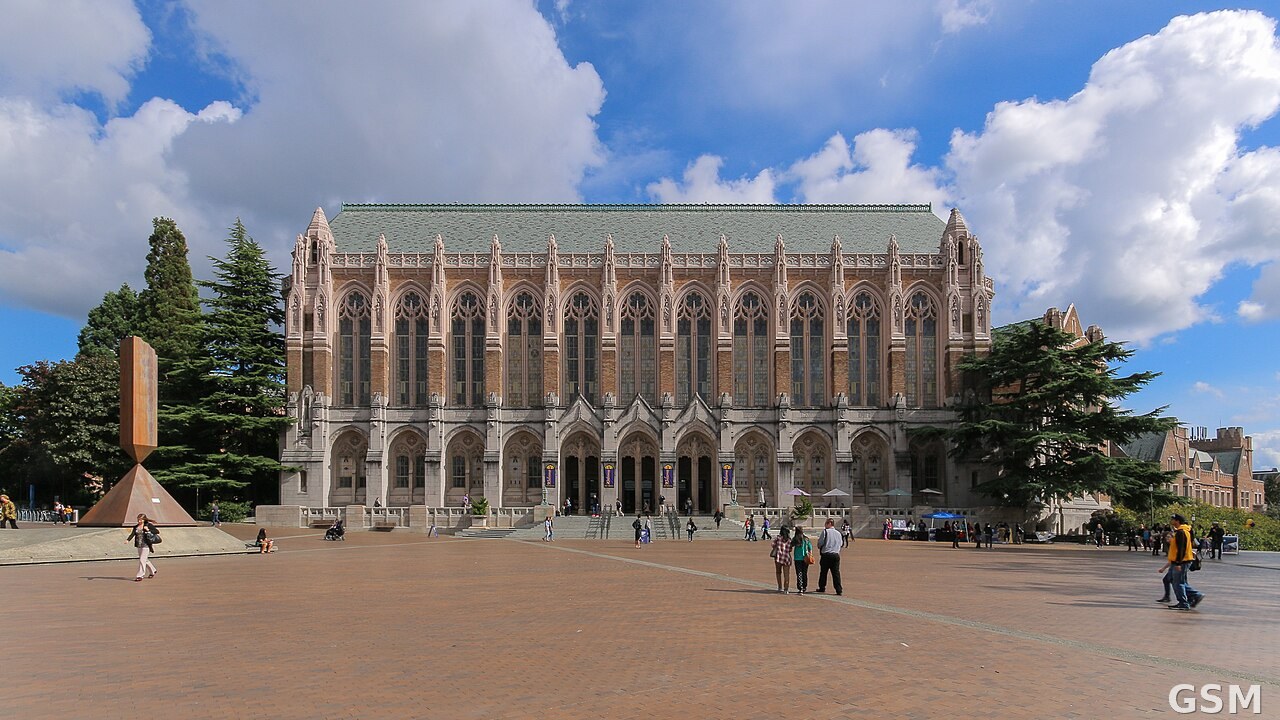
图片来源:图:华盛顿大学苏扎洛图书馆。Martin Kraft 摄,CC BY-SA 3.0,经 Wikimedia Commons。 / Photo: Suzzallo Library, University of Washington. By Martin Kraft, CC BY-SA 3.0, via Wikimedia Commons.
GSM Global · 本篇英文版 English edition of this story