Lifeway调查:三分之二美国教会会众圣经素养测验不及格,平均分51分
Lifeway Research对2,000多名美国基督徒教会会众进行圣经常识测验,结果显示平均得分仅51分:约三分之二(65%)的受访者得分低于60分、属不及格,9%得D(60至69分),9%得C(70至79分),仅8%得B(80至89分)、9%达A(90分以上)。
调查在田纳西州Brentwood发布。Lifeway Research执行主任Scott McConnell表示,教会领袖常推测会众不熟悉圣经,但以往缺乏客观证据;这项研究证实,多数基督徒会众没有学过或已忘记圣经中的许多内容及其编排方式。
测验共设八类题目:圣经人物、某段叙事出自哪卷书、圣经事件排序、经文填空、某卷书属圣经哪个大部类、判断某卷书属旧约、新约还是不在圣经内、判断某句话是否出自圣经,以及一般圣经知识。McConnell说,题目选取的是圣经中重要的例子而非冷僻人物或事件,目的不是刁难,而是了解会众对所读所学内容的记忆。
具体结果包括:94%的受访者能正确指出摩西是从神领受十诫的人;但对于以色列第一位君王是谁,仅45%答对扫罗,32%误答大卫。只有11%能正确排列底波拉作士师、大卫杀歌利亚、约拿被大鱼吞下与以斯帖拯救以色列的先后次序;67%的人误以为希西家是一卷圣经书卷,44%误以为多马福音在圣经之内。
在读经习惯方面,21%的会众表示每天亲自读圣经,24%每周读几次,22%表示很少读或从不读。每天读经者的平均分(66分)显著高于很少读或从不读经者(36分);每月至少参加四次礼拜者的平均分也最高,为55分。
McConnell表示,圣经素养来自读经与研经两者,既要深入理解每段经文,也要经常通读全书以助记忆。
这项在线调查于2026年8月12日至29日进行,样本为2,012名美国人,受访者经筛选为新教无宗派、天主教或东正教基督徒且通常每月参加教会聚会;调查在95%置信水平下抽样误差不超过正负2.2个百分点。
(来源:Baptist Press)
Two in Three U.S. Churchgoers Fail Bible Literacy Quiz, Averaging 51, Lifeway Research Finds
Lifeway Research asked more than 2,000 American Christian churchgoers dozens of questions about general Bible knowledge, and the average respondent scored 51. Around 2 in 3 (65 percent) earned an F, below 60. Almost 1 in 10 (9 percent) received a D, between 60 and 69, and another 9 percent received a C, between 70 and 79. Just 8 percent scored a B, 80 to 89, and 9 percent reached A status, 90 and higher.
The study was released from Brentwood, Tennessee. Scott McConnell, executive director of Lifeway Research, said church leaders often theorize that churchgoers don't know their Bibles but have typically lacked objective proof, and that the study confirms most Christian churchgoers haven't learned or don't remember many things in the Bible and how it is organized.
The quiz covered eight categories of Bible literacy: people of the Bible, which books contain certain narratives, ordering specific biblical events, filling in the blanks of Bible verses, which major division a book belongs to, identifying whether a book belongs in the Old or New Testament or is not part of the Bible, knowing whether a phrase is included in the Bible, and general Bible knowledge. McConnell said significant examples were selected rather than obscure characters or events, and the goal was not to trick anyone but to understand recall of what churchgoers have read and been taught.
Among the findings, 94 percent correctly identified Moses as the person who received the Ten Commandments from God, while only 45 percent correctly named Saul as the first king of Israel and 32 percent said David. Only 11 percent correctly ordered the events of Deborah judging Israel, David killing Goliath, Jonah being swallowed by a big fish and Esther delivering Israel. Two in 3 (67 percent) wrongly identified Hezekiah as a biblical book, and 44 percent wrongly believed the Gospel of Thomas is in the Bible.
On Bible habits, around 1 in 5 (21 percent) said they read the Bible personally every day, another quarter (24 percent) a few times a week, and 22 percent said they rarely or never read it. Daily readers averaged 66 percent correct, compared with 36 percent for those who rarely or never read Scripture, and those attending church four times a month or more had the highest average score by attendance, at 55 percent.
McConnell said Bible literacy comes with both reading and studying the Bible, digging to understand each passage while also moving throughout the Bible regularly to aid remembering.
The online survey of 2,012 Americans was conducted August 12-29, 2026, using a national pre-recruited panel. Respondents were screened to include those who identified as Protestant/nondenominational, Catholic or Orthodox Christian and who attend church in a typical month. The sample provides 95 percent confidence that the sampling error does not exceed plus or minus 2.2 percent.
(Source: Baptist Press)
来源:Baptist Press
发布:GSM·美国(发布链接)
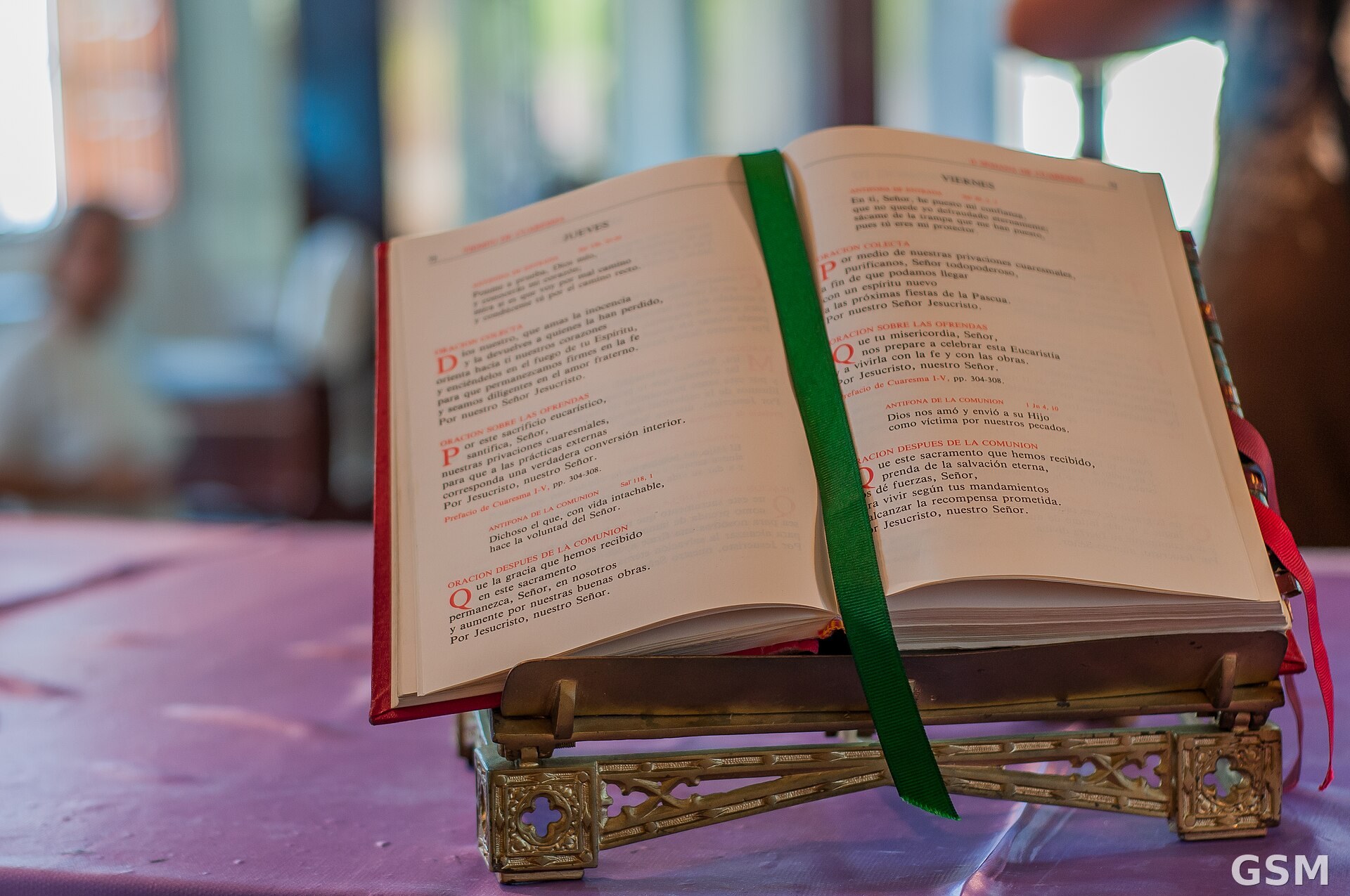
图片来源:图:教会里摊开的圣经。Wilfredor 摄,CC0,经 Wikimedia Commons。 / Photo: An open Bible in a church. Photo by Wilfredor, CC0, via Wikimedia Commons.
GSM Global · 本篇英文版 English edition of this story