FDA确认儿童重症疗法QUELIMMUNE已满足上市后研究要求:登记患者90天存活率65.1%
总部位于科罗拉多州 Denver 的医疗器械公司 SeaStar Medical 于11月3日宣布,食品药品监管局(FDA)生物制品评价与研究中心(CBER)已确认,其 QUELIMMUNE 儿童 SAVE 监测登记研究(SAVE Registry)已满足该疗法最初人道主义器械豁免(HDE)批准中列明的上市后研究要求。
QUELIMMUNE(SCD-PED)用于体重10公斤以上、22岁及以下、正在接受抗生素治疗并在重症监护室接受肾脏替代治疗(RRT)的脓毒症相关急性肾损伤危重儿童。该疗法2024年2月获 FDA 以人道主义器械豁免批准,是目前唯一获批用于这一超罕见危重症的疗法。
公司在美国肾脏病学会 Kidney Week 2026 的最新突破环节公布了登记数据:接受 QUELIMMUNE 治疗的43名患儿90天存活率为65.1%,而来自全美儿童住院数据库(KID)临床对齐队列的196名患儿为47.5%(p=0.043),住院存活率与60天存活率同样显著更高;登记患者中未出现器械相关不良事件。公司首席执行官 Eric Schlorff 表示,这类患儿仅靠传统支持治疗的存活率约为50%,FDA 的决定将帮助把这一疗法的潜在救生获益带给更多危重儿童。
首席医疗官 Kevin Chung 表示,登记中的许多患儿同时与脓毒症和多器官衰竭抗争,SAVE 登记为疗法的安全性与可能获益提供了关键的真实世界证据。公司称,FDA 的决定意味着医院今后无需 SAVE 登记所要求的研究基础设施即可使用 QUELIMMUNE,此前无法参与登记的医疗中心也能为脓毒症相关急性肾损伤患儿提供该疗法;公司仍将继续自愿登记部分患儿以积累证据。
公司同时说明,QUELIMMUNE 的选择性细胞吸附装置(SCD)技术旨在中和过度活化的免疫细胞、平息导致器官衰竭的过度炎症;其成人急性肾损伤关键试验 NEUTRALIZE-AKI 正在进行中,计划纳入339名在重症监护室接受持续肾脏替代治疗的成人患者。公司提醒,QUELIMMUNE 系基于安全性与可能获益获人道主义器械豁免批准,其有效性尚未得到证实,临床研究中观察到的不良反应包括低血压、低体温、心动过速、高血糖与血小板减少等。
(来源:SeaStar Medical)
FDA Confirms QUELIMMUNE Pediatric Therapy Meets Post-Approval Study Requirements: 90-Day Survival 65.1% in Registry
Denver, Colorado-based SeaStar Medical Holding Corporation announced on November 3 that the Center for Biologics Evaluation and Research (CBER) of the U.S. Food and Drug Administration (FDA) has determined that the QUELIMMUNE Pediatric SAVE Surveillance Registry has fulfilled the post-approval study requirements outlined in the original Humanitarian Device Exemption (HDE) approval of QUELIMMUNE.
QUELIMMUNE (SCD-PED) is commercialized for children with acute kidney injury (AKI) and sepsis or a septic condition weighing 10 kilograms or more and aged 22 years or younger who are on antibiotics and being treated in the ICU with renal replacement therapy (RRT). It was approved in February 2024 under a Humanitarian Device Exemption and is the only FDA-approved product for the ultra-rare condition of life-threatening AKI due to sepsis requiring RRT in critically ill pediatric patients.
Results from the SAVE Registry, presented in a late-breaking session at ASN Kidney Week 2026, showed 90-day survival of 65.1% for the 43 QUELIMMUNE patients versus 47.5% (P = 0.043) for 196 patients from clinically aligned cohorts in the Kids' Inpatient Database (KID), with statistically significant increases also seen for in-hospital and 60-day survival. The registry data showed no device-related adverse events. CEO Eric Schlorff said these children typically have about a 50% survival rate with traditional supportive care alone.
Chief Medical Officer Kevin Chung, MD, said many of the children are fighting sepsis and multi-organ failure at the same time, and that the registry provides crucial real-world evidence on safety and probable benefits. The company said FDA's decision now enables hospitals to employ the QUELIMMUNE therapy without the research infrastructure the SAVE Registry demanded, expanding access at medical centers that previously could not participate, while the company will continue to voluntarily enroll patients at centers that choose to take part.
The company noted that its Selective Cytopheretic Device (SCD) therapy is designed to neutralize over-activated immune cells and stop the destructive hyperinflammation that shuts down organ function, and that its NEUTRALIZE-AKI pivotal trial is evaluating the therapy in 339 adults with AKI in the ICU receiving continuous RRT. QUELIMMUNE was approved under the HDE based on safety and probable benefit; its effectiveness for this use has not been demonstrated, and adverse reactions observed in clinical studies include hypotension, hypothermia, tachycardia, hyperglycemia and thrombocytopenia.
(Source: SeaStar Medical)
来源:SeaStar Medical
发布:GSM·美国(发布链接)
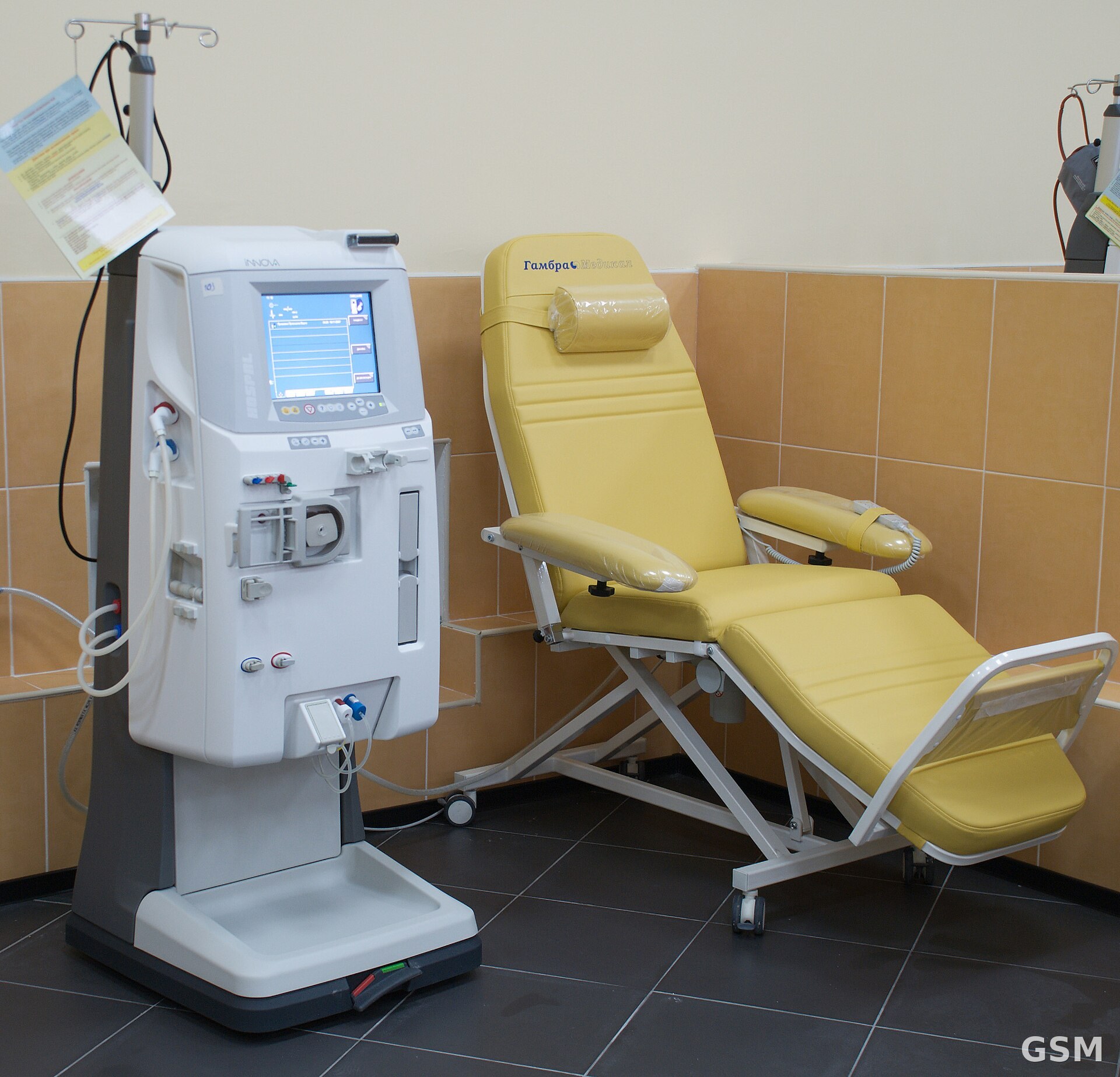
图片来源:血液透析机与治疗椅(QUELIMMUNE 配合肾脏替代治疗使用,同类设备示意)。图:Vitaliy Pospelov,CC BY-SA,经 Wikimedia Commons / A hemodialysis machine and treatment chair (renal replacement therapy equipment of the kind used alongside QUELIMMUNE). Photo: Vitaliy Pospelov, CC BY-SA, via Wikimedia Commons
GSM Global · 本篇英文版 English edition of this story