FDA受理首个亨廷顿病基因疗法上市申请并给予优先审查:2027年5月1日作决定
美国食品药品监管局(FDA)已受理基因疗法公司 uniQure 提交的 ifezuntirgene inilparvovec 生物制品许可申请(BLA),并给予优先审查。uniQure 11月2日在马萨诸塞州 Lexington 与荷兰 Amsterdam 同步宣布这一消息:该申请按加速批准通道提交,处方药使用者付费法案(PDUFA)目标行动日期为2027年5月1日;若获批准,这款疗法将成为全球首个能改变亨廷顿病病程的治疗。
FDA在受理函中表示,暂定计划召开咨询委员会会议讨论这份申请,具体日期与时间表确定后将通知公司。uniQure 首席执行官 Matt Kapusta 表示:「FDA受理我们的 BLA 进入审查,是亨廷顿病群体的重要里程碑——这个群体已经等待了世代,盼望一种能改变这种毁灭性疾病进程的治疗。」他表示,公司将与 FDA、临床医生和亨廷顿病群体共同支持审查进程。
这份申请的依据是该疗法 I/II 期临床研究的36个月数据分析,研究结果已于2025年9月24日公布,并与 Enroll-HD 自然史数据库中经倾向评分匹配的外部对照作了比较。两项多中心 I/II 期研究迄今共有51名患者接受给药,其中美国随机研究入组26人,欧洲开放标签研究入组13人,另有后续队列继续探索剂量与免疫抑制方案。
确证性试验的设计已与 FDA 对齐:这是一项随机、标准治疗对照试验,计划入组约200名患者,按2比1随机分配至治疗组与标准治疗组,主要终点为36个月时的总功能能力(TFC)。公司计划在2026年底前在美国启动患者筛查,预计在可能获批时试验已充分展开。
亨廷顿病是一种罕见的遗传性神经退行性疾病,由亨廷顿基因第一外显子中的 CAG 重复扩增引起,患者会出现舞蹈症等运动症状、行为异常与认知衰退,身体与精神状况持续恶化。据 uniQure 引用的研究,美国、欧盟与英国约有75,000名患者,另有数十万人面临遗传风险;目前尚无任何获批疗法可以延缓发病或减慢病程。这款疗法通过 MRI 引导的对流增强立体定向神经外科手术,将基因沉默成分单次递送至大脑纹状体(尾状核与壳核);它此前已获 FDA 突破性疗法、再生医学先进疗法(RMAT)与快速通道三项认定,是首个获这些认定的亨廷顿病在研疗法。
FDA Accepts Review of First Huntington's Disease Gene Therapy With Priority Review, Decision Due May 1, 2027
The U.S. Food and Drug Administration (FDA) has accepted for review uniQure's Biologics License Application (BLA) for ifezuntirgene inilparvovec and granted it Priority Review. uniQure announced the news on November 2 from Lexington, Massachusetts, and Amsterdam: the application was submitted under the Accelerated Approval pathway, with a Prescription Drug User Fee Act (PDUFA) target action date of May 1, 2027. If approved, the therapy would become the world's first disease-modifying treatment for Huntington's disease.
In its acceptance letter, the FDA said it is tentatively planning to discuss the application at an Advisory Committee meeting, and will notify the company once the date and timelines are finalized. "The FDA's acceptance of our BLA for review marks an important milestone for the Huntington's disease community, which has waited generations for a treatment that changes the course of this devastating disease," said Matt Kapusta, chief executive officer of uniQure. He said the company will work with the agency, clinicians and the Huntington's community to support the review process.
The BLA is supported by the 36-month data analysis from the therapy's Phase I/II clinical studies, announced on September 24, 2025, compared against a propensity score-matched external control drawn from the Enroll-HD natural history database. In total, the two multi-center Phase I/II studies have dosed 51 patients, including 26 in the U.S. randomized study and 13 in the European open-label study, with further cohorts exploring dosing and immunosuppression.
The company and the FDA have aligned on the design of the confirmatory study: a randomized, standard-of-care trial enrolling approximately 200 patients in a 2:1 ratio of treatment to standard of care, with Total Functional Capacity (TFC) as the primary endpoint at 36 months. uniQure plans to initiate patient screening in the U.S. by the end of 2026, and expects the study to be well underway by the time of a potential approval.
Huntington's disease is a rare, inherited neurodegenerative disorder caused by a CAG repeat expansion in the first exon of the huntingtin gene. It leads to motor symptoms including chorea, behavioral abnormalities and cognitive decline, with progressive physical and mental deterioration. According to research cited by uniQure, approximately 75,000 people have Huntington's disease in the U.S., the EU and the UK, with hundreds of thousands more at risk of inheriting it, and no approved therapy can yet delay onset or slow progression. The therapy is delivered once, directly into the striatum (caudate and putamen), through MRI-guided, convection-enhanced stereotactic neurosurgery. It is the first investigational therapy for Huntington's disease to have received Breakthrough Therapy, Regenerative Medicine Advanced Therapy (RMAT) and Fast Track designations from the FDA.
来源:GSM·美国(原文链接)
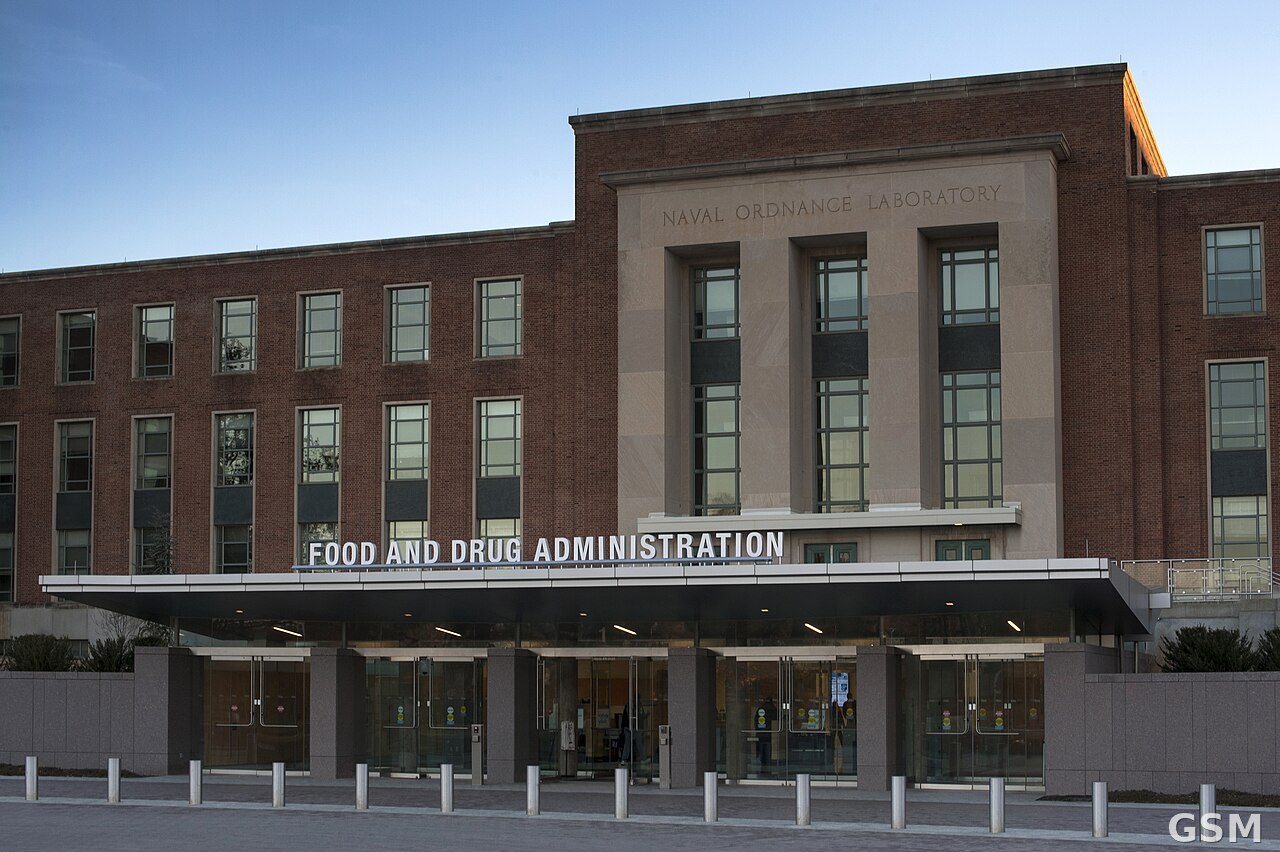
图片来源:图:美国食品药品监管局(FDA)位于马里兰州 Silver Spring 白橡树园区的总部入口(资料图)。美国食品药品监管局摄,公共领域,经 Wikimedia Commons。 / The entrance to FDA headquarters at the White Oak campus in Silver Spring, Maryland (file photo). Photo by the U.S. Food and Drug Administration, public domain, via Wikimedia Commons.
GSM Global · 本篇英文版 English edition of this story