教育部拨款请款新规生效:每笔请款须附255字符书面说明,11名议员联名质疑
华盛顿——美国教育部(ED)一项拨款请款新规已于11月1日生效:自该日起,所有教育部拨款受款人每次通过该部 G5 拨款系统申请拨付已获批的联邦拨款时,都必须附上一份书面说明,且每份说明不得超过255个字符。教育部9月28日备忘录显示,这项名为「Defend the Spend」的要求,依据特朗普总统2025年2月26日签署的第14222号行政令,即「实施总统的政府效率部成本效益倡议」,目的是确保联邦支出的透明与问责。
按备忘录,每份说明必须写全四项内容:所涉拨款项目名称(备忘录举例包括 Perkins V、《中小学教育法》Title I A 部分、《残疾人教育法》IDEA B 部分第611节,以及「创新识字方法」等项目);费用类别与金额,各类别金额合计须等于本次请款总额;本次请款所含最早与最晚费用的起止日期;且不得包含姓名、员工编号、社会安全号等个人身份信息。备忘录给出的句式范例为「项目名称:费用类别 金额、费用类别 金额;日期 起—止」。
在审查流程上,备忘录称,该流程在正常情形下不应改变一笔请款的处理时限。若受款人提交的说明无效或不完整,教育部将发电邮要求补充信息,在补充说明被接受之前,请款不会获批;在重复请款、申请不可报销费用等情形下,说明可被直接驳回,受款人将收到电邮通知。通过机构间协议由伙伴机构共同管理的拨款此前已执行同一要求,11月1日起,经 G5 系统管理的全部教育部拨款与之看齐。
众议员 Raja Krishnamoorthi 领衔共11名议员此前致函教育部长 Linda McMahon 与备忘录署名人 Murray Bessette,警告新规可能拖慢阅读教学、特殊教育等基本学校服务的拨款。议员们在信中写道,若一份说明触发额外审查,拨款就可能被搁置、等待进一步解释;对财务人手有限、现金流紧张的小学区而言,哪怕短暂延误也可能危及发薪或中断学生服务。他们还写道,国会拨出这些资金是为了支持公立教育、为学生扩大机会,而不是让行政部门以新的官僚繁文缛节拖慢拨付。
议员们要求教育部在10月30日前书面答复十个问题,包括:教育部援引何种具体法定授权对国会已拨资金的拨付附加新要求;Title I A 部分与 IDEA B 部分等公式拨款被纳入的依据是什么;判定说明「无效或不完整」的标准为何;说明由人工、自动系统还是两者共同审查;教育部已指派多少人手负责审查;从受款人提交到资金拨付的最长时限为何;以及教育部是否估算过新规给各州、学区、高校与社区组织增加的行政负担与成本。联名者包括国会众议员 Judy Chu(赵美心)等人。
备忘录署名人 Murray Bessette 是教育部计划、评估与政策发展办公室的首席副助理部长兼代理助理部长,该备忘录发给全体教育部拨款受款人。教育部方面表示,这项要求意在提高透明度。
Education Department Rule Takes Effect: Every Grant Payment Request Now Needs a 255-Character Written Justification
WASHINGTON: A new U.S. Department of Education (ED) grant payment rule took effect on November 1: every time a grant recipient draws down previously approved federal funds through the department's G5 system, it must now attach a written justification of no more than 255 characters. Under the department's September 28 memorandum, the requirement, part of an initiative called "Defend the Spend," implements Executive Order 14222, signed by President Donald Trump on February 26, 2025, titled "Implementing the President's 'Department of Government Efficiency' Cost Efficiency Initiative," which the department says aims to ensure transparency and accountability in federal spending.
Each justification must include all of the following: the name of the grant program (the memorandum gives examples including Perkins V, ESEA Title I, Part A, IDEA Part B, Section 611, and Innovative Approaches to Literacy); the expense categories and amounts, which must total the amount of the payment request; the date range covering the earliest and latest expenses in the request; and no personally identifiable information, such as names, employee IDs or Social Security numbers. The memorandum suggests a sentence frame of "[Grant Program Name]: [Line item] $, [Line item] $; Dates [start]-[end]."
The memorandum says the process should not change the timeline for processing a payment request, unless the request triggers procedural or internal control concerns. If a recipient submits an invalid or incomplete justification, the department will send an email asking for additional information, and the payment request will not be approved until the clarification is accepted. In certain cases, such as duplicate payment requests or requests for unallowable costs, a justification can be rejected outright, with the recipient notified by email. Grants co-administered with partner agencies through interagency agreements were already subject to the requirement; from November 1, it applies to all ED grants administered through G5.
Congressman Raja Krishnamoorthi led ten fellow lawmakers in a letter to Education Secretary Linda McMahon and the memorandum's signer, Murray Bessette, warning that the requirement could delay funding for reading instruction, special education and other essential school services. "If a justification triggers additional review, the payment can be held pending further explanation. For a small district with limited finance staff and tight cash flow, even a temporary delay could jeopardize payroll or interrupt services for students," the lawmakers wrote. They also wrote: "Congress appropriated these funds to support public education and expand opportunities for students, not for the administration to slow-walk their disbursement by creating new bureaucratic red tape."
The lawmakers requested written responses by October 30 to ten questions, including what specific statutory authority the department relies on to impose new requirements on the disbursement of congressionally appropriated funds; on what basis formula programs such as Title I, Part A and IDEA Part B are covered; what standard will be used to decide whether a justification is "invalid or incomplete"; whether justifications will be reviewed by staff, automated systems, or both; how many department staff have been assigned to review them; and whether the department has estimated the administrative burden and cost the requirement will impose on states, districts, colleges and community-based organizations. The signers included Representative Judy Chu of California. Bessette is the department's Principal Deputy Assistant Secretary and Acting Assistant Secretary for the Office of Planning, Evaluation and Policy Development. The department says the requirement is intended to improve transparency.
来源:GSM·美国(原文链接)
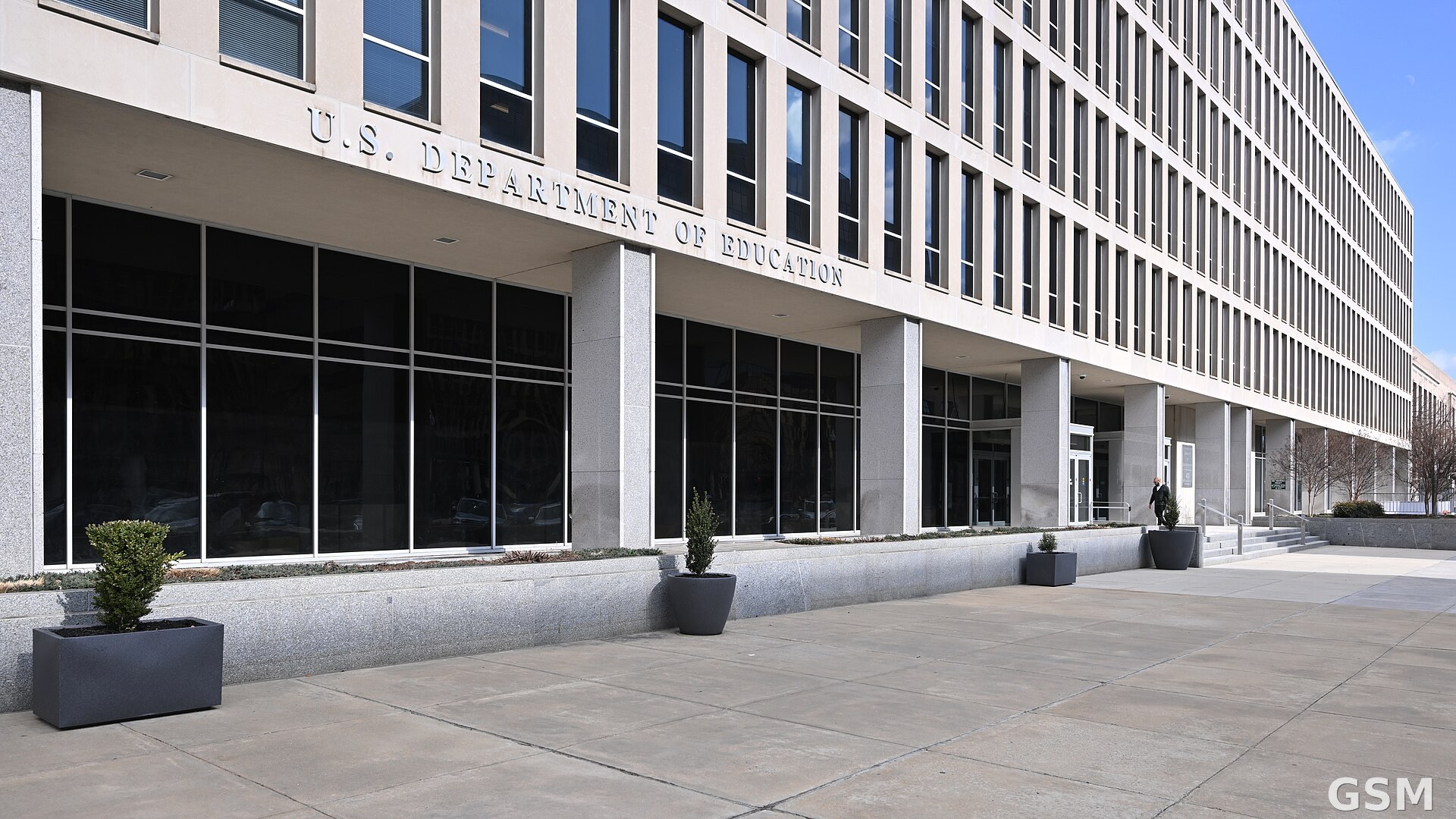
图片来源:位于华盛顿的美国教育部大楼(Lyndon Baines Johnson Building)入口(2025年2月摄,资料图)。照片:G. Edward Johnson,CC BY 4.0,经 Wikimedia Commons。
GSM Global · 本篇英文版 English edition of this story