教宗良十四世谈超级智能:影响人类生命的决定绝不能交给机器,呼吁禁止致命自主武器
据梵蒂冈新闻报道,教宗良十四世10月30日在宗座宫接见「超级智能的未来:梵蒂冈与科学界关于智能技术发展与应用的对话」会议的与会者,强调必须把人置于这项技术的中心,避免危及公益、把人简化为数据点。他说,某些决定绝不能交给机器:涉及人类生命、自由与使用武力的决定,必须始终置于有效、知情与负责任的人类监督之下。
这场为期一天的会议当天在梵蒂冈的庇护四世别墅(Casina Pio IV)举行,由宗座生命科学院与生命未来研究所共同主办。教宗在讲话中沿着他今年5月15日发布的通谕《Magnifica Humanitas》提出五点考量:超级智能的未来并非预定,而是取决于人所作的选择;机器是工具、不是人;某些决定绝不能让渡;超级智能应服务公益;各机构应把伦理原则落到实处。
教宗说,人们有责任去引导、修正,并在必要时拒绝超级智能的应用。他以把某人列入目标清单或写入边境管控数据库为例,指出人有被简化为一个数据点的危险。为此,他说超级智能必须被「解除武装」,并鼓励今年11月在日内瓦开会的各国采取具体步骤,禁止致命自主武器。
教宗还对赋予超级智能系统权利或法律人格的提议表示质疑,指出机器没有人的经验与关系,把机器当作人,可能遮蔽人的责任、让受害者面对一个没有面孔的实体。他表示,一个可靠地服务于人的系统,比一个异常强大、但后果无法充分预见或控制的系统更有价值。
教宗在讲话中回顾了教宗方济各2024年6月14日对七国集团领导人的讲话:方济各当时把这项技术形容为一个「同时令人兴奋又令人畏惧的工具」,并申明任何机器都不应被赋予决定夺走人类生命的权力。
关联:教宗良十四世寄出中期选举邮寄选票:梵蒂冈证实,他成为首位在美国选举中投票的教宗
来源:GSM·美国
Pope Leo XIV on AI: Decisions Affecting Human Life Must Never Be Delegated to Machines
Pope Leo XIV on October 30 received participants in a meeting dedicated to artificial intelligence at the Apostolic Palace, stressing the importance of keeping the human person at the heart of this technology to avoid threatening the common good and reducing people to data points, Vatican News reported. Certain decisions, he said, must never be delegated: decisions affecting human life, freedom, and the use of force must always remain subject to effective, informed, and responsible human oversight.
The one-day meeting, "The Future of AI: A Dialogue Between the Vatican and the Scientific World on the Developments and Applications of Intelligent Technologies," was held that day at the Casina Pio IV and organized jointly by the Pontifical Academy for Life and the Future of Life Institute. In his address, the Pope offered five considerations drawn from his encyclical Magnifica Humanitas, issued on May 15, 2026: the future of artificial intelligence depends on human choices; machines are tools, not persons; certain decisions must never be delegated; the technology should serve the common good; and institutions should put ethical principles into practice.
The Pope said societies have a responsibility to guide, modify, and, when necessary, reject applications of the technology. When a person is placed on a target list or entered into a border control database, he said, there is a danger that he or she will be reduced to a mere data point. For that reason, artificial intelligence must be "disarmed," and he encouraged the states meeting in Geneva in November to take concrete steps toward banning lethal autonomous weapons.
He also questioned proposals to grant artificial intelligence systems rights or legal personhood, saying machines do not have human experiences or relationships and that treating them as persons could obscure human responsibility and leave those who suffer harm confronting a faceless entity. A system that serves the human person reliably, he said, is of greater value than one that is exceptionally powerful but whose consequences cannot be adequately foreseen or controlled.
The Pope recalled Pope Francis's June 14, 2024 address to G7 leaders, in which Francis described artificial intelligence as a tool that inspires both excitement and fear and affirmed that no machine should ever be entrusted with the decision to take a human life.
Related: Pope Leo XIV Casts a Mail-In Ballot in the U.S. Midterms, the Vatican Confirms — a First for a Pope
Source: GSM · USA
来源:GSM·美国(原文链接)
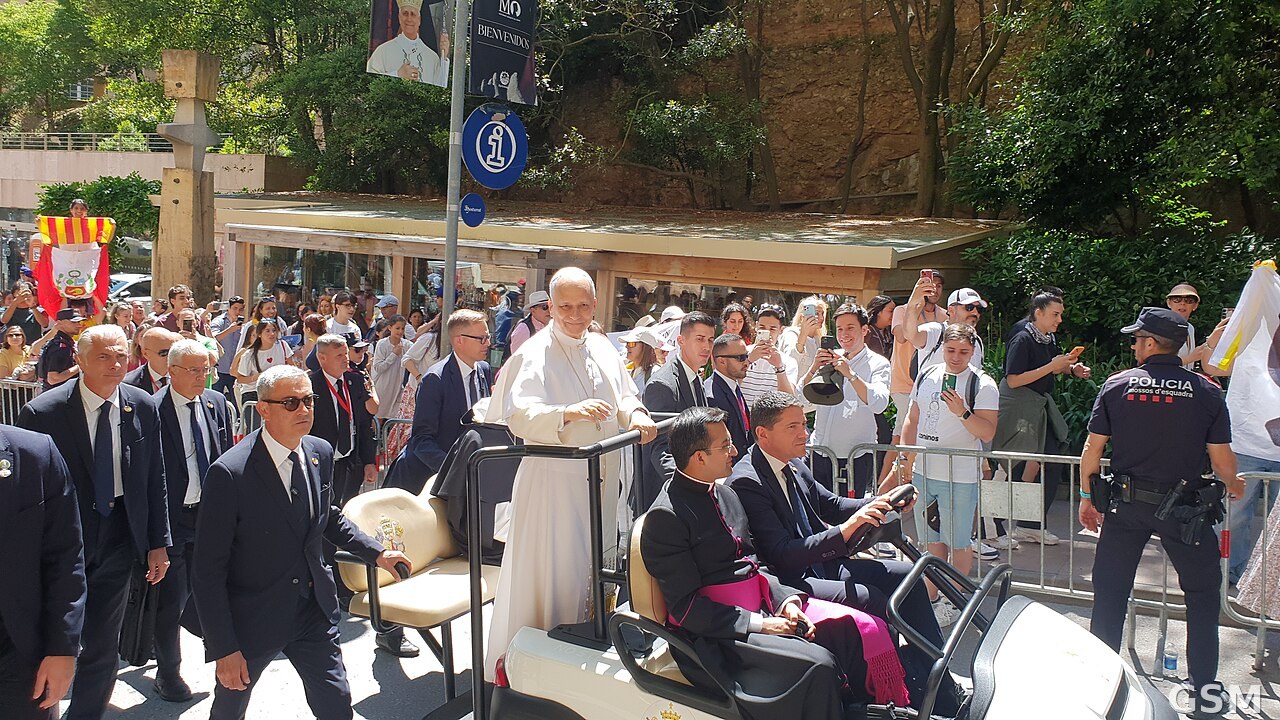
图片来源:图:教宗良十四世2026年6月在西班牙蒙塞拉特向人群致意(资料图)。Sergio López Prieto 摄,CC BY-SA 4.0,经 Wikimedia Commons。 / Pope Leo XIV greeting crowds at Montserrat, Spain, in June 2026 (file photo). Photo by Sergio López Prieto, CC BY-SA 4.0, via Wikimedia Commons.