双星首批成果:NASA的TRACERS论文指向磁重联以空间变化为主,主任务已延期至2027年春
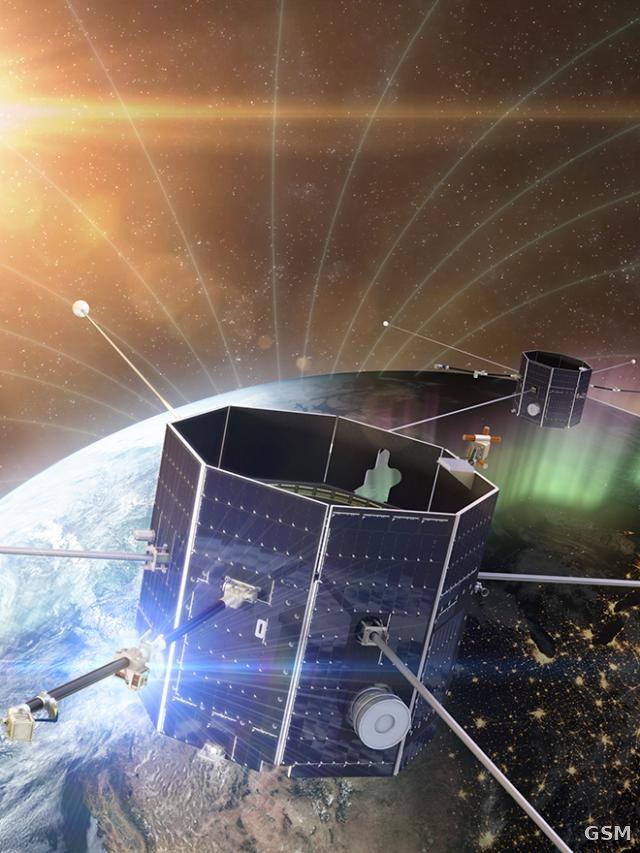
美国国家航空航天局(NASA)10月29日发布:双星任务 TRACERS(串联重联与极尖电动力学侦察卫星)已取得关于空间天气如何影响地球磁场的首批线索,研究团队分析任务首年观测后,将成果写成论文,发表在《地球物理研究杂志:空间物理学》(Journal of Geophysical Research: Space Physics)上。
TRACERS 的两颗卫星去年发射升空,以一前一后的编队锁定在太阳同步轨道上,反复穿过南北磁极上方地球磁场汇聚成漏斗状的「极尖」区域,观测太阳风与地球磁盾之间名为「磁重联」的爆发过程:太阳磁场随太阳风撞上地球磁层时,能量积聚、磁力线断裂并把附近粒子高速弹入大气。
这次的关键问题是:驱动重联过程的主要因素,究竟是重联发生的「位置」变化,还是重联的「速率」随时间变化。双星搭载的极尖离子分析仪数据显示,磁重联在很大程度上是一个空间过程,也就是重联发生的位置在移动,而不是主要随时间改变;后续测量将帮助确认这一结论。
TRACERS 副首席研究员、Southwest Research Institute 的仪器负责人 Stephen Fuselier 说:「分析 TRACERS 收集的数据,让我们的团队更清楚地看到太阳风粒子的行为,以及它与重联事件的联系。这是理解磁重联如何运作、这些过程如何影响地球的重要第一步。」首席研究员、University of Iowa 的 David Miles 表示,团队为收集与评估这些数据展现了出色的协作与决心,他期待后续测量揭示更多内容。
任务并非一帆风顺:一颗卫星在发射后曾出现故障,团队努力恢复与其的联系并建立例行数据采集;目前双星每天多次例行观测南极尖。今年 9 月,NASA 批准了该任务的主任务延期,让双星继续研究重联事件至 2027 年春季。
理解磁重联如何变化,有助于科学家更好地预报地磁暴:地磁暴会影响宇航员安全,也会影响人们依赖的电网与通信系统。TRACERS 由 University of Iowa 的 David Miles 领导、Southwest Research Institute 提供支持,NASA 总部太阳物理部门下属的 Goddard 航天飞行中心的太阳物理探索者计划办公室负责管理。
NASA's Twin TRACERS Satellites Deliver First Results on Magnetic Reconnection
NASA announced on October 29 that its TRACERS mission — the Tandem Reconnection and Cusp Electrodynamics Reconnaissance Satellites — has gathered its first clues to how space weather affects Earth's magnetic field. In a new paper published in the Journal of Geophysical Research: Space Physics, researchers break down the interactions after analyzing initial observations from the first year of the mission.
The two TRACERS spacecraft, launched last year, fly one behind the other in a Sun-synchronous orbit, passing through the polar cusps — funnel-shaped regions over the north and south magnetic poles where Earth's magnetic field converges — to study magnetic reconnection, the explosive process in which the Sun's magnetic field, embedded in the solar wind, collides with Earth's magnetic shield and flings nearby particles into the atmosphere at high speeds.
A critical question is what primarily drives the process: whether the location of reconnection events influences the magnetopause reaction more than the rate of reconnection. Data from the Analyzers for Cusp Ions instruments show that magnetic reconnection is largely a spatial process, meaning where reconnection is occurring is moving, rather than changing in time. Future measurements will help confirm the results.
"Analyzing the data TRACERS collected gave our team a clearer view of solar wind particle behavior and how it connects to reconnection events," said Stephen Fuselier, TRACERS deputy principal investigator and instrument lead at the Southwest Research Institute in San Antonio. Principal Investigator David Miles of the University of Iowa said he is excited to see what future measurements reveal.
After a setback with one of the satellites shortly after launch, the team re-established contact and routine data collection; the spacecraft now observe the southern cusp routinely several times a day. In September, NASA approved a prime mission extension for the spacecraft to continue studying reconnection events into spring 2027.
Understanding how magnetic reconnection varies helps scientists better predict geomagnetic storms that can affect the safety of astronauts near Earth, as well as the power grids and communication systems people rely on. The mission is led by David Miles at the University of Iowa with support from the Southwest Research Institute, and is managed for NASA's Heliophysics Division by the agency's Goddard Space Flight Center.
来源:GSM·美国(原文链接)
图片来源:图:TRACERS 双星在地球上空飞行的艺术概念图。图片来源:美国国家航空航天局(NASA),公共领域,经 Wikimedia Commons。 / Artist's view of the twin TRACERS satellites above Earth. Source: NASA, public domain, via Wikimedia Commons.