特朗普签署第232条公告调整机器人与工业机械进口:商务部与贸易代表180天内谈判,关税列为后备选项
白宫10月28日发布总统公告与事实清单:总统特朗普当日依据《1962年贸易扩展法》第232条签署公告,认定机器人、工业机械及其零部件的进口数量与情形已威胁损害美国国家安全,并指示商务部长与美国贸易代表(USTR)共同与贸易伙伴展开谈判,以调整相关进口、消除这一威胁。
公告的核心安排是先谈判、后备手段随后。商务部长与贸易代表须在公告发布后180天内向总统汇报谈判进展,并随时通报谈判状态与结果;商务部长还须持续监测相关进口情况,如认为有必要采取进一步行动,须及时报告总统。公告写明:视谈判状态与结果,总统今后可考虑其他补救措施,包括征收或调整关税、关税配额与费用,以及设立激励计划,鼓励对美国本土机器人、工业机械及其零部件生产的新投资。若谈判协议在180天内未能达成、未被执行或无效,总统也可采取其认为必要的其他调整进口措施。
公告依据的是商务部在过去90天内完成并提交总统的第232条调查报告。报告认定,几乎所有现代国防系统与关键基础设施领域都离不开机器人或工业机械:先进机器人可为军方执行情报、监视、侦察、伤员后送与探雷排雷等危险任务,工业机器人与机械则广泛用于汽车、电气电子、金属机械、塑料化工、食品饮料等行业,并支撑飞机、坦克、舰船、武器与弹药等国防产品的生产。白宫公布的数据显示,2024年美国制造业货物出货额约7.1万亿美元,相关设备生产额约860亿美元。
报告同时认定,美国在多数品类的机器人、工业机械及其零部件上依赖外国进口,进口额在过去十年持续增长且预计继续上升;即便近期美国制造业设施投资激增,美国的产量仍低于消费量,国内产能不足以满足不断增长的需求。公告还指出,来自某些外国实体的机器人与工业机械会处理和存储敏感数据,可能带来网络安全漏洞,构成独特的安全与安保风险。
白宫在事实清单中表示,这是特朗普以第232条保护关键产业的延续:其第一任期曾以该条款处理钢铁与铝产业,本任期以来已对钢铁、铝、铜、汽车、卡车、木材、半导体、药品、多晶硅与无人机等商品加征或强化关税。本次公告当日未直接宣布新的关税税率,后续走向取决于商务部与贸易代表的谈判结果以及180天内的汇报。
Trump Signs Section 232 Proclamation on Robotics and Industrial Machinery Imports: Commerce and USTR Given 180 Days to Negotiate, Tariffs Held as Backup Option
The White House on October 28 released a presidential proclamation and fact sheet stating that President Donald J. Trump had signed a proclamation under Section 232 of the Trade Expansion Act of 1962, finding that imports of robotics, industrial machinery, and their parts and components are being imported in such quantities and under such circumstances as to threaten to impair the national security of the United States, and directing the Secretary of Commerce and the United States Trade Representative (USTR) to jointly negotiate agreements with trading partners to adjust those imports.
The proclamation puts negotiation first, with other remedies held in reserve. The Secretary and the Trade Representative must update the President on the progress of the negotiations within 180 days of the proclamation and keep him informed of their status and outcome, while the Secretary continues to monitor the imports and report any circumstances that might indicate a need for further action. Depending on the status or outcome of the negotiations, the President may consider alternative remedies, including imposing or modifying tariffs, duties, quotas, and fees, and establishing a program to incentivize new investment in United States production of robotics and industrial machinery and their parts and components. If an agreement is not entered into within 180 days, is not being carried out, or is ineffective, the President may also take other actions he deems necessary to adjust the imports.
The action rests on a Section 232 investigation report transmitted by the Secretary of Commerce within the past 90 days. The report found that nearly all modern defense systems and critical infrastructure sectors require robotics or industrial machinery: advanced robots provide combat support including intelligence, surveillance, and reconnaissance missions and dangerous tasks such as casualty extraction and mine detection, while industrial robots and machinery are used across the automotive, electrical and electronics, metal and machinery, plastic and chemical, and food and beverage industries and enable production of aircraft, tanks, ships, weapons, and munitions. According to the proclamation, robotics and industrial machinery supported approximately $7.1 trillion in shipments of manufactured goods in 2024 and the production of approximately $86 billion worth of equipment that year.
The report also found that the United States relies on foreign imports for most types of robotics, industrial machinery, and their components, that the value of those imports has increased over the last decade and is projected to keep rising, and that domestic production remains below consumption with capacity insufficient to meet growing demand despite a recent surge in manufacturing investment. It further found that robotics and industrial machinery from certain foreign entities can pose cybersecurity vulnerabilities because the technologies routinely process and store sensitive data. The White House fact sheet presented the proclamation as a continuation of Section 232 actions covering steel, aluminum, copper, automobiles, trucks, timber and lumber, semiconductors, pharmaceuticals, polysilicon, and drones. No new tariff rates were announced on the day of the proclamation; the next steps depend on the negotiations and the report due within 180 days.
来源:GSM·美国(原文链接)
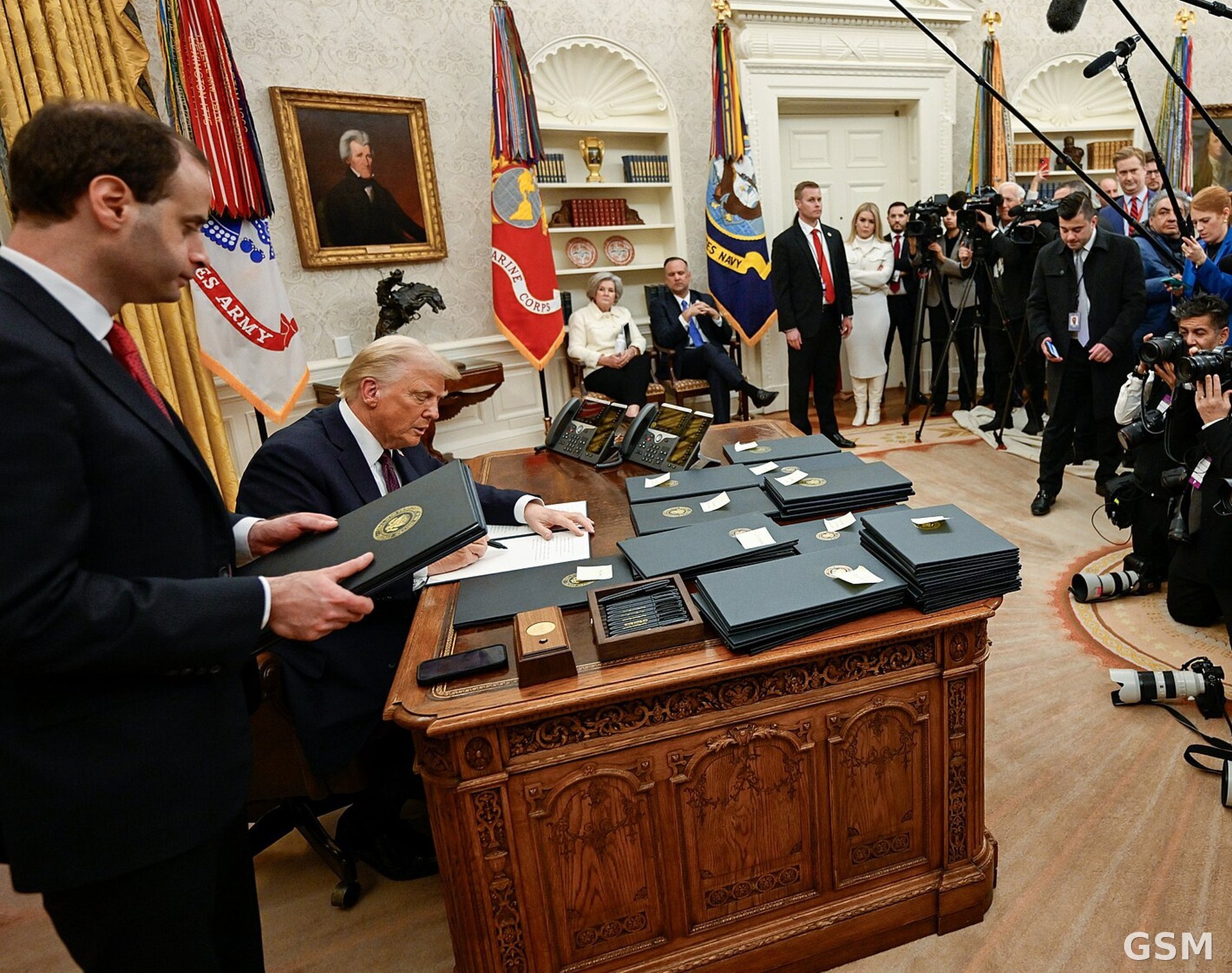
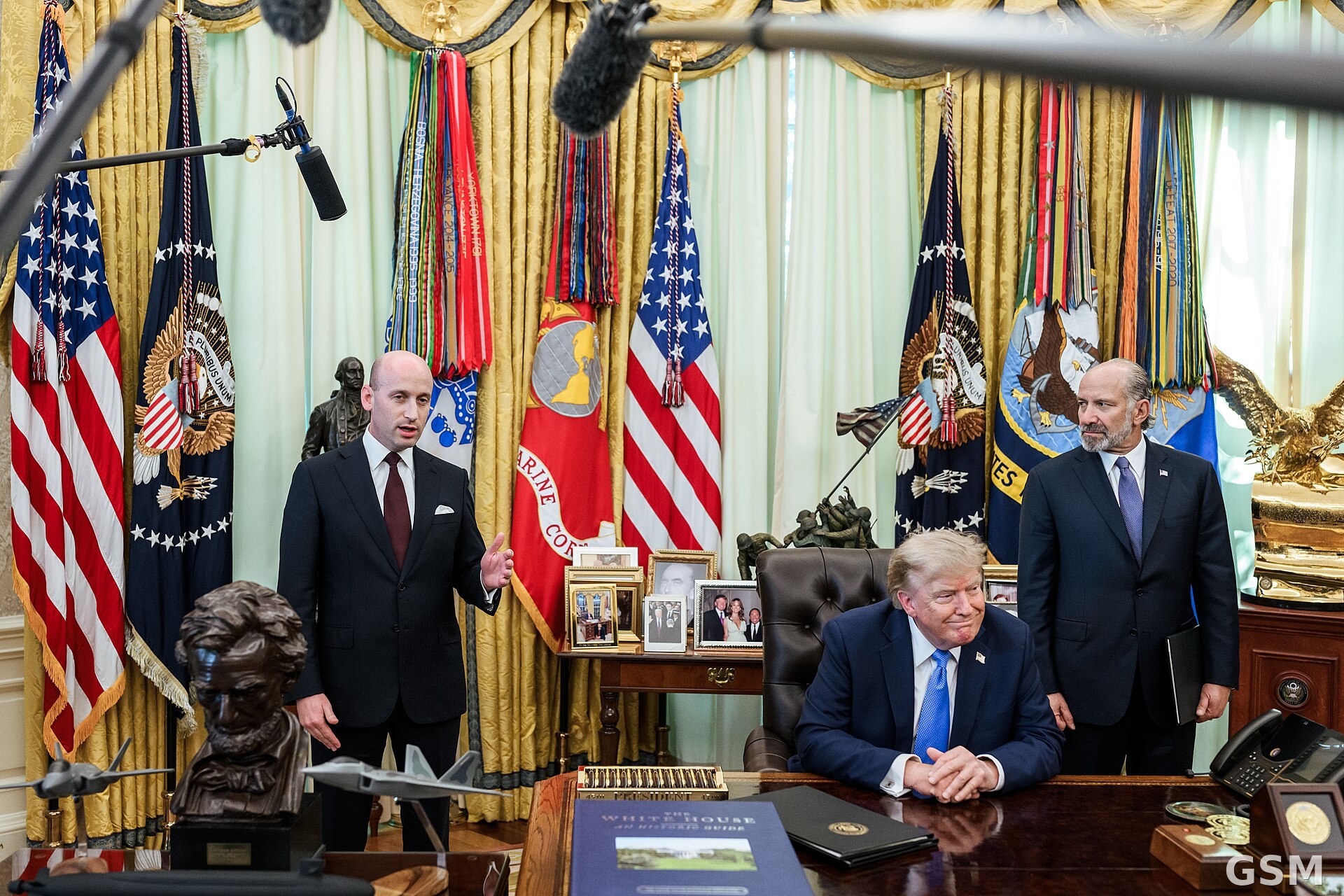
图片来源:特朗普总统在椭圆形办公室签署行政文件,商务部长 Howard Lutnick 在侧(资料图)。白宫官方照片,公共领域,经 Wikimedia Commons。 / President Donald J. Trump signs Executive Orders in the Oval Office alongside Secretary of Commerce Howard Lutnick, August 6, 2026 (file photo). Official White House photo by Molly Riley (public domain), via Wikimedia Commons.