白宫经济顾问委员会报告:环评时限压至2年,长期GDP每年多增820亿至1640亿美元
白宫经济顾问委员会(CEA)10月28日发布研究报告《许可改革的经济效益》(The Economic Benefits of Permitting Reform),估算把联邦环境评估时限压至2年,可使美国长期国内生产总值(GDP)每年多增820亿至1,640亿美元;若进一步压至1年,每年多增1,200亿至2,430亿美元。报告于10月28日在白宫官网研究页发布。
报告说,《国家环境政策法》(NEPA)是联邦环评的总框架,联邦行动与需要联邦许可的私人项目都须先评估环境影响。近年公布的环境影响报告书(EIS)平均长达约1,700页(含附录),联邦机构平均耗时4.2年才完成一份。报告称,漫长的延误会让投资者更晚拿到回报,从而压低基础设施投资与人均资本量,推高价格、压低产出。
报告以设想中的两党法案《美国负担能力与就业法案》(BAAJA)为测算对象:该法案将为 NEPA 审查设定可执行的期限,要求机构在2年内完成 EIS。按此情景,长期 GDP 将增加0.28%至0.56%(即每年多增820亿至1,640亿美元产出),联邦年税收增加140亿至280亿美元,普通家庭实际工资每年增加306至637美元,电费每年减少178至251美元,其他支出每年减少125至176美元。
若把完成时限进一步压到1年,报告估算长期 GDP 增加0.41%至0.83%(每年1,200亿至2,430亿美元),年税收增加200亿至410亿美元,户均实际工资每年增加445至922美元,电费每年减少259至366美元,其他支出每年减少184至257美元。
报告同时称,上述估算可能偏保守,原因有二:其一,测算只计入环境影响报告书(EIS),没有计入数量多得多的环境评估(EA),后者同样延误投资落地;其二,NEPA 框架下的诉讼延误会给投资决策带来额外不确定性,模型没有量化减少这类不确定性以及降低诉讼财务成本的收益。
White House CEA: Capping Environmental Reviews at 2 Years Would Add $82B to $164B a Year to Long-Run GDP
The White House Council of Economic Advisers (CEA) released a study on October 28, The Economic Benefits of Permitting Reform, estimating that capping federal environmental reviews at two years would add $82 billion to $164 billion a year to long-run U.S. gross domestic product (GDP), and that cutting the limit to one year would add $120 billion to $243 billion a year. The study was published on the White House research page on October 28.
The study says the National Environmental Policy Act (NEPA) acts as an umbrella for environmental review, requiring agencies to evaluate environmental impacts before projects can proceed, covering both direct federal actions and private projects requiring federal permits. Environmental impact statements (EISs) published in recent years have averaged roughly 1,700 pages including appendixes, and agencies took on average 4.2 years to complete them. Long delays discourage investment because they force investors to wait longer for returns, resulting in insufficient infrastructure investment and a lower quantity of capital per worker, which leads to higher prices and lower output, the study says.
The study models the Bipartisan American Affordability and Jobs Act (BAAJA), which would institute enforceable NEPA review deadlines requiring agencies to complete EISs within two years. Under that scenario, long-run GDP would increase by 0.28 percent to 0.56 percent, or $82 billion to $164 billion in additional output each year; annual tax revenue would rise by $14 billion to $28 billion; real wages would rise by $306 to $637 per year for the average household; electric bills would fall by $178 to $251 per year; and other expenses would fall by $125 to $176 per year.
Reducing completion time further, to one year, would increase long-run GDP by 0.41 percent to 0.83 percent ($120 billion to $243 billion a year), raise annual tax revenue by $20 billion to $41 billion, raise real wages by $445 to $922 per year for the average household, cut electric bills by $259 to $366 per year, and reduce other expenses by $184 to $257 per year, the study estimates.
The CEA says its findings are likely conservative for two reasons. First, the analysis is limited to environmental impact statements and does not account for environmental assessments (EA), which are significantly more numerous and similarly delay realized investment. Second, NEPA allows for litigation delays, which introduce additional uncertainty into investment decisions; the model does not quantify the benefits of reducing that uncertainty or the financial costs of litigation.
来源:GSM·美国(原文链接)
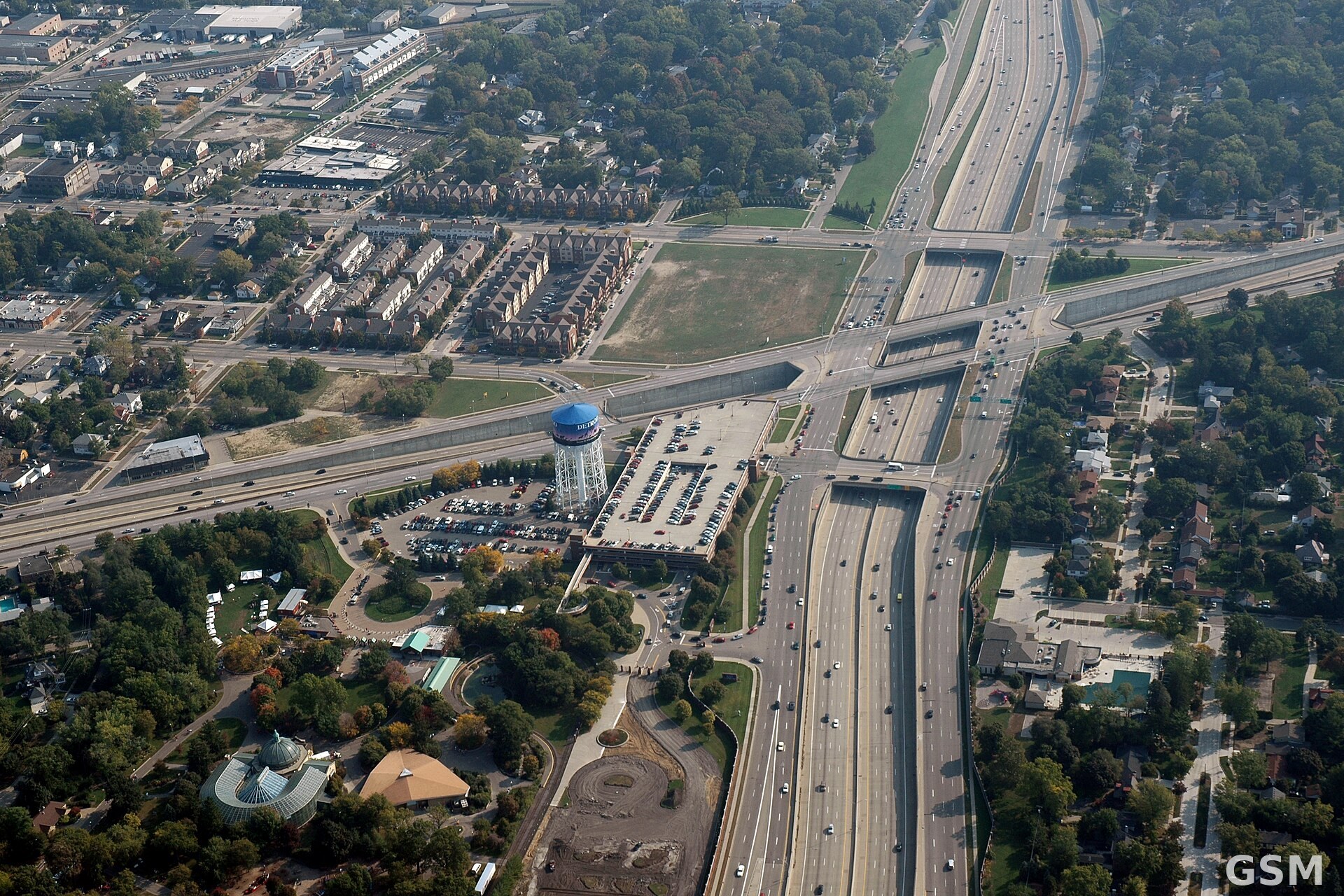
图片来源:图:Michigan州696号州际公路与M-1公路立交航拍(资料图)。照片:Karen Breen-Bondie,CC BY-SA 2.0,经 Wikimedia Commons