圣佩德罗湾双港发布清洁船用燃料评估:液化天然气与甲醇最具可行性,2030年甲醇年需求或达25万吨
Long Beach——长滩港与洛杉矶港 10月28日联合发布《清洁船用燃料可行性评估》报告,指出液化天然气(LNG)与甲醇是近中期最具可行性的清洁船用燃料,并列出支持这两种燃料在全美最繁忙港区落地的步骤。这项研究是两港「绿色航运走廊」联合行动的一部分,评估了航运业最可能采用的燃料、本地可能形成的需求规模以及所需的基础设施。每年约有 4,000 艘船舶挂靠圣佩德罗湾双港,远洋船舶是港区最大的排放源。
报告的主要结论包括:各航运公司正投资多种燃料技术,而非转向单一替代燃料;到 2030 年,两港 LNG 年需求可能达到约 6.5 万至 11.5 万公吨,甲醇年需求可能达到约 6.4 万至 25 万公吨,具体取决于市场状况与船舶部署;早期甲醇加注所需的大部分储存与分发基础设施已经存在或可改造利用,无需大规模初期投资;燃料成本、航运公司的承诺与监管要求将决定清洁燃料普及的速度。报告建议采取分阶段推进:激励早期甲醇使用、探索试点加注项目、利用现有储存设施、与监管机构合作确立明确的安全与许可要求;LNG 方面,建议聚焦现有的船对船加注方式以确保安全与效率,而非在港区新建大型储存设施。两港预计在今年年底前发布联合征求建议书(RFP),征集在圣佩德罗湾示范替代燃料加注能力的方案。
长滩港首席执行官 Noel Hacegaba 博士表示:「以这项研究为指引的战略投资,将为这些绿色船用燃料培育成长中的市场,帮助服务跨太平洋航线的船舶迈向更清洁的未来。」洛杉矶港执行董事 Gene Seroka 表示,削减船舶排放是行业面临的最重要挑战之一,这项研究让两港更清楚地看到市场走向。
两港的《清洁空气行动计划》(CAAP)最初于 2006 年通过、2017 年更新,目标是迈向零排放:自 2005 年以来,圣佩德罗湾港区相关空气污染物排放中,柴油颗粒物下降 90%、氮氧化物下降 70%、硫氧化物下降 98%;计划要求港区相关温室气体排放在 2030 年降至 1990 年水平的 40% 以下、2050 年降至 80% 以下。
San Pedro Bay Ports Release Clean Marine Fuels Assessment: LNG and Methanol Most Viable, With 2030 Methanol Demand Put at Up to 250,000 Metric Tons
LONG BEACH, Calif. — The ports of Long Beach and Los Angeles on October 28 released a comprehensive Clean Marine Fuel Feasibility Assessment identifying liquefied natural gas (LNG) and methanol as the two most viable clean marine fuels for the near and medium term, and outlining steps to support their use at the nation's busiest port complex. Conducted as part of the ports' joint Green Shipping Corridor efforts, the study examined which fuels are most likely to be adopted by the shipping industry calling at the ports, how much demand could develop locally, and what infrastructure would be needed. Approximately 4,000 vessels call each year at the San Pedro Bay ports, and oceangoing vessels are the largest source of emissions in the port complex.
Among the study's findings: shipping lines are investing in a variety of fuel technologies rather than moving toward a single alternative; by 2030, annual demand at the two ports could reach approximately 65,000 to 115,000 metric tons of LNG and 64,000 to 250,000 metric tons of methanol, depending on market conditions and vessel deployment; much of the storage and distribution infrastructure needed for early methanol fueling is already available or could be adapted; and fuel costs, shipping line commitments and regulatory requirements will help determine how quickly cleaner fuels become widely available. The assessment recommends a phased approach: incentivizing early methanol use, exploring pilot fueling projects, using existing storage facilities, and working with regulators on clear safety and permitting requirements; for LNG, it recommends focusing on existing ship-to-ship fueling methods rather than constructing major new storage facilities. The findings will inform a joint ports Request for Proposal, anticipated by the end of the year, to demonstrate alternative fuel bunkering capabilities in the San Pedro Bay.
"Strategic investments guided by this study will enable a growing market for these green marine fuels, helping ships serving the trans-Pacific transition to a cleaner future," said Port of Long Beach CEO Dr. Noel Hacegaba. "Reducing emissions from ships is one of the most important challenges facing our industry," said Port of Los Angeles Executive Director Gene Seroka.
The ports' Clean Air Action Plan (CAAP), first approved in 2006 and updated in 2017, sets a course toward zero emissions. Since 2005, port-related emissions in San Pedro Bay have dropped 90% for diesel particulate matter, 70% for nitrogen oxides and 98% for sulfur oxides; the plan calls for reducing port-related greenhouse gas emissions 40% below 1990 levels by 2030 and 80% below 1990 levels by 2050.
来源:GSM·美国(原文链接)
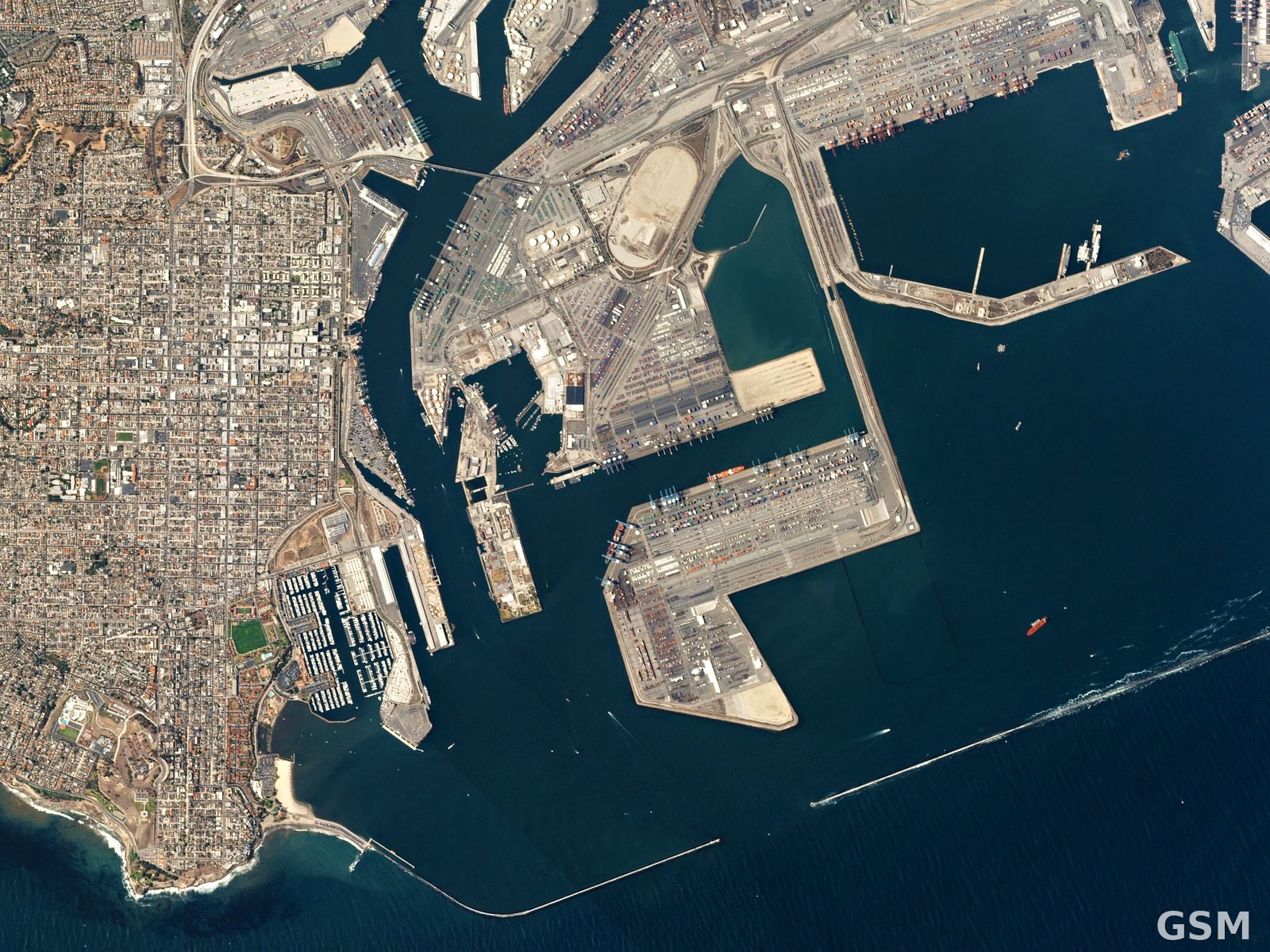
图片来源:圣佩德罗湾长滩港与洛杉矶港港区航拍(资料图)。Planet Labs 摄,CC BY-SA 4.0,经 Wikimedia Commons。 / Aerial view of the San Pedro Bay port complex (file photo). Photo by Planet Labs, Inc., CC BY-SA 4.0, via Wikimedia Commons.