NASA「Lucy」探测器进入木星特洛伊小行星区:飞行逾22亿英里、为首艘抵达该区域的航天器
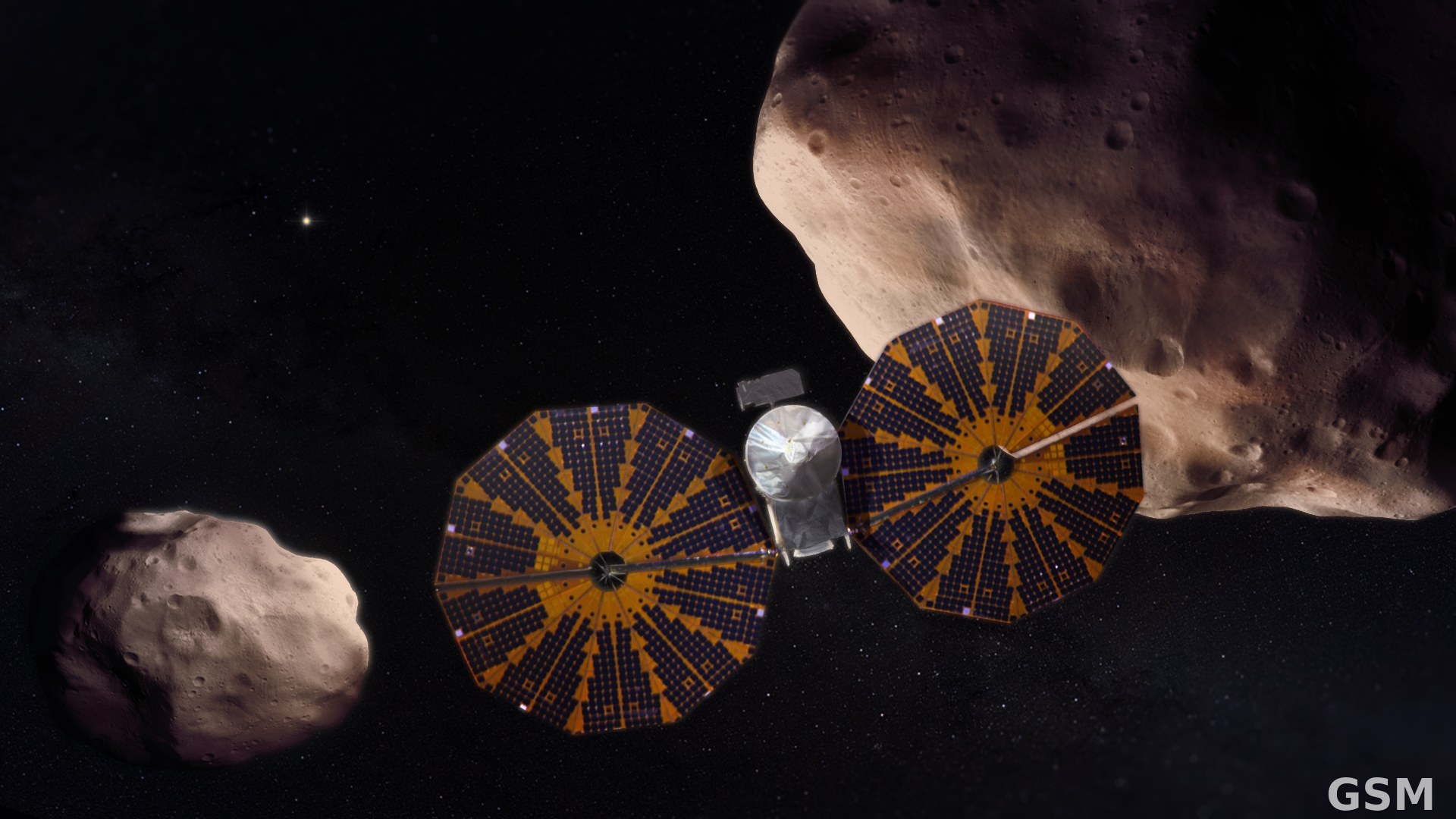
美国国家航空航天局(NASA)10月28日宣布,其「Lucy」探测器自2021年10月16日发射以来已飞行超过22亿英里,现已进入木星特洛伊小行星所在的区域,成为首艘抵达这一区域的航天器;探测器正接近木星的拉格朗日点L4(Lagrange point 4),首次飞掠目标小行星 Eurybates 定于2027年8月11日。
据 NASA 任务博客介绍,特洛伊小行星分两群沿木星轨道绕太阳运行:一群位于 L4、运行在木星前方,另一群位于 L5、跟在木星后方;两群与木星的距离同木星与太阳的距离相当,约4.84亿英里。任务工程师通过探测器的无线电信号与周围恒星图像追踪其位置,确认它正接近 L4。由于特洛伊小行星彼此平均相距600多万英里,在首次近距离飞掠之前,它们在探测器视野中只是星野里的微小光点。
NASA 称,此前多艘航天器到访过木星、或借木星引力弹弓前往更远处,但从未有航天器探访过木星特洛伊小行星,只有专为探索这一小行星群设计的 Lucy 有理由前往该区域。科学家预期,近距离研究特洛伊小行星将帮助完善关于太阳系行星如何在45亿年前形成、又如何演化到今天格局的理论。
任务团队表示,Lucy 深入该区域后正适应持续变冷的温度与变暗的阳光:它的设计针对这一区域优化,那里距太阳的距离是地球的五倍多,探测器与仪器目前运行状态符合预期。首次飞掠只持续数小时,团队正为 Eurybates 飞掠做最后准备,确保探测器、仪器与人员都能充分利用这段时间。
按计划,Lucy 飞掠 Eurybates 之后,将依次探访 Polymele(2027年9月)、Leucus(2028年4月)与 Orus(2028年11月);2030年返回地球进行第三次引力弹弓,之后前往木星后方的 L5 小行星群,于2033年3月探访双小行星 Patroclus 与 Menoetius。
NASA's Lucy Enters the Jupiter Trojan Asteroid Region After Flying More Than 2.2 Billion Miles
NASA announced on October 28 that its Lucy spacecraft, having traveled more than 2.2 billion miles since its launch on October 16, 2021, has entered the region of the Jupiter Trojan asteroids, becoming the first spacecraft to reach that region. Lucy is approaching Jupiter's Lagrange point 4 (L4), and its first encounter, with the asteroid Eurybates, is set for August 11, 2027.
According to NASA's mission blog, the Trojans travel around the Sun in two groups sharing Jupiter's orbit: one group around L4, ahead of Jupiter, and a second around L5, trailing behind the planet. The clusters are as far from Jupiter as the planet is from the Sun, about 484 million miles. Mission engineers know Lucy is approaching L4 by tracking the spacecraft's location through its radio signals and images of surrounding stars. Because the Trojans are separated from each other by more than 6 million miles on average, they will appear to Lucy as pinpricks of light against a field of stars until the spacecraft closes in on its chosen targets.
NASA said several previous spacecraft have visited Jupiter, some using its gravity to travel even farther in a maneuver called a gravity assist, but none had the opportunity to visit the Jupiter Trojans. Only Lucy, built specifically to explore that population, has had a reason to travel to those regions. Scientists expect that studying the Trojans up close will help them refine theories of how the solar system's planets formed 4.5 billion years ago and how they ended up in their current configuration.
As Lucy cruises deeper into the region, it has adapted to gradually cooling temperatures and dimming sunlight. Its design is optimized for a region more than five times farther from the Sun than Earth, and the spacecraft and its instruments continue to operate as expected. With less than a year until the first encounter, the team is putting the final touches on the encounter plans to make the most of the few hours Lucy will spend studying Eurybates.
After Eurybates, Lucy will visit Polymele in September 2027, Leucus in April 2028 and Orus in November 2028. It will return to Earth in 2030 for a third and final gravity assist, which will send it toward Jupiter's trailing Trojan group, where it will explore the binary pair Patroclus and Menoetius in March 2033.
来源:GSM·美国(原文链接)
图片来源:图:NASA「Lucy」探测器飞掠木星特洛伊双小行星 Patroclus 与 Menoetius 的艺术概念图。NASA Goddard Space Flight Center 制作,公共领域,经 Wikimedia Commons。 / Photo: Artist's concept of NASA's Lucy spacecraft flying past the Trojan binary asteroids Patroclus and Menoetius. Created by NASA Goddard Space Flight Center, public domain, via Wikimedia Commons.