NASA「毅力号」在火星测得约100纳米超细尘粒 仅为头发丝五百分之一 研究称或深入人体难清除
美国国家航空航天局(NASA)的「毅力号」(Perseverance)火星车在 Jezero 陨石坑一带测到了迄今为止在火星上发现的最细尘粒:直径最小仅约100纳米,约为人类头发丝的五百分之一。这项研究由圣路易斯华盛顿大学(Washington University in St. Louis)行星科学家 Scott VanBommel 领衔,发表于《美国国家科学院院刊》(PNAS),路透社10月28日报道了这一发现。
火星以尘土闻名:日常风、尘卷风与地区性乃至全球性沙尘暴不断搬运尘粒,尘土也是未来载人火星任务必须解决的难题。「毅力号」自2021年登陆以来一直在 Jezero 陨石坑及周边工作,本次测得的超细尘粒附着在火星车的硬件上,其中包括车上搭载的、用来测试其在火星严酷环境中耐受情况的宇航服材料样本。
VanBommel 表示:「粒径更小并不必然意味着尘土更危险,但更小的颗粒更有可能深入人体、也更难被身体清除。」「与任何物质一样,毒性取决于剂量与暴露时长。火星尘含有二氧化硅、铁的化合物以及高氯酸盐等氯化合物,这些物质在剂量足够高时在地球上已知对人体有害。」
研究团队指出,这批关于火星尘粒径与成分的数据,将帮助任务规划者评估尘土对宇航员健康、宇航服与设备的影响,为未来的载人登火做准备。
NASA's Perseverance Rover Detects Ultrafine Mars Dust About 100 Nanometers Wide, 500 Times Thinner Than a Human Hair
NASA's Perseverance rover, operating in and around Jezero Crater on Mars since landing in 2021, has detected the finest particles of dust yet found on the planet — ultrafine particles as small as around 100 nanometers wide, about 500 times thinner than a human hair, Reuters reported on Wednesday, October 28. The findings, led by planetary scientist Scott VanBommel of Washington University in St. Louis, a member of the Perseverance science team, were published in the journal Proceedings of the National Academy of Sciences.
Mars is a dusty place: dust is circulated by everyday winds, whirlwinds called dust devils and larger dust storms raging at local, regional and global scales, and dust is a factor that must be addressed in any human mission to Mars. Perseverance measured dust particles that stuck to rover hardware, including spacesuit materials carried aboard the six-wheeled robotic vehicle to observe how they hold up in the planet's harsh environment.
"A smaller particle size does not necessarily make dust more dangerous, but smaller particles do have a higher potential to penetrate deeper into the human body and are harder for the body to clear," VanBommel said. "Like any substance, toxicity depends on dose and duration. Martian dust contains silica, iron compounds and chlorine compounds such as perchlorate, which are known to be harmful at high enough doses on Earth."
The measurements give mission planners new data on the size and composition of Martian dust, informing assessments of risks to astronaut health, spacesuits and equipment ahead of future crewed missions to Mars.
来源:GSM·美国(原文链接)
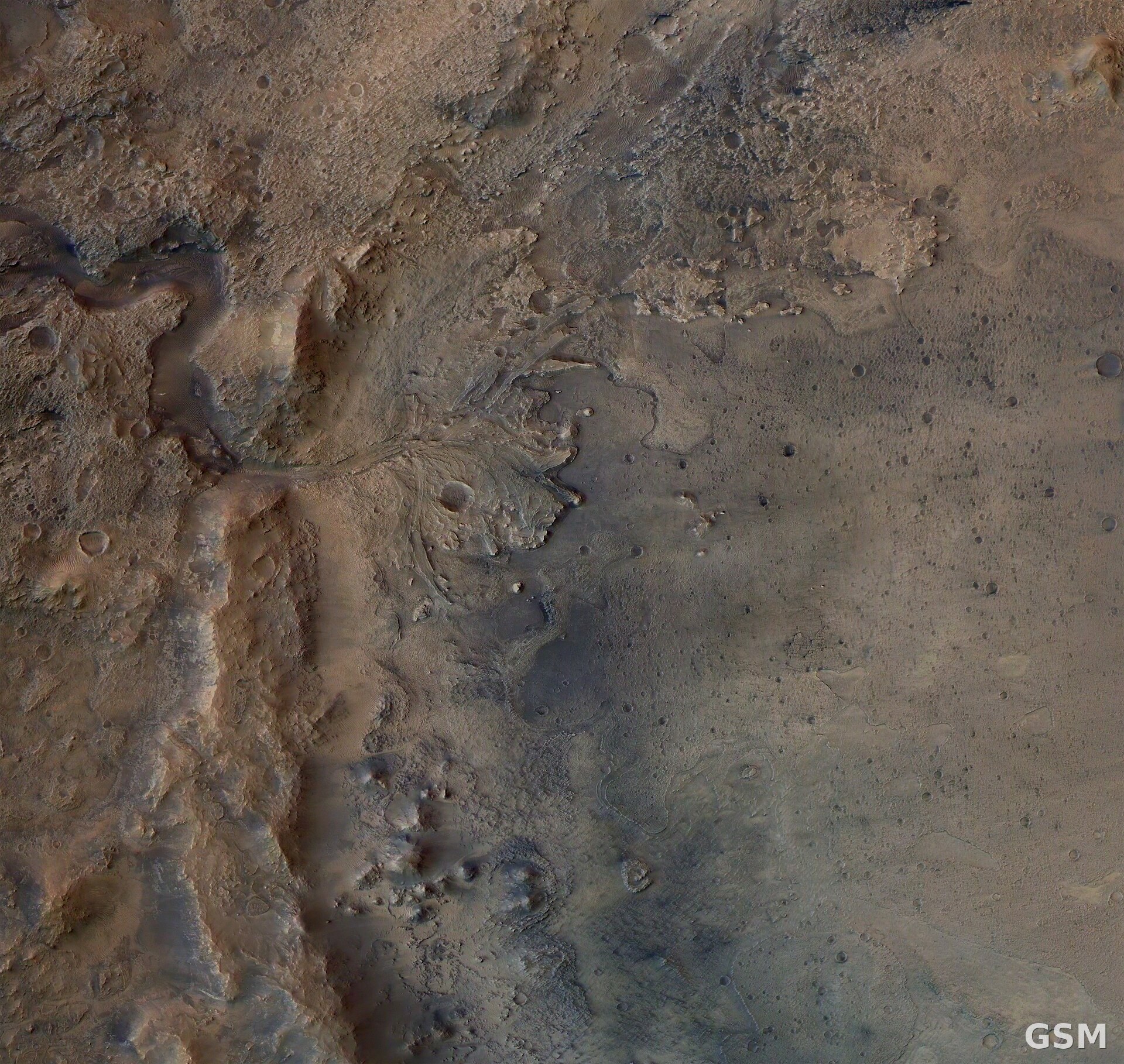
图片来源:火星Jezero陨石坑的古河流三角洲轨道影像,「毅力号」正在该陨石坑一带工作(资料图)。/ Orbital view of the ancient river delta in Jezero Crater on Mars, where the Perseverance rover is working (file photo). Image by ESA/DLR/FU Berlin, CC BY-SA 3.0 IGO, via Wikimedia Commons