SLAC暗物质之夜10月28日在Menlo Park举行:四位科学家讲解LZ与SuperCDMS如何搜寻暗物质,免费参加
位于加州圣马特奥县Menlo Park市的SLAC国家加速器实验室(SLAC National Accelerator Laboratory)将于10月28日(周三)下午5时30分至7时举办科普活动「SLAC on Tap:暗物质之夜」(SLAC on Tap: Night of the Dark Matter),地点在The Dutch Goose餐馆(3567 Alameda de las Pulgas, Menlo Park, CA 94025)。四位SLAC科学家Dan Akerib、Tom Shutt、Kelly Stifter与Ann Wang将以座谈加问答的形式,讲解人类如何搜寻暗物质;活动免费,通过Eventbrite报名,本场为万圣节特别版,现场还设有变装比赛,欢迎参加者打扮成自己心目中的暗物质候选粒子。
暗物质占宇宙中物质的大部分,却至今无法被直接观测到。SLAC的科学家介绍,LUX-ZEPLIN(LZ)实验近期记录到一次难以解释的神秘粒子相互作用,有可能正是由暗物质造成;与此同时,SuperCDMS实验已经启动对更轻暗物质粒子的搜寻,其探测器灵敏到可以捕捉最微弱的信号痕迹。本场活动将带听众「深入地下」,看LZ与SuperCDMS这类实验如何在地下实验室为这种宇宙中最神秘的物质设下「陷阱」,以及科学家距离最终揭开暗物质面纱还有多远。
四位主讲人都在暗物质搜寻一线工作:Dan Akerib与Tom Shutt均为SLAC粒子物理与天体物理教授,两人合作搜寻暗物质近30年,从早年的CDMS计划一路做到液氙探测器LUX与LZ,2014年从凯斯西储大学转投SLAC;Kelly Stifter是他们到斯坦福后指导的第一位物理系研究生,现从事包括量子传感器在内的新型探测器研发以拓展低质量暗物质的搜寻范围,是SuperCDMS合作组成员;Ann Wang以KIPAC博士后研究员身份加入LZ团队,与Akerib、Shutt合作从事液氙暗物质搜寻与未来探测器技术。Stifter与Wang后来均获Panofsky博士后奖金,在SLAC独立开展研究。
参加方式:活动免费,通过Eventbrite报名;截至发稿时,Eventbrite报名页面显示本场名额已满,有意参加者可留意SLAC官网活动页与报名页面是否有候补名额或后续场次信息。活动为实地举行,无线上直播安排。
SLAC on Tap Brings a Night of the Dark Matter to Menlo Park on October 28: Four SLAC Scientists Explain the LZ and SuperCDMS Hunts, Free to Attend
SLAC National Accelerator Laboratory, in the city of Menlo Park, San Mateo County, California, will host "SLAC on Tap: Night of the Dark Matter" on Wednesday, October 28, from 5:30 to 7:00 p.m. at The Dutch Goose restaurant, 3567 Alameda de las Pulgas, Menlo Park, CA 94025. Four SLAC scientists — Dan Akerib, Tom Shutt, Kelly Stifter and Ann Wang — will explain how researchers hunt for dark matter in a moderated panel followed by an audience Q&A. The event is free, with registration through Eventbrite. This Halloween edition also features a costume competition: attendees are invited to come dressed as their favorite dark matter candidate particle.
Dark matter makes up most of the matter in the universe, yet it continues to slip through our grasp. According to SLAC, the LUX-ZEPLIN (LZ) experiment recently made headlines after researchers spotted a mysterious particle interaction that they cannot easily explain — one that could potentially have been caused by dark matter. Meanwhile, SuperCDMS has started its hunt for lighter dark matter particles with detectors sensitive enough to pick up their faintest traces. The panel will take the audience deep underground, where experiments like LZ and SuperCDMS have set traps for one of the universe's sneakiest substances, and explore what could be hiding in the dark, how scientists are trying to catch it, and what it would take to finally unmask dark matter.
All four speakers work on the front lines of the dark matter search. Dan Akerib and Tom Shutt, both professors of particle physics and astrophysics at SLAC, have worked together in the search for dark matter for most of the last 30 years, starting with the CDMS program and continuing through the development of liquid-xenon detectors including LUX and LZ; they relocated from Case Western Reserve University to SLAC in 2014. Kelly Stifter, their first graduate student from the Stanford Physics Department, now develops new detectors, including quantum sensors, to extend dark matter searches to lower masses, and is a member of the SuperCDMS collaboration. Ann Wang joined the LZ group as a KIPAC fellow, working on the search for dark matter with liquid xenon and on technologies for future detectors. Both Stifter and Wang later became Panofsky Fellows at SLAC.
How to attend: The event is free and registration is through Eventbrite. As of publication, the Eventbrite registration page shows this session as fully booked; those interested can watch the SLAC events page and the registration page for any waitlist openings or future sessions. The event is held in person only, with no livestream.
来源:GSM·美国(原文链接)
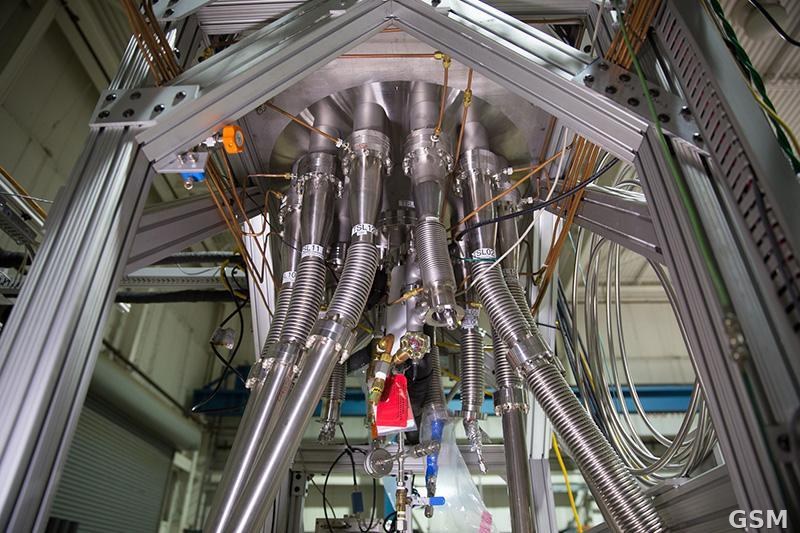
图片来源:图:位于SLAC国家加速器实验室的LZ(LUX-ZEPLIN)暗物质实验系统测试平台,SLAC科学家正是在这类探测器上搜寻暗物质粒子。图片来源:SLAC国家加速器实验室(SLAC/LZ实验官网图库)。Photo: The LZ (LUX-ZEPLIN) dark matter experiment's system test platform at SLAC National Accelerator Laboratory. Credit: SLAC National Accelerator Laboratory.