跟进:环保署在德州Lubbock正式提出油气法规修订提案 预计省450亿美元、增产2.1亿桶石油
美国环境保护署(EPA)10月27日在得克萨斯州 Lubbock 宣布,正式提出修订上届政府油气法规的提案:特朗普总统与环保署署长 Lee Zeldin 当天在当地公布这项针对《清洁空气法》(CAA)油气规则(业内称 OOOOb/c)的修订方案,环保署预计可为消费者与企业节省450亿美元成本,并新增约2.1亿桶石油和1.41万亿立方英尺天然气产量。
环保署署长 Lee Zeldin 表示,美国生产的每一桶石油、每一立方英尺天然气背后,是数以百万计的工人、企业和这个国家经济的心跳;上届政府的环保署曾摧毁性地针对这一行业,特朗普总统承诺结束对石油和天然气的打压,他本人也誓言尽自己的一份力、同时保护环境。内政部长 Doug Burgum 表示,今天的修订回滚了上届政府鲁莽的繁文缛节,预计可释放约2.1亿桶美国石油、为纳税人节省约450亿美元。能源部长 Chris Wright 表示,上届政府推行能源减法议程、对美国油气生产商施加昂贵规则,推高了成本;环保署这项提案是本届政府释放美国能源主导地位的又一项常识性举措。
据环保署介绍,上届政府的环保署2024年敲定的一刀切规则,当时估算成本为180亿美元,但环保署现认为其低估了成本,且拒绝承认这些规则会迫使许多油井关闭、阻止新井开钻,整体上威胁国内生产,并推高从取暖费到食品杂货与加油站价格的生活成本。新提案强调边际井改革:边际井约占全国在产油井的五分之四,许多为家庭所有,除为家庭经济提供动力外,油井收入常被家庭用作退休储蓄,降低其监管负担将为成千上万美国家庭提供财务保障。
提案的五项关键改动为:第一,井场分类——环保署共同提出两个方案供选择,按产量水平把井场分为边际与非边际,或按资源类型分为常规与非常规,并分别设定标准,使规则对不同类型的井切实可行;第二,撤销「超级排放者」计划——该计划认证第三方监测机构报告所谓超级排放泄漏事件并要求各州同样执行,环保署以法律疑虑、必要性存疑以及运营商已有其他及时发现并修复重大排放事件的做法为由,提议将其废除;第三,盖罩与密闭排气系统——把「无可识别排放」要求拆分为设计要求与运行要求,运行要求允许维修;第四,伴生气——恢复以95%效率的火炬燃烧或其他控制装置作为最佳减排系统,不再要求油井产出的全部伴生天然气都必须进入销售管线,环保署称这在所有产区并不现实、且引发严重的法律与实际问题;第五,控制装置——作技术性调整,为火焰监测数据偏差、控制装置警报与可见排放测试条件提供适当灵活性。
程序方面,环保署将在提案刊登于《联邦公报》后,举行至少45天的公众评论期,并召开公开听证会。背景时间线为:署长 Lee Zeldin 2025年3月12日首次宣布全面再审2024年最终规则;2025年7月31日环保署发布临时最终规则,延长2024年规则的多项合规期限;2025年11月26日确认上述延期,并对火炬与密闭燃烧装置的净热值监测追加180天延期、初步年度报告提交追加360天延期;2026年4月6日敲定涉及净热值与伴生气临时火炬燃烧时限等事项的修订;2026年5月1日澄清现行联邦规则已允许油气生产商在限定情形下对新油井的伴生气进行火炬燃烧。
本站10月7日曾报道,泽尔丁当天在新墨西哥州 Santa Fe 的新墨西哥油气协会年会上预告环保署即将提出这项再审的第二部分提案;本次在 Lubbock 的宣布,是该提案的正式提出。
Follow-Up: EPA Formally Proposes Oil and Gas Rule Revisions in Lubbock, Texas, Estimating $45 Billion in Savings and 210 Million Additional Barrels
The U.S. Environmental Protection Agency (EPA) announced in Lubbock, Texas, on October 27 that it is formally proposing major revisions to the previous administration's oil and natural gas regulations: President Trump and EPA Administrator Lee Zeldin unveiled the proposal to revise the Clean Air Act (CAA) oil and gas rules known as OOOOb/c, which EPA expects to save $45 billion in costs to consumers and businesses and to unleash an estimated 210 million additional barrels of oil and 1.41 trillion cubic feet of natural gas.
EPA Administrator Lee Zeldin said that behind every barrel of oil and every cubic foot of natural gas produced in the U.S. are millions of workers, businesses, and the heartbeat of the nation's economy, that President Trump promised to end the war on oil and natural gas, and that he vowed to do his part while protecting the environment. Secretary of the Interior Doug Burgum said the revision rolls back reckless Biden-era red tape to unlock an estimated 210 million barrels of American oil and deliver an estimated $45 billion in taxpayer savings. Secretary of Energy Chris Wright said the previous administration imposed costly regulations on American oil and natural gas producers, and that EPA's proposal is another commonsense effort to unleash American energy dominance and allow producers to deliver more energy at lower costs.
According to EPA, the one-size-fits-all regulations finalized in 2024 were estimated at the time to cost $18 billion, but EPA now says the prior agency underestimated the costs and refused to acknowledge the rules would force many wells to close and stop new wells from opening, threatening domestic production and driving up the cost of living from heating bills to grocery and pump prices. The proposal emphasizes reforms for marginal wells, which account for roughly four out of every five producing wells in the nation; many are family-owned, and families often use income from the wells for retirement savings, so reducing their regulatory burdens will provide financial security for thousands of American families, EPA said.
The five key proposed changes are: (1) well sites — EPA is co-proposing two options to create separate categories and standards, by production level (marginal or non-marginal) or by resource type (conventional or unconventional); (2) the Super Emitter Program — EPA proposes to rescind the program that certified third-party monitors for so-called super emitter leak events, citing legal concerns and questioning its necessity; (3) covers and closed vent systems — EPA proposes to split the No Identifiable Emissions aspect into design requirements and operational requirements, with the operational requirements allowing for repairs; (4) associated gas — EPA proposes to restore 95 percent efficient flaring or other control devices as the best system of emission reduction, rather than requiring all associated gas from oil wells to reach a sales line; and (5) control devices — technical changes to give flexibility for flame monitoring data deviations, control device alerts, and visible emissions test conditions where appropriate.
EPA will hold at least a 45-day public comment period, including a public hearing, after the proposal is published in the Federal Register. The agency's timeline notes that Administrator Zeldin first announced a comprehensive reconsideration of the 2024 final rule on March 12, 2025; EPA issued an interim final rule on July 31, 2025 extending several compliance deadlines, reaffirmed the extensions on November 26, 2025 with additional extensions, finalized revisions on April 6, 2026 related to net heating value and temporary flaring, and clarified on May 1, 2026 that current regulations already allow flaring of associated gas at new oil wells in limited circumstances.
GSM reported on October 7 that Zeldin, speaking in Santa Fe, New Mexico, previewed that EPA would propose this second part of the reconsideration; the Lubbock announcement is the formal proposal.
来源:GSM·美国(原文链接)
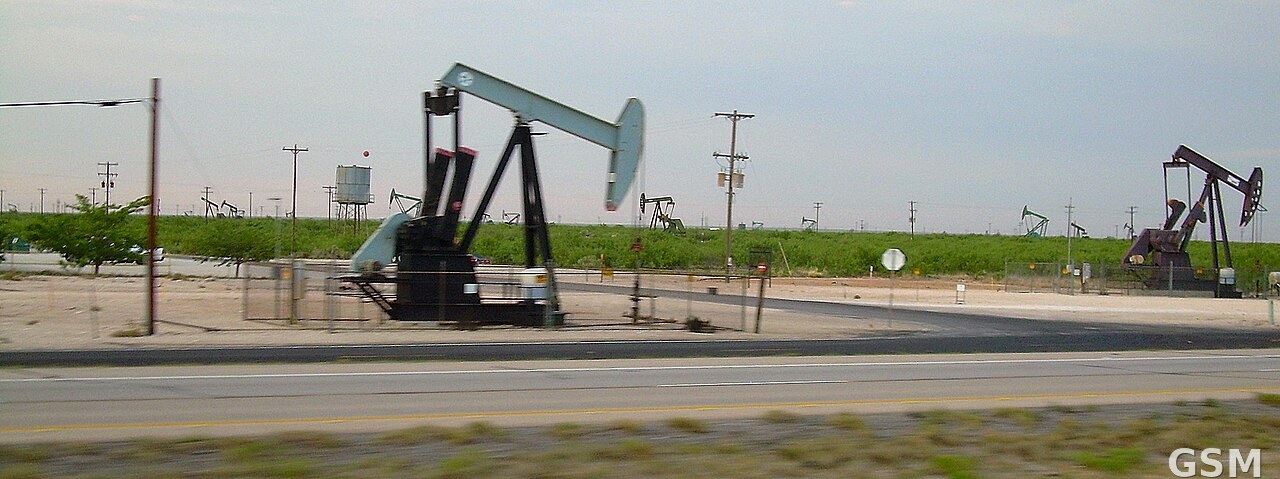
图片来源:图:得克萨斯州 Midland 附近 Interstate 20 沿线的抽油机油田。照片:ErgoSum88,公共领域,来源:Wikimedia Commons / Photo: Pumpjacks along Interstate 20 near Midland, Texas. Photo by ErgoSum88, public domain, via Wikimedia Commons
- 2026-10-07 03:47环保署将提油气甲烷规则再审第二部分:涉边际井与超级排放者计划 官方估省450亿美元
- 2026-10-27 17:54跟进:环保署在得州拉伯克正式提出油气规则修订:撤销超级排放者计划,估省450亿美元、释放2.1亿桶石油
- 2026-10-27 23:48跟进:环保署在德州Lubbock正式提出油气法规修订提案 预计省450亿美元、增产2.1亿桶石油本篇