中国五千年:五代十国:唐宋之间的分裂与过渡
五代十国是指唐朝灭亡后至北宋统一之前,约公元九〇七年至九七九年的分裂时期。北方先后出现后梁、后唐、后晋、后汉、后周五个朝代,南方及山西等地则并存着十个相对独立的割据政权,史称十国。
这一时期的开端是朱温灭唐建后梁。此后李存勖灭后梁建后唐,石敬瑭借助契丹力量建后晋,并割让燕云十六州给契丹,使中原王朝失去北方屏障,这一事件对后来的宋辽关系影响深远。
后周世宗柴荣励精图治,整顿军政,收复部分失地,为统一创造了条件,但他英年早逝,幼主即位,禁军将领赵匡胤在陈桥驿发动兵变,黄袍加身,建立北宋,结束了五代的更替。
十国包括吴、南唐、吴越、闽、楚、南汉、前蜀、后蜀、南平和北汉等,其中九国在南方,北汉独踞北方,统治时间长短不一。尽管战乱频繁,南方在这一时期相对安定,农业、手工业和商业继续发展,人口南移,江南经济逐渐崛起,文化艺术也有所积累。
在具体政权上,南方各国各有特点。南唐定都金陵,文化底蕴较深,词人冯延巳、李煜等人的作品流传后世;吴越国重视水利,修筑钱塘江海塘,杭州一带经济受益;前蜀、后蜀定都成都,蜀地相对富庶,雕版印刷与蜀锦、茶叶贸易都有发展;闽国、楚国、南汉则依托沿海或内陆商路,发展地方手工业与对外交往。
北方五代的君主多由军人出身,皇位更迭频繁,政权寿命短暂,最短的后汉仅约四年。这一时期的战争也推动了军事与政治制度的变化,禁军地位上升,后周的殿前司成为赵匡胤发迹的起点。
文化上,词体在南方进一步发展,绘画、陶瓷等艺术并未因分裂而中断。五代十国虽然短暂分裂,却是唐宋之间的过渡阶段。它暴露了藩镇割据的危害,也为北宋加强中央集权、重文轻武、改革兵制提供了反面教训。北方政权的频繁更迭与南方经济的持续发展,共同塑造了宋朝统一后南北经济格局的变化。
信息来源:《旧五代史》《新五代史》《资治通鉴》及公开博物馆史料
Five Thousand Years of China: The Five Dynasties and Ten Kingdoms: Division and Transition Between Tang and Song
The Five Dynasties and Ten Kingdoms is the period of division from the fall of the Tang to the unification by the Northern Song, roughly 907 to 979 CE. In the north, five dynasties succeeded one another — Later Liang, Later Tang, Later Jin, Later Han and Later Zhou — while in the south and in Shanxi and elsewhere ten relatively independent separatist regimes coexisted, known in history as the Ten Kingdoms.
The period began when Zhu Wen destroyed the Tang and founded Later Liang. Thereafter Li Cunxu destroyed Later Liang and founded Later Tang; Shi Jingtang, leaning on Khitan strength, founded Later Jin and ceded the Sixteen Prefectures of Yan and Yun to the Khitan, costing the Central Plains dynasties their northern screen — an event that deeply affected later Song-Liao relations.
Emperor Shizong of Later Zhou, Chai Rong, governed with vigour, reformed the army and administration and recovered part of the lost territory, creating conditions for unification, but he died young; with a child ruler on the throne, the palace-army general Zhao Kuangyin mutinied at Chenqiao, was draped in the yellow robe and founded the Northern Song, ending the succession of the Five Dynasties.
The Ten Kingdoms comprised Wu, Southern Tang, Wuyue, Min, Chu, Southern Han, Former Shu, Later Shu, Nanping and Northern Han, each ruling for a different length of time; of the ten kingdoms, nine lay in the south, and Northern Han alone held the north. Though wars were frequent, the south in this period was relatively settled: agriculture, handicrafts and commerce continued to develop, population moved south, the Jiangnan economy rose gradually, and culture and art accumulated as well.
Among the individual regimes, the southern states each had their character. The Southern Tang made its capital at Jinling and had deep cultural resources — the lyrics of poets such as Feng Yansi and Li Yu were handed down to later ages. Wuyue valued waterworks and built the Qiantang sea wall, benefiting the economy around Hangzhou.
The Former and Later Shu, based at Chengdu, were relatively prosperous, and block printing and Shu brocade and the tea trade all developed. Min, Chu and Southern Han relied on coastal or inland trade routes to develop local handicrafts and foreign exchange.
The rulers of the northern Five Dynasties mostly came from the military, thrones changed hands frequently and regimes were short-lived — the shortest, Later Han, only about four years. The period's wars also drove changes in military and political systems: the palace army rose in status, and the Later Zhou's Palace Command was where Zhao Kuangyin rose to prominence.
Culturally, the lyric (ci) form developed further in the south, and arts such as painting and ceramics did not cease for the division. Though brief and fragmented, the Five Dynasties and Ten Kingdoms is the transition between Tang and Song.
It exposed the harm of military-governor separatism and gave the Northern Song negative lessons for strengthening central power, valuing civil over military affairs and reforming the army system. The frequent changes of regime in the north and the sustained development of the southern economy together shaped the north-south economic pattern after Song unification.
Sources: Old History of the Five Dynasties; New History of the Five Dynasties; Zizhi Tongjian; public museum historical materials.
来源:GSM·美国(原文链接)
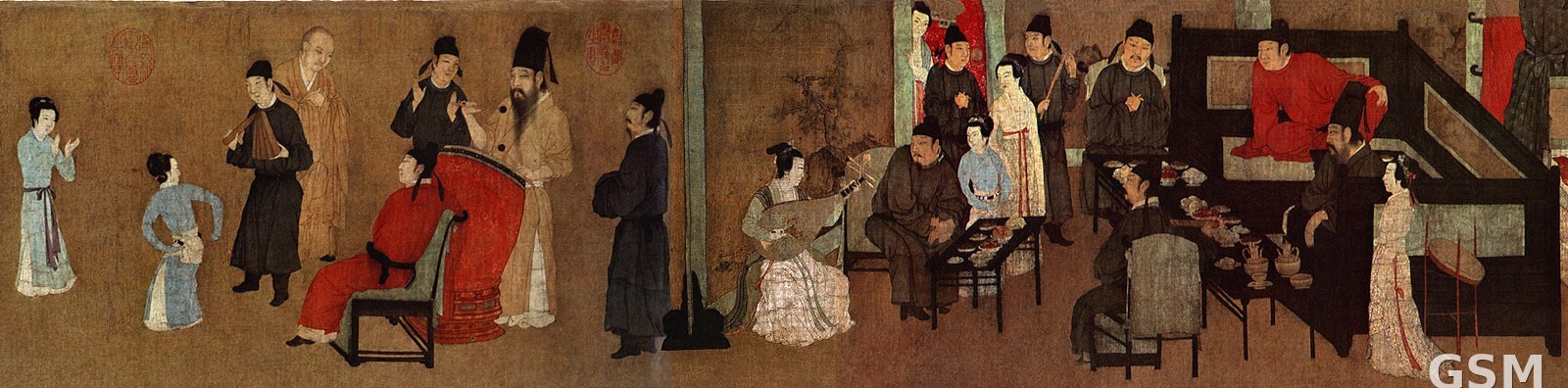
图片来源:五代顾闳中《韩熙载夜宴图》(宋摹本)局部,公有领域,Wikimedia Commons / Detail from Gu Hongzhong’s “Night Revels of Han Xizai” (Song-dynasty copy), Five Dynasties. Public domain, via Wikimedia Commons.