中国五千年:唐朝:贞观之治与开元盛世
唐朝起于公元六一八年,终于公元九〇七年,是中国历史上疆域辽阔、文化开放的统一王朝之一。隋末天下大乱,李渊在太原起兵,次年建立唐朝,定都长安。其子李世民通过玄武门之变即位,是为唐太宗。
他虚心纳谏,重用魏徵、房玄龄、杜如晦等臣僚,轻徭薄赋,完善三省六部与科举制度,史称贞观之治,为唐朝的强盛奠定了基础。高宗时期疆域进一步扩大,但武则天以皇后、皇太后、皇帝的身份先后掌权,改国号为周,是中国历史上唯一的女皇帝。她重用酷吏也提拔贤能,延续了唐朝的国力。
唐玄宗前期任用姚崇、宋璟等贤相,开创开元盛世,长安成为当时世界性的大都市,丝绸之路商旅往来频繁,来自西域、日本、朝鲜半岛等地的使节、商人、僧侣云集于此。唐朝诗歌达到高峰,李白、杜甫、白居易等人的作品,至今仍是中国文学的瑰宝。
然而安史之乱成为转折点。安禄山、史思明叛乱历时约八年,虽最终平定,却使中央对地方藩镇的控制削弱,宦官专权、朋党之争等问题日益严重。唐末黄巢起义沉重打击了旧的统治秩序,藩镇割据愈演愈烈。公元九〇七年,朱温废唐哀帝自立,唐朝灭亡。
在制度上,唐朝继承隋朝的三省六部与科举,完善了中央官制与选官途径,寒门士人得以通过考试进入仕途,这一做法被后世长期沿用。经济上实行均田制与租庸调制,前期府兵制与后期的募兵制交替,农业、手工业与城市商业都有发展。
文化交流方面,玄奘西行取经、鉴真东渡日本的故事广为流传,佛教、道教与外来宗教在长安并存,日本遣唐使多次来华,学习唐朝的制度、律令、建筑与文字,对日本奈良、平安时代的政治文化影响明显。
唐朝前期国力强盛时,疆域东至朝鲜半岛、西达中亚、南抵越南中部一带,据正史记载,其羁縻州县众多,边疆治理多因地制宜。安史之乱后,唐朝虽又延续约一百五十年,但藩镇割据与中央财政困难始终未能根本解决。唐朝留下的制度、诗歌、对外交流的开放姿态,以及长安作为国际都会的记忆,对后世中国乃至东亚文化产生了深远影响。
信息来源:《旧唐书》《新唐书》《资治通鉴》及陕西历史博物馆、中国国家博物馆公开史料
Five Thousand Years of China: The Tang Dynasty: The Zhenguan Reign and the Kaiyuan Prosperity
The Tang began in 618 CE and ended in 907 — one of the unified dynasties of Chinese history with a vast territory and an open culture. Amid the chaos at the end of the Sui, Li Yuan rose at Taiyuan and the next year founded the Tang, with his capital at Chang'an. His son Li Shimin came to the throne through the Xuanwu Gate Incident, becoming Emperor Taizong.
Open to remonstrance and employing worthy ministers such as Wei Zheng, Fang Xuanling and Du Ruhui, he lightened taxes and corvée and perfected the Three Departments and Six Ministries and the examination system — the famed 'Reign of Zhenguan' — laying the foundation of Tang strength.
Under Emperor Gaozong the territory expanded further, but Wu Zetian wielded power successively as empress, empress dowager and emperor, changing the dynastic name to Zhou — the only woman emperor in Chinese history. She employed cruel officials but also promoted the worthy, continuing the Tang's strength.
In the early reign of Emperor Xuanzong, worthy chancellors such as Yao Chong and Song Jing were employed, opening the Kaiyuan Prosperity; Chang'an became a world metropolis of its age, with Silk Road travellers coming and going and envoys, merchants and monks from the Western Regions, Japan, the Korean peninsula and elsewhere gathering there. Tang poetry reached its peak: the works of Li Bai, Du Fu and Bai Juyi remain treasures of Chinese literature.
But the An Lushan Rebellion became the turning point. The rebellion of An Lushan and Shi Siming lasted some eight years; though finally suppressed, it weakened the centre's control over the regional military governors, and eunuch dictatorship and factional strife grew ever more serious. At the end of the Tang, the Huang Chao uprising dealt the old ruling order a heavy blow, and military-governor separatism intensified. In 907 Zhu Wen deposed Emperor Ai and took the throne himself, and the Tang fell.
Institutionally, the Tang inherited the Sui's Three Departments and Six Ministries and its examinations, perfecting the central administration and the routes into office, so that men of humble origin could enter officialdom by examination — a practice long followed by later ages. Economically it practised the equal-field system and the zu-yong-diao tax, alternating between the early fubing militia and the later recruited armies, and agriculture, handicrafts and urban commerce all developed.
In cultural exchange, the stories of Xuanzang's journey west for the scriptures and Jianzhen's voyages east to Japan are widely told; Buddhism, Daoism and foreign religions coexisted in Chang'an; Japanese embassies to the Tang came many times to study Tang institutions, law, architecture and writing, markedly influencing the politics and culture of Japan's Nara and Heian periods.
At the height of its early strength, Tang territory reached the Korean peninsula in the east, Central Asia in the west and as far as central Vietnam in the south; as the orthodox histories record, it maintained numerous protectorate prefectures and counties, governing its frontiers according to local conditions. After the An Lushan Rebellion the Tang lasted another century and a half, but military-governor separatism and the centre's fiscal difficulties were never fundamentally resolved.
The institutions, poetry, openness to exchange and the memory of Chang'an as an international metropolis that the Tang left behind have profoundly influenced later China and East Asian culture alike.
Sources: Old Book of Tang; New Book of Tang; Zizhi Tongjian; public historical materials of the Shaanxi History Museum and the National Museum of China.
来源:GSM·美国(原文链接)
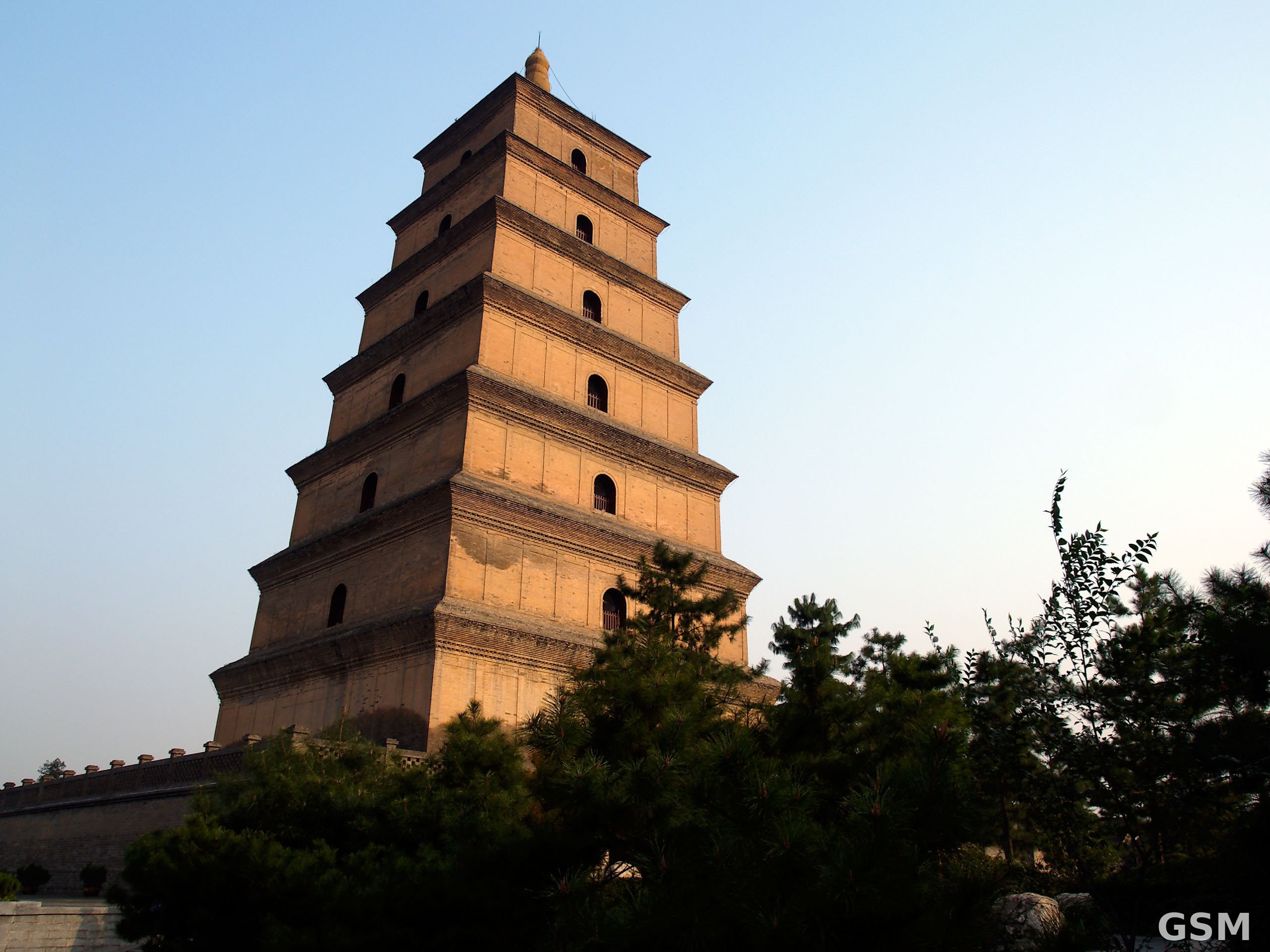
图片来源:西安大雁塔实景,Alex Kwok 摄,CC BY-SA 3.0,Wikimedia Commons / The Giant Wild Goose Pagoda, Xi’an. Photo by Alex Kwok, CC BY-SA 3.0, via Wikimedia Commons.