中国五千年:隋朝:大运河与科举
隋朝由杨坚建立,是南北朝之后重新统一中国的短命王朝,时间约在公元五八一年至六一八年之间。北周末年,外戚杨坚掌握朝政,五八一年代周称帝,国号隋,定都大兴城。五八九年,隋军南下灭陈,结束了自西晋以来长达二百余年的分裂局面,中国再次统一。
隋文帝在位期间,改革制度,实行均田制与租庸调制,减轻百姓负担,创立科举制的雏形,以考试选拔官吏,打破了门阀士族对官职的垄断。隋炀帝杨广即位后,营建东都洛阳,开凿大运河,沟通南北水系。
大运河以洛阳为中心,北抵涿郡,南达余杭,后世不断疏浚使用,成为中国古代重要的南北交通干线。隋朝还修建驰道、长城,并多次用兵辽东与西域,扩大了疆域,但连年大兴土木与对外战争,加重了百姓负担。
炀帝统治后期,各地农民起义蜂起,贵族集团也相继反叛。公元六一八年,隋炀帝在江都被杀,隋朝灭亡。隋朝虽然仅存三十余年,却统一了制度、货币与度量衡,创立的三省六部制与科举制被唐朝继承发展,大运河更惠及后世千年,其制度遗产远比王朝寿命长久。
隋朝的工程与制度细节也影响深远。大兴城规划方正,宫城、皇城与外郭城分区明确,成为后世都城规划的范本。隋文帝开皇年间修订法律,废除酷刑,编订《开皇律》,唐律多沿用其体例。
隋朝统一货币,铸行五铢钱,度量衡也重新规范,便利了全国贸易。隋炀帝开凿的大运河虽然耗费巨大,但沟通了海河、黄河、淮河、长江与钱塘江五大水系,此后历代漕运多沿此线路。隋朝还开通了通往西域的商路,丝绸之路贸易复盛。
隋朝的短命提醒后世,统一需要制度与民力的平衡,而它创立的科举与三省六部制度,却成为中国古代政治制度长期运行的支柱。隋朝的统一还体现在文字与礼制的规范上,各地官学与考试的推行,使人才选拔不再只看门第。
信息来源:《隋书》《资治通鉴》及中国国家博物馆、大运河公开考古史料
Five Thousand Years of China: The Sui Dynasty: The Grand Canal and the Imperial Examinations
The Sui was founded by Yang Jian and was the short-lived dynasty that reunified China after the Northern and Southern Dynasties, lasting roughly from 581 to 618 CE. In the last years of the Northern Zhou, the consort-clan relative Yang Jian grasped control of the government; in 581 he took the throne in place of the Zhou, with the dynastic name Sui and his capital at Daxingcheng.
In 589 the Sui army marched south and destroyed Chen, ending a division of more than two hundred years since the Western Jin and reuniting China. In the reign of Emperor Wen, institutions were reformed: the equal-field system and the zu-yong-diao tax system were implemented, lightening the people's burdens, and the first form of the imperial examination system was created, selecting officials by examination and breaking the great clans' monopoly of office.
After Emperor Yang, Yang Guang, took the throne, he built the eastern capital at Luoyang and cut the Grand Canal, linking the waterways of north and south. Centred on Luoyang, the canal reached Zhuojun in the north and Yuhang in the south; dredged and used by later ages, it became a major north-south transport artery of ancient China.
The Sui also built imperial highways and Great Wall sections and campaigned repeatedly in the northeast and the Western Regions, enlarging the territory, but years of great works and foreign wars increased the people's burdens. In the last years of Emperor Yang's rule, peasant uprisings flared everywhere and aristocratic groups rebelled in turn. In 618 Emperor Yang was killed at Jiangdu, and the Sui fell.
Though it lasted only some thirty years, the Sui unified systems, currency and weights and measures, and the Three Departments and Six Ministries and the examination system it created were inherited and developed by the Tang; the Grand Canal benefited later ages for a millennium, and its institutional legacy far outlasted the dynasty itself.
The engineering and institutional details of the Sui also had deep influence. Daxingcheng was laid out in a regular grid, its palace city, imperial city and outer city clearly zoned, becoming a model for later capitals. In the Kaihuang era Emperor Wen revised the laws, abolished cruel punishments and compiled the Kaihuang Code, whose form the Tang code largely followed.
The Sui unified the currency, casting the five-zhu coin, and restandardized weights and measures, easing trade across the country. The Grand Canal cut by Emperor Yang, though enormously costly, linked the five great river systems — the Hai, Yellow, Huai, Yangtze and Qiantang — and the grain transport of later dynasties mostly followed this route. The Sui also opened trade routes to the Western Regions, and Silk Road trade revived.
The Sui's brevity reminds later ages that unification requires a balance between institutions and the people's strength, yet the examination system and the Three Departments and Six Ministries it created became the pillars on which the political system of ancient China long operated. Sui unification also showed in the standardization of script and ritual; official schools and examinations spread across the country, so that the selection of talent no longer looked only at pedigree.
Sources: Book of Sui; Zizhi Tongjian; public archaeological materials of the National Museum of China and on the Grand Canal.
来源:GSM·美国(原文链接)
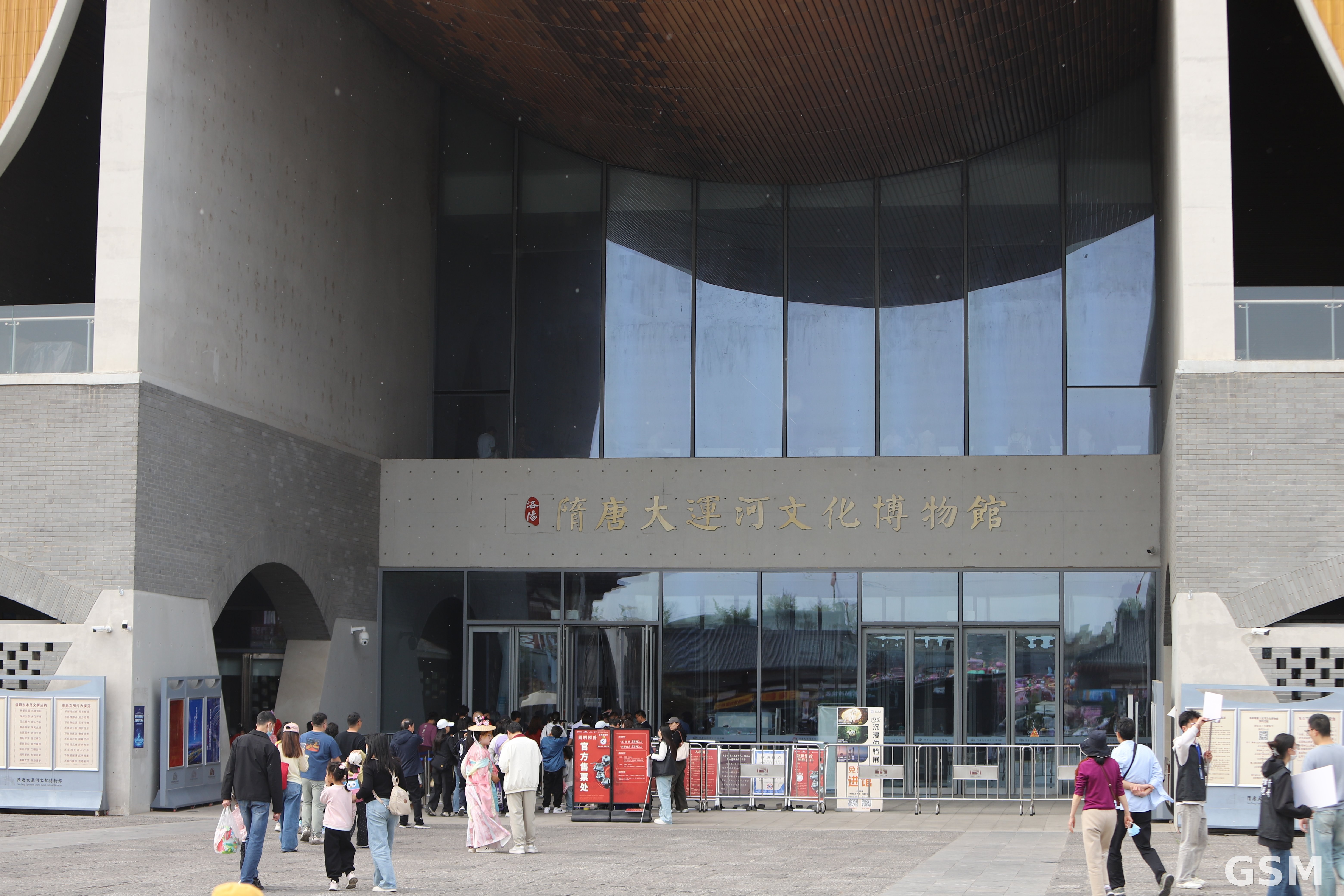
图片来源:洛阳隋唐大运河文化博物馆入口实景,Baomi 摄,CC BY-SA 4.0,Wikimedia Commons / Entrance to the Sui and Tang Grand Canal Culture Museum, Luoyang. Photo by Baomi, CC BY-SA 4.0, via Wikimedia Commons.