中国五千年:宋朝:经济繁荣与活字印刷
宋朝分为北宋与南宋,前后共约三百二十年。公元九六〇年,赵匡胤陈桥兵变后建立北宋,定都开封。他通过杯酒释兵权收回将领兵权,并实行重文轻武、强干弱枝的政策,加强中央对地方和军队的控制,结束了五代以来武人专权的局面。
北宋前期经济繁荣,都城开封商业发达,出现了世界上最早的纸币交子,海外贸易活跃,瓷器、丝绸远销海外。文化上,宋词兴盛,苏轼、李清照、辛弃疾等人的作品流传至今;理学兴起,程颢、程颐、朱熹的思想对后世士人影响深远;活字印刷、指南针、火药的应用,也在这一时期得到发展或传播。
北宋中期的王安石变法试图富国强兵,但因争议较大,成效有限。公元一一二七年,金军攻破开封,徽、钦二帝被俘,史称靖康之变,北宋灭亡。赵构在临安建立南宋,岳飞等将领坚持抗金,秦桧主和,最终以绍兴和议划淮水为界,南北对峙。南宋经济重心进一步南移,江南农业、手工业和海外贸易发达,临安成为繁华的商业城市。
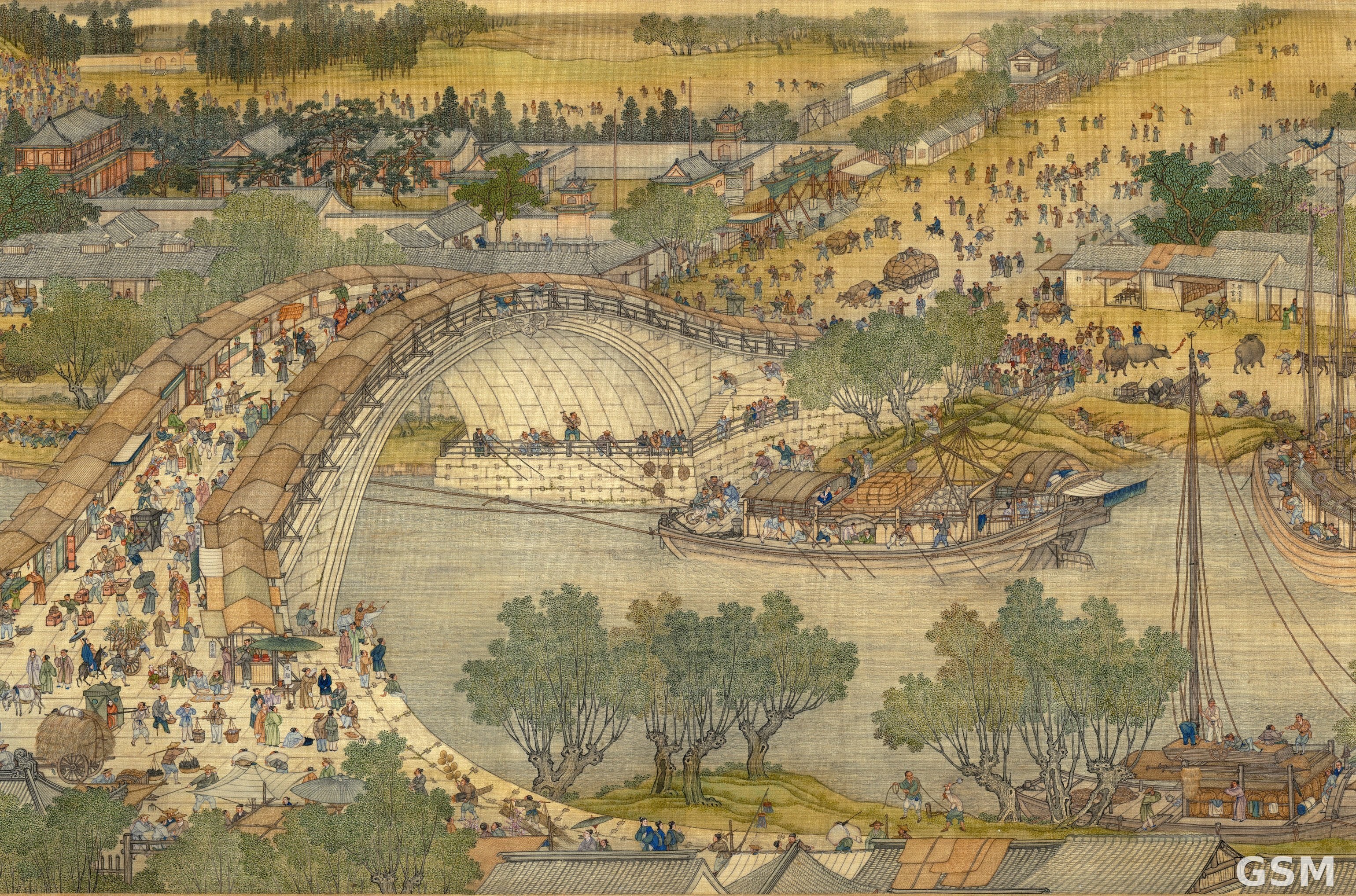
公元一二七九年,南宋在崖山之战中灭亡。在社会生活上,宋朝城市打破了唐代坊市制度的严格界限,夜市与早市兴起,瓦舍勾栏提供说书、杂剧等娱乐,市民文化活跃。
教育方面,书院兴起,科举规模扩大,士大夫阶层成为政治与文化的主体,范仲淹先天下之忧而忧的言论、欧阳修等人的文章,都体现了士人的责任意识。科技上,沈括的《梦溪笔谈》记录了当时的科学认识与技术成就,毕昇发明活字印刷,指南针用于航海,火药开始用于军事。
对外方面,宋朝设立市舶司管理海外贸易,泉州、广州、明州等港口商船云集,与东南亚、西亚等地往来频繁。南宋偏安江南后,太湖流域成为粮仓,苏湖熟、天下足的说法反映了江南农业的地位。宋朝虽在军事上偏弱,却在经济、文化、科技与市民生活方面留下了丰富的遗产。
信息来源:《宋史》《续资治通鉴长编》及中国国家博物馆、故宫博物院公开史料
Five Thousand Years of China: The Song Dynasty: Economic Prosperity and Movable-Type Printing
The Song divides into the Northern and Southern Song and lasted in all some three hundred and twenty years. In 960 CE, after the Chenqiao mutiny, Zhao Kuangyin founded the Northern Song, with his capital at Kaifeng. By 'releasing military power over a cup of wine' he took back the generals' commands, and he practised the policies of prizing civil over military affairs and strengthening the trunk while weakening the branches, tightening the centre's control over the regions and the army and ending the era of military dictatorship since the Five Dynasties.
In the early Northern Song the economy prospered; the capital Kaifeng was commercially developed, the world's earliest paper money, jiaozi, appeared, overseas trade was brisk, and porcelain and silk were sold far abroad. Culturally, Song lyrics (ci) flourished — the works of Su Shi, Li Qingzhao and Xin Qiji are handed down today; Neo-Confucianism (lixue) arose, and the thought of Cheng Hao, Cheng Yi and Zhu Xi deeply influenced later literati; and the applications of movable-type printing, the compass and gunpowder were developed or spread in this period.
In the mid-Northern Song, Wang Anshi's reforms sought to enrich the state and strengthen the army, but, being much disputed, had limited effect. In 1127 the Jin army took Kaifeng and captured Emperors Huizong and Qinzong — the Jingkang Incident — and the Northern Song fell. Zhao Gou founded the Southern Song at Lin'an; generals such as Yue Fei upheld resistance to the Jin while Qin Hui advocated peace, and the Shaoxing Peace finally drew the boundary at the Huai River, with north and south facing each other.
In the Southern Song the economic centre moved further south; agriculture, handicrafts and overseas trade in Jiangnan flourished, and Lin'an became a thriving commercial city. In 1279 the Southern Song perished at the Battle of Yashan. In social life, Song cities broke the strict bounds of the Tang ward-and-market system; night markets and morning markets arose, and entertainment quarters offered storytelling, variety plays and other amusements, with a lively urban culture.
In education, academies flourished and the examinations widened in scale; the scholar-official class became the mainstay of politics and culture, and Fan Zhongyan's saying — to be 'first to worry for the realm and last to enjoy oneself' — and the writings of Ouyang Xiu and others embodied the literati's sense of responsibility.
In science and technology, Shen Kuo's Dream Pool Essays recorded the scientific knowledge and technical achievements of the time; Bi Sheng invented movable-type printing; the compass came into use in navigation, and gunpowder began to be used in war.
In foreign relations, the Song set up maritime trade offices to manage overseas trade; at ports such as Quanzhou, Guangzhou and Mingzhou merchant ships gathered, trading frequently with Southeast Asia, West Asia and beyond. After the Southern Song settled in Jiangnan, the Taihu basin became a granary, and the saying 'when Su and Hu harvest, the realm is fed' reflects the standing of Jiangnan agriculture. Militarily weak, the Song nonetheless left a rich legacy in economy, culture, science and technology and urban life.
Sources: History of Song; the Xu Zizhi Tongjian Changbian (Continuation of the Zizhi Tongjian, Long Draft); public historical materials of the National Museum of China and the Palace Museum.
来源:GSM·美国(原文链接)
图片来源:清院本《清明上河图》局部(虹桥),清代宫廷画家集体绘制,公有领域,Wikimedia Commons / Detail (the Rainbow Bridge) from the Qing Court version of “Along the River During the Qingming Festival”, by Qing court painters. Public domain, via Wikimedia Commons.