中国五千年:三皇五帝:传说时代与人文初祖
三皇五帝是中国上古传说中的圣王时代,并非信史可以确指的朝代。据《史记》记载,司马迁从黄帝写起,讲述了黄帝、颛顼、帝喾、尧、舜五帝的世系与事迹,而三皇的说法在先秦文献中并不统一,常见的有伏羲、神农等不同组合,今天只能作为传说来讲,不能当作确切的历史年表。
传说中,燧人氏钻木取火,伏羲氏结网渔猎、画八卦,神农氏尝百草、教稼穑,嫘祖教民养蚕缫丝,仓颉造字记事。这些故事不见得都是史实,但它们反映了先民对火、农业、医药、文字等文明起点的记忆与想象。
黄帝是其中最关键的人物。据《史记》记载,黄帝先在阪泉战胜炎帝,又在涿鹿战胜蚩尤,统一了中原地区的部族联盟,被后世尊为中华民族的人文初祖,炎黄子孙的说法即由此而来。此后颛顼、帝喾相继为帝,尧举荐舜,舜举荐禹,禅让成为传说中选贤任能的理想模式。尧舜时代还留下了治水、观象授时、制礼作乐等传说,舜命禹治水,禹三过家门而不入,最终平息水患,为夏朝的建立埋下伏笔。
三皇五帝的意义不在于年代是否精确,而在于它塑造了中国人的起源记忆:敬天法祖、重农重德、推举贤能、协和万邦。这些观念后来被儒家不断阐发,成为华夏文明认同的重要源头。今天讲述这段历史,应当分清传说与信史,既不把神话当作考古结论,也不轻视传说承载的文化价值。
考古上看,传说中的三皇五帝时代大致对应新石器时代晚期,黄河流域的仰韶文化和龙山文化已经出现了大型聚落、精美陶器和玉器,部落联盟的规模不断扩大,社会分化也日益明显,这为传说中部族首领的事迹提供了现实背景,但具体人物与事件仍无法一一对应。
黄帝陵祭祀绵延至今,中华民族的祖先记忆正是在这种传说、祭祀和历史书写中不断凝聚的。后人谈论炎黄子孙时,谈的与其说是某一位确切可考的君王,不如说是一种共同的文化源头和身份认同。
信息来源:《史记·五帝本纪》、仰韶文化与龙山文化公开考古资料
Five Thousand Years of China: The Three Sovereigns and Five Emperors: The Legendary Age and the First Ancestors
The Three Sovereigns and Five Emperors are the sage kings of China's ancient legends, not a dynasty that reliable history can pinpoint. According to the Shiji, Sima Qian begins with the Yellow Emperor and recounts the lineages and deeds of the five emperors — the Yellow Emperor, Zhuanxu, Di Ku, Yao and Shun — while accounts of the Three Sovereigns were never uniform in pre-Qin texts, common versions giving combinations such as Fuxi and Shennong; today they can only be told as legend, not as an exact historical chronology.
In legend, Suiren took fire by drilling wood, Fuxi made nets for hunting and fishing and drew the Eight Trigrams, Shennong tasted a hundred herbs and taught farming, Leizu taught the people to raise silkworms and reel silk, and Cangjie created characters to record events. These stories may not all be fact, but they preserve the memory and imagination of the ancients about the origins of civilization — fire, agriculture, medicine and writing.
The Yellow Emperor is the pivotal figure among them. According to the Shiji, he first defeated the Yan Emperor at Banquan and then defeated Chiyou at Zhuolu, uniting the tribal alliances of the Central Plains, and was honoured by later generations as the ancestral founder of the Chinese nation — the phrase 'descendants of Yan and Huang' comes from this. After him Zhuanxu and Di Ku reigned in turn; Yao recommended Shun, and Shun recommended Yu, and abdication to the worthy became the ideal model of selecting the able.
The age of Yao and Shun also left legends of flood control, observing the heavens to fix the calendar, and making rites and music; Shun ordered Yu to tame the waters, and Yu passed his own home three times without entering, finally quelling the floods and preparing the way for the founding of Xia.
The significance of the Three Sovereigns and Five Emperors lies not in whether their dates are exact, but in how they shaped the Chinese memory of origins: revering Heaven and following the ancestors, valuing agriculture and virtue, elevating the worthy, and harmonizing the myriad states. Confucians elaborated these ideas again and again, making them an important source of Chinese civilizational identity. Telling this history today requires distinguishing legend from reliable history — neither treating myth as archaeological conclusion, nor slighting the cultural value that legend carries.
Archaeologically, the legendary age of the Three Sovereigns and Five Emperors corresponds roughly to the late Neolithic; the Yangshao and Longshan cultures of the Yellow River valley already had large settlements, fine pottery and jade ware, tribal alliances kept growing in scale, and social differentiation became increasingly marked — a real backdrop for the deeds of tribal chiefs in legend, though specific persons and events still cannot be matched one to one.
Sacrifices at the Mausoleum of the Yellow Emperor have continued to this day; the ancestral memory of the Chinese nation has been continually consolidated in just such legend, sacrifice and historical writing. When later generations speak of 'descendants of Yan and Huang', they speak less of one verifiable monarch than of a shared cultural source and identity.
Sources: Shiji, 'Annals of the Five Emperors'; public archaeological materials on the Yangshao and Longshan cultures.
来源:GSM·美国(原文链接)
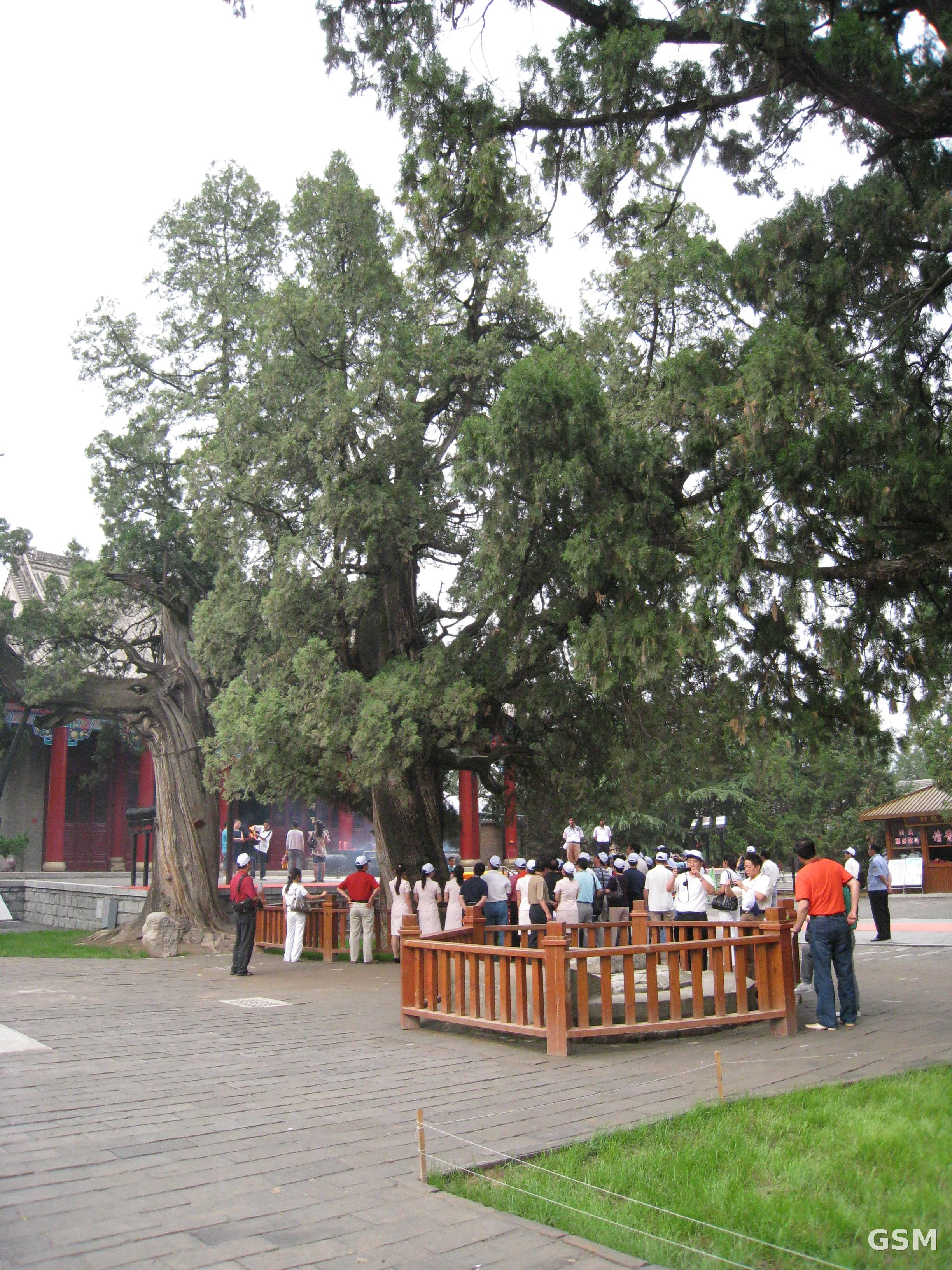
图片来源:黄帝陵轩辕庙古柏实景,monicker 摄,CC BY-SA 3.0,Wikimedia Commons / Ancient cypress at the Xuanyuan Temple, Mausoleum of the Yellow Emperor. Photo by monicker, CC BY-SA 3.0, via Wikimedia Commons.