中国五千年:三国:魏蜀吴鼎立与赤壁之战
三国是东汉灭亡后形成的分裂局面,由魏、蜀、吴三个政权并立,时间约在公元二二〇年至二八〇年之间。东汉末年,黄巾起义动摇了朝廷统治,各地军阀割据混战。曹操统一北方,挟天子以令诸侯,逐步掌握朝政;刘备以汉室宗亲自居,联络各方势力;孙权则据有江东,经营多年。
在争夺天下的过程中,公元二〇八年的赤壁之战成为关键转折。孙刘联军以少胜多,大败曹操南下的大军,奠定了三分天下的格局。此后,曹操之子曹丕于二二〇年代汉称帝,国号魏;刘备于二二一年在成都称帝,国号汉,史称蜀汉;孙权于二二九年在建业称帝,国号吴。
三国鼎立期间,各国都注重发展生产。魏国推行屯田,恢复北方农业;蜀汉在诸葛亮辅佐下,整顿内政,开发西南;吴国则发展造船与海外贸易,江南地区得到进一步开发。汉末三国时期,战争与外交频繁,官渡之战、夷陵之战等战役广为人知。
公元二六三年,魏灭蜀;二六五年,司马炎代魏建立晋;二八〇年,晋灭吴,三国时代结束。三国虽短,却以其人物与谋略、忠义与权变,成为后世文学与戏曲取之不尽的题材,也反映了统一大势之下分裂与整合的反复。
三国时期的人才与制度也值得注意。曹操重视人才,唯才是举,屯田制使流民得以安置,北方生产恢复。刘备集团以荆州、益州为根据地,诸葛亮治蜀,重视水利与法度,蜀锦成为重要物产。
孙权派卫温到达夷洲,这是大陆政权与台湾地区交往的早期记载之一,据正史记载如此。吴国造船业发达,船队可远航至辽东与东南亚一带。三国时期的军事谋略、人物品评与民间传说,后来演变为《三国演义》等文学作品的素材。
需要说明的是,小说中的许多情节属于文学虚构,正史记载与演义描写并不相同,读史时应当区分。三国鼎立的局面虽以分裂为表,却在制度、经济与文化上为后来的统一准备了条件。
信息来源:《三国志》《后汉书》及中国国家博物馆公开史料
Five Thousand Years of China: The Three Kingdoms: Wei, Shu and Wu and the Battle of Red Cliffs
The Three Kingdoms was the division that followed the fall of the Eastern Han, with the three regimes of Wei, Shu and Wu standing together, roughly from 220 to 280 CE. In the late Eastern Han, the Yellow Turban Rebellion shook the rule of the court and warlords carved the country into warring enclaves.
Cao Cao unified the north, 'holding the emperor to command the lords', and gradually grasped control of the government; Liu Bei presented himself as a scion of the Han house and gathered forces from all sides; Sun Quan held the land east of the Yangtze, long under his family's management.
In the struggle for the realm, the Battle of Red Cliffs in 208 CE became the key turning point: the allied armies of Sun and Liu, with fewer troops, crushed Cao Cao's southward host and set the pattern of tripartite division.
Thereafter Cao Cao's son Cao Pi took the throne in place of the Han in 220, with the dynastic name Wei; Liu Bei took the throne at Chengdu in 221, with the dynastic name Han, known in history as Shu-Han; and Sun Quan took the throne at Jianye in 229, with the dynastic name Wu.
During the period of tripartite division, each state attended to production: Wei practised military-agricultural colonies (tuntian) and restored northern farming; Shu-Han, under Zhuge Liang, reformed internal government and developed the southwest; Wu developed shipbuilding and overseas trade, and the Jiangnan region was further developed. Wars and diplomacy were frequent in the late Han and Three Kingdoms period, and battles such as Guandu and Yiling are widely known.
In 263 Wei destroyed Shu; in 265 Sima Yan took the throne in place of Wei and founded Jin; in 280 Jin destroyed Wu, and the Three Kingdoms period ended. Brief as it was, the Three Kingdoms — its figures and stratagems, loyalty and expediency — became an inexhaustible source for later literature and theatre, and also reflects the alternation of division and integration beneath the larger trend toward unity.
The talent and institutions of the Three Kingdoms also deserve note. Cao Cao valued talent and appointed men on merit alone; the tuntian system settled refugees and northern production recovered. The Liu Bei group, based in Jingzhou and Yizhou, was governed by Zhuge Liang, who valued waterworks and law; Shu brocade became an important product.
Sun Quan sent Wei Wen to Yizhou (the island of Taiwan), one of the earliest records of contact between a mainland regime and the Taiwan region — as the orthodox histories record it. Wu's shipbuilding was advanced, and its fleets could sail as far as Liaodong and Southeast Asia. The military stratagems, judgements of character and folk legends of the Three Kingdoms later evolved into literary works such as the Romance of the Three Kingdoms.
It should be noted that many episodes in the novels are literary invention: the records of the orthodox histories and the depictions of the romance are not the same, and readers of history should distinguish them. Though the tripartite division was division on the surface, in institutions, economy and culture it prepared the conditions for the unity that followed.
Sources: Records of the Three Kingdoms; Book of the Later Han; public historical materials of the National Museum of China.
来源:GSM·美国(原文链接)
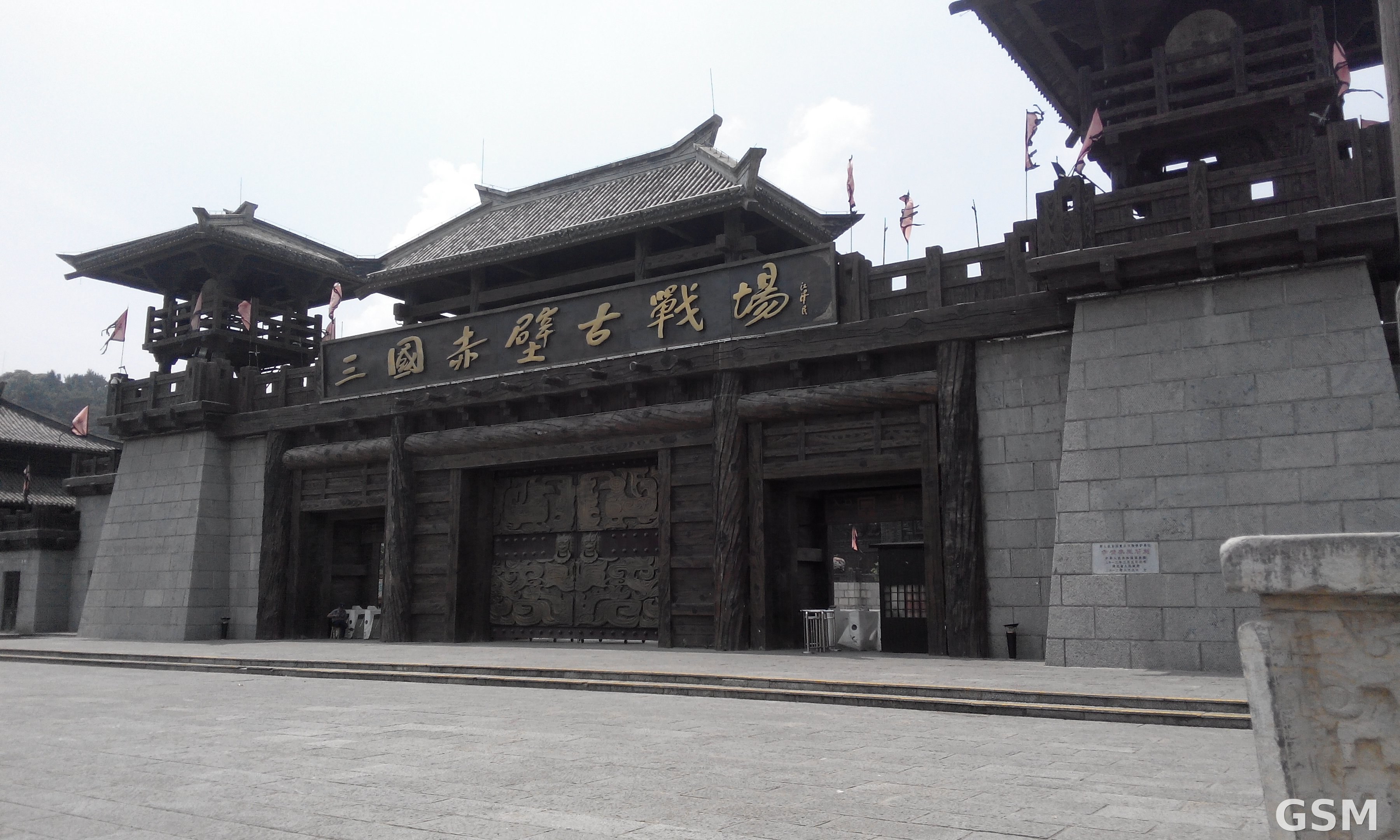
图片来源:湖北赤壁三国赤壁古战场景区大门实景,Ddayzzz 摄,CC BY-SA 4.0,Wikimedia Commons / The gate of the Three Kingdoms Red Cliffs Ancient Battlefield scenic area, Chibi, Hubei. Photo by Ddayzzz, CC BY-SA 4.0, via Wikimedia Commons.