中国五千年:清朝:康雍乾盛世与鸦片战争
清朝是中国最后一个封建王朝,由满洲贵族建立。努尔哈赤统一女真各部,皇太极改国号为清。顺治年间,清军入关,定都北京,随后逐步统一全国。康熙、雍正、乾隆三朝,是清朝的鼎盛时期。
康熙平定三藩,收复台湾,签订尼布楚条约,划定中俄东段边界;雍正整顿吏治,设立军机处,加强中央集权;乾隆平定准噶尔与大小和卓,疆域达到辽阔的规模,奠定了今日中国版图的基本轮廓。
清朝实行摊丁入亩等赋税改革,人口与耕地在一段时期内明显增长,农业、手工业与商业都有发展,瓷器、丝绸与茶叶远销海外。然而,清朝长期实行闭关锁国政策,对外贸易只留广州一口(广州一口通商),对外部世界的变化反应迟缓。
鸦片战争后,清朝被迫签订一系列不平等条约,割地赔款,主权不断受损,半殖民地化的程度逐步加深。洋务运动试图以引进西方技术求自强,甲午战争的失败暴露了这种改革的局限;戊戌变法昙花一现,清末新政也未能挽回颓势。辛亥革命爆发后,清帝退位,清朝灭亡。
清朝的历史教训与遗产同样深刻:统一多民族国家的疆域格局基本形成,满汉文化的交融丰富了中华文化,而闭关自守的代价,也成为后人反复思考的课题。文化上,清朝编纂了《四库全书》,整理了大量古代典籍;《红楼梦》在清代成书,成为中国古典小说的高峰。
京剧形成于清代道光年间(徽班进京为滥觞),并逐步走向全国,至今仍是代表性的传统戏曲。清朝前期,农业生产恢复,手工业与商业市镇继续发展,人口增长与耕地开垦使社会规模扩大。
同时,文字狱与思想控制也压抑了学术活力,这是清代文化需要正视的一面。对外方面,乾隆年间英国使团来华,双方在贸易与礼仪上的分歧,已显示出两种秩序之间的隔阂。鸦片战争之后,中国被卷入世界市场体系,通商口岸、租界与新式学堂相继出现,传统社会结构开始松动,留学生与新式知识分子成为后来变革的重要力量。
信息来源:《清史稿》、故宫博物院公开史料、中国国家博物馆公开史料
Five Thousand Years of China: The Qing Dynasty: The High Qing Era and the Opium War
The Qing was China's last feudal dynasty, founded by the Manchu nobility. Nurhaci unified the Jurchen tribes, and Huang Taiji changed the state name to Qing. In the Shunzhi era, Qing armies entered the passes and made Beijing the capital, thereafter gradually unifying the whole country. The reigns of Kangxi, Yongzheng and Qianlong were the Qing at its height.
Kangxi suppressed the Three Feudatories, recovered Taiwan and signed the Treaty of Nerchinsk, fixing the eastern section of the Sino-Russian border; Yongzheng rectified the administration and established the Grand Council, strengthening centralization; Qianlong pacified the Zunghars and the Greater and Lesser Khojas, and the territory reached a vast extent, laying down the basic outline of the territory of China today.
The Qing carried out tax reforms such as merging the poll tax into the land tax (tanding rumu); population and cultivated land grew markedly for a period, agriculture, handicrafts and commerce all developed, and porcelain, silk and tea were sold far overseas. Yet the Qing long practised a closed-door policy: foreign trade was confined to the single port of Guangzhou (the 'single-port trade' at Guangzhou), and it responded slowly to changes in the outside world.
After the Opium War, the Qing was forced to sign a series of unequal treaties, ceding territory and paying indemnities, its sovereignty continually impaired and its semi-colonization deepening step by step. The Self-Strengthening Movement sought self-strengthening by importing Western technology; defeat in the First Sino-Japanese War exposed the limits of such reform; the Hundred Days' Reform flickered and vanished, and the New Policies of the late Qing could not reverse the decline.
After the Xinhai Revolution broke out, the Qing emperor abdicated and the Qing fell. The lessons and legacy of Qing history are equally deep: the territorial pattern of a unified multi-ethnic state was basically formed, the fusion of Manchu and Han cultures enriched Chinese culture, and the price of closing the country became a question later generations ponder again and again.
Culturally, the Qing compiled the Siku Quanshu (Complete Library of the Four Treasuries), ordering a vast body of ancient texts; the Dream of the Red Chamber was completed in the Qing and became the summit of the classical Chinese novel. Peking opera took shape in the Daoguang era of the Qing (the entry of the Hui opera troupes into Beijing being its fountainhead) and gradually spread across the country; it remains a representative traditional theatre today.
In the early Qing, agricultural production recovered, handicraft and commercial market towns continued to develop, and population growth and the opening of farmland enlarged the scale of society. At the same time, literary inquisitions and ideological control suppressed scholarly vitality — a side of Qing culture that must be faced squarely. In foreign relations, the British embassy of the Qianlong era and the two sides' differences over trade and ceremony already showed the gulf between two orders.
After the Opium War, China was drawn into the world market system; treaty ports, concessions and new-style schools appeared one after another, the traditional social structure began to loosen, and students returned from abroad and new-style intellectuals became important forces of later change.
Sources: Draft History of Qing (Qing Shi Gao); public historical materials of the Palace Museum and the National Museum of China.
来源:GSM·美国(原文链接)
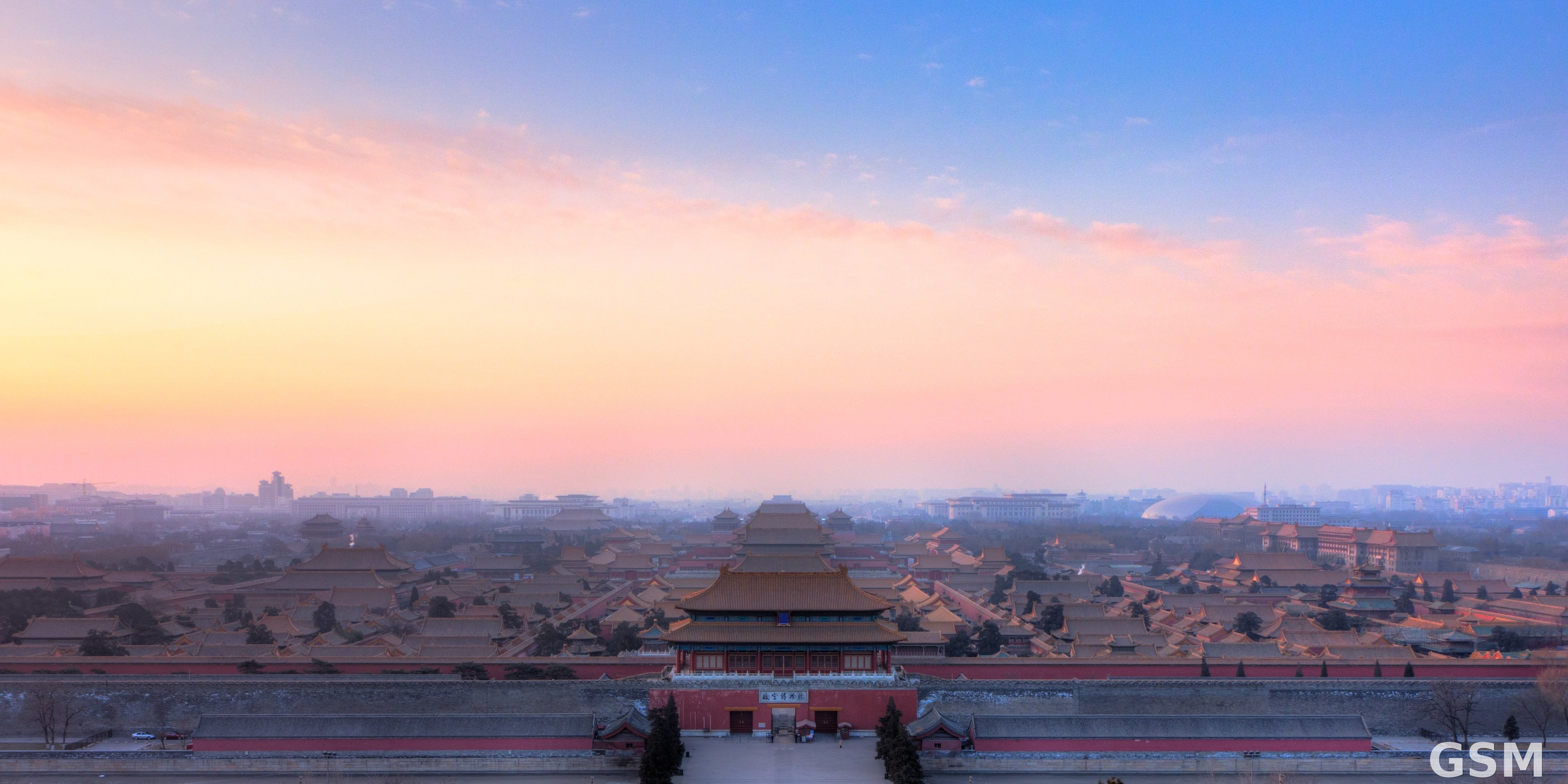
图片来源:自景山眺望紫禁城全景,Pixelflake 摄,CC BY-SA 3.0,Wikimedia Commons / The Forbidden City viewed from Jingshan (Coal Hill). Photo by Pixelflake, CC BY-SA 3.0, via Wikimedia Commons.