中国五千年:秦朝:统一六国与郡县制
秦朝是中国历史上第一个统一的中央集权王朝,虽然只存在了约十五年,却奠定了此后两千多年政治制度的基础。公元前三世纪后期,秦国经过商鞅变法,实行耕战政策、奖励军功、废除世卿世禄,逐渐成为战国七雄中最强的国家。秦王嬴政即位后,重用李斯、王翦、王贲等将相,先后灭韩、赵、魏、楚、燕、齐六国,于公元前二二一年完成统一,嬴政自称始皇帝,意思是功盖三皇、德过五帝。
统一之后,秦朝实行了一系列影响深远的制度。政治上废分封、行郡县,全国分为三十六郡,由中央任命官吏管理;经济上统一货币、度量衡和车轨,修筑驰道和灵渠;文化上书同文,统一文字为小篆,便于政令通行和文化交流;军事上北击匈奴、修筑长城,南平百越、开凿灵渠,疆域空前辽阔。
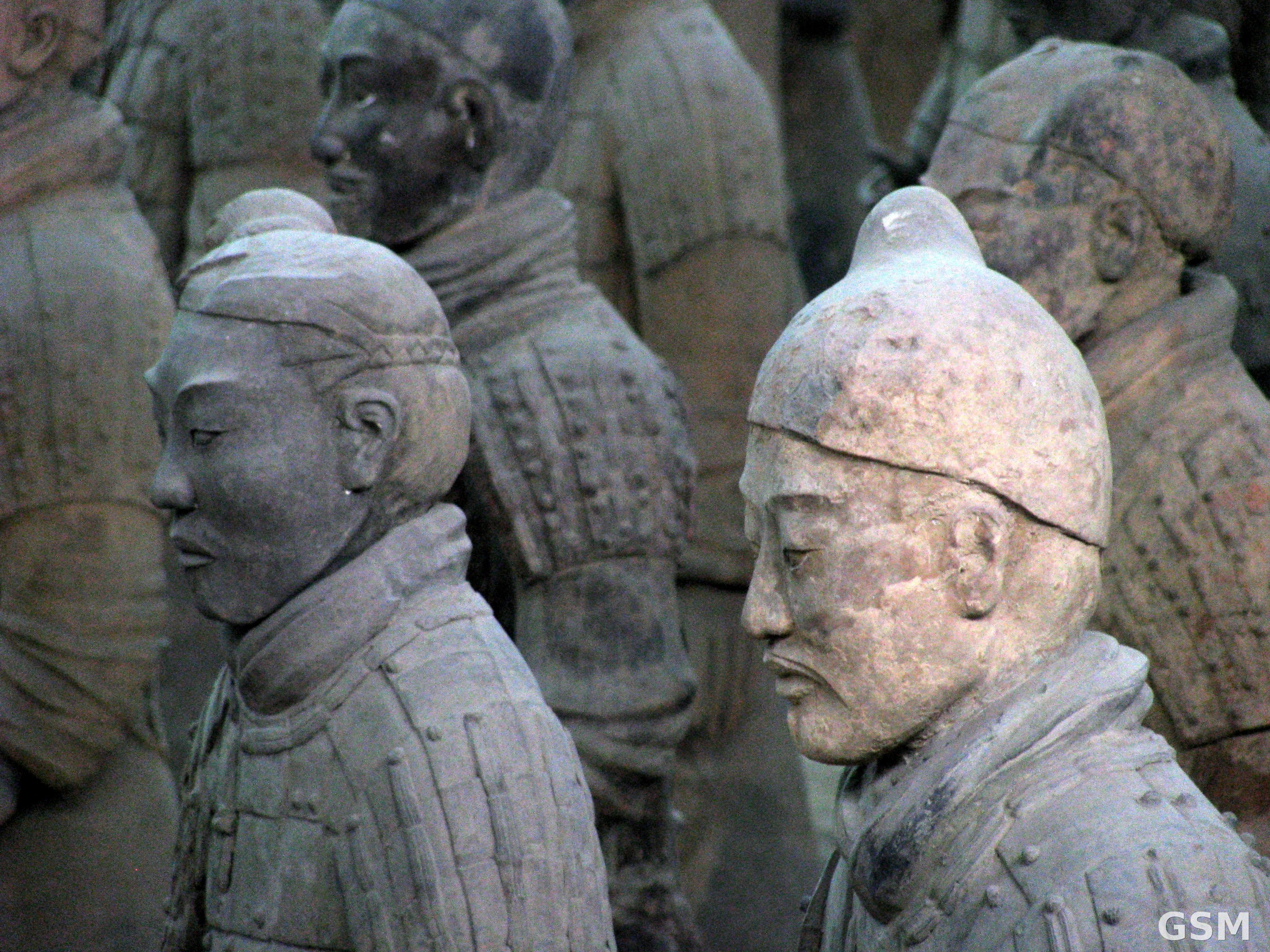
秦始皇还大兴土木,修建阿房宫和骊山陵墓,陵墓外的兵马俑规模宏大,成为后世了解秦代军制和工艺的重要实物。但秦朝严刑峻法、徭役繁重,焚书坑儒引起士人不满,秦始皇死后,赵高和李斯矫诏立胡亥为帝,政治迅速腐败。
公元前二〇九年,陈胜吴广起义爆发,各地纷纷响应,刘邦和项羽相继崛起,秦朝在公元前二〇七年灭亡。秦朝虽然短命,但郡县制、中央集权、统一文字和度量衡的遗产被汉朝继承,成为中国大一统传统不可动摇的起点。
秦朝的官制也很有代表性,中央设丞相、太尉和御史大夫,合称三公,下设九卿分管政务,地方郡县长官由皇帝直接任免,官员可以调动和罢免,不再世袭,这与分封制有根本区别。
秦朝统一的半两钱、统一的度量衡和文字,使全国市场和政令往来更加便利,隶书也在秦代官吏的日常书写中逐渐流行,为汉代隶书的成熟打下基础。秦朝的统治也有沉重的一面,长城、驰道、陵墓和宫殿工程征发了大量徭役,法律严苛,百姓负担沉重。
贾谊后来在《过秦论》中总结秦亡教训,认为秦朝取天下靠武力,守天下却没有施行仁政,这一评价影响了后世对统一王朝治国方式的思考。秦朝的兴亡说明,统一和集权可以带来效率,也需要与民休息的政策相配合,否则强盛的帝国也可能迅速崩塌。
信息来源:《史记·秦始皇本纪》、秦始皇陵兵马俑公开考古与博物馆资料
Five Thousand Years of China: The Qin Dynasty: Unification of the Six States and the Commandery System
The Qin was the first unified, centralized dynasty in Chinese history; though it lasted only about fifteen years, it laid the foundations of the political system for the next two thousand years and more. In the late 3rd century BCE, after Shang Yang's reforms, the state of Qin practised a policy of farming and war, rewarded military merit and abolished hereditary office and emolument, gradually becoming the strongest of the seven Warring States.
After Ying Zheng took the Qin throne, he relied on chancellors and generals such as Li Si, Wang Jian and Wang Ben to destroy the six states of Han, Zhao, Wei, Chu, Yan and Qi in turn, completing unification in 221 BCE; Ying Zheng styled himself the First Emperor (Shi Huangdi), meaning that his merit surpassed the Three Sovereigns and his virtue the Five Emperors.
After unification, Qin carried out a series of far-reaching systems. Politically it abolished enfeoffment for commanderies and counties — the whole country divided into thirty-six commanderies administered by officials appointed by the centre. Economically it unified currency, weights and measures and the gauge of cart tracks, and built imperial highways and the Lingqu Canal.
Culturally it unified the script into the small-seal script, easing the circulation of decrees and cultural exchange. Militarily it struck north at the Xiongnu and built the Great Wall, and pacified the Baiyue in the south and cut the Lingqu Canal, reaching an unprecedented extent.
The First Emperor also built on a grand scale, raising the Epang Palace and his mausoleum at Mount Li, outside which the terracotta army, vast in scale, became important physical evidence for understanding the Qin military system and craftsmanship. But Qin's harsh laws and heavy corvée, and the burning of books and burying of scholars, provoked the discontent of the literati; after the First Emperor's death, Zhao Gao and Li Si forged an edict to enthrone Huhai, and politics swiftly rotted.
In 209 BCE the uprising of Chen Sheng and Wu Guang broke out, regions rose in response, Liu Bang and Xiang Yu emerged in turn, and Qin fell in 207 BCE. Short-lived as it was, Qin's legacy — commanderies and counties, centralized power, a unified script and unified weights and measures — was inherited by the Han and became the unshakeable starting point of China's tradition of unity.
Qin's official system was also representative: at the centre stood the Chancellor, the Grand Commandant and the Imperial Censor, collectively the Three Dukes, with the Nine Chamberlains below them in charge of different affairs; local commandery and county heads were appointed and dismissed directly by the emperor and could be transferred, no longer hereditary — a fundamental difference from enfeoffment.
Qin's unified banliang coinage, weights, measures and script made markets and decrees circulate more smoothly across the country, and clerical script, used in the daily writing of Qin officials, gradually spread, preparing the ground for its maturity in the Han. Qin rule also had its heavy side: the Great Wall, highways, mausoleum and palaces conscripted enormous corvée, the laws were severe and the people's burdens crushing.
Jia Yi later summed up the lesson of Qin's fall in his 'Disquisition on the Faults of Qin': Qin took the realm by force but did not govern it with benevolence — a judgement that influenced how later ages thought about governing a unified dynasty. The rise and fall of Qin shows that unification and centralization can bring efficiency, but must be matched with policies that let the people rest; otherwise even a powerful empire can collapse with speed.
Sources: Shiji, 'Annals of the First Emperor of Qin'; public archaeological and museum materials on the Mausoleum of the First Qin Emperor and the terracotta army.
来源:GSM·美国(原文链接)
图片来源:秦始皇陵兵马俑实景,Peter Dowley 摄,CC BY 2.0,Wikimedia Commons / Terracotta warriors at the Mausoleum of the First Qin Emperor. Photo by Peter Dowley, CC BY 2.0, via Wikimedia Commons.