中国五千年:一部文明没有中断的历史总览
说中国有五千年历史,这个数字从哪里来?按司马迁《史记》的记载,中华文明的源头可以追到黄帝、尧、舜、禹的传说时代;按考古看,黄河流域的仰韶文化、龙山文化距今已有五六千年,二里头遗址则被多数学者认为是夏王朝晚期的都城。传说与考古并不完全重合,但有一点是公认的:中华文明是世界上唯一没有中断、延续至今的古老文明。这篇总览,就是把这五千年先看一遍全貌。
第一段是夏商周。约公元前 2070 年,大禹治水后建立夏朝,中国进入王朝时代;商朝留下甲骨文,那是中国目前发现最早的成熟文字;周朝实行分封制,青铜礼器与《诗经》、礼乐制度一起,奠定了中国文化的底色。周朝后期礼崩乐坏,春秋战国却思想大爆发,孔子、老子、墨子、韩非子百家争鸣,儒家、道家、法家等思想,至今仍影响着中国人的处世方式。
第二段是秦汉。公元前 221 年,秦始皇统一六国,书同文、车同轨、统一度量衡,郡县制取代分封,中国第一次成为中央集权的大一统国家。汉朝继承秦制并开疆拓土,张骞出使西域打通丝绸之路,造纸术、指南针的前身陆续出现,汉朝的名字后来成了中国主体民族的称呼——汉族、汉字、汉语,都从这里来。
第三段是魏晋南北朝到隋唐。三国两晋南北朝近四百年分裂,民族大交融,佛教传入并中国化,书法、山水画、诗歌走向成熟。隋朝开通大运河、创立科举,唐朝把中国推向高峰:长安是当时世界最大的城市之一,来自中亚、波斯、日本、朝鲜的商人、僧侣、留学生云集,李白、杜甫的诗至今仍是中国人共同的语言记忆。
第四段是宋元明清。宋朝经济文化高度发达,活字印刷、火药、指南针三大发明经阿拉伯传向世界,市井文化、宋词、山水画空前繁荣;元朝疆域空前辽阔,东西方交流更密;明朝郑和七下西洋,船队最远到达东非;清朝前期疆域奠定今日中国版图的基础,但后期闭关锁国,在工业革命的浪潮中落伍,1840 年鸦片战争后,中国被迫卷入近代世界的剧变。
第五段是近现代。辛亥革命推翻帝制,抗日战争中中国人民付出巨大牺牲并取得胜利,1949 年新中国成立,1978 年改革开放后,中国经济快速发展,成为世界第二大经济体。
回望五千年,中国历史有分裂、有外患、有低谷,但文字没有断、史书没有断、文化认同没有断——这正是“五千年”最实在的含义:不是一个朝代活了五千年,而是一种文明活了五千年。接下来这个专题会按朝代一篇一篇细写,从三皇五帝讲起,每一篇讲透一个时代。
信息来源:《史记》、中国社会科学院考古研究所公开资料、二里头遗址考古成果、国家博物馆公开史料
Five Thousand Years of China: The Story of an Unbroken Civilization: Overview
Where does the figure of 'five thousand years' of Chinese history come from? According to Sima Qian's Records of the Grand Historian (Shiji), the origins of Chinese civilization can be traced back to the legendary age of the Yellow Emperor, Yao, Shun and Yu; archaeologically, the Yangshao and Longshan cultures of the Yellow River valley are already five to six thousand years old, and the Erlitou site is regarded by most scholars as a capital of the late Xia dynasty.
Legend and archaeology do not coincide exactly, but one point is generally accepted: Chinese civilization is the only ancient civilization in the world that has continued unbroken to the present day. This overview surveys those five thousand years as a whole.
The first part covers Xia, Shang and Zhou. Around 2070 BCE, after Yu the Great tamed the floods, he founded the Xia dynasty and China entered the dynastic age; the Shang left behind oracle bone inscriptions, the earliest mature writing yet discovered in China; the Zhou practised enfeoffment, and its bronze ritual vessels, together with the Book of Songs and the rites-and-music system, laid the cultural foundations of China.
In the late Zhou the ritual order collapsed, yet the Spring and Autumn and Warring States periods saw an explosion of thought — Confucius, Laozi, Mozi and Han Feizi contended as a hundred schools, and Confucianism, Daoism and Legalism still shape how Chinese people conduct themselves today.
The second part covers Qin and Han. In 221 BCE the First Emperor of Qin unified the six states: one script, one axle gauge, unified weights and measures, and commanderies replacing enfeoffment — China became a centralized, unified state for the first time.
The Han inherited the Qin system and expanded the frontiers; Zhang Qian's missions to the Western Regions opened the Silk Road; papermaking and the forerunner of the compass appeared in turn; and the name of Han later became the name of China's principal ethnic group — the Han people, Han characters and the Chinese language all come from this.
The third part runs from Wei, Jin and the Northern and Southern Dynasties to Sui and Tang. The Three Kingdoms, the two Jins and the Northern and Southern Dynasties brought nearly four centuries of division and great ethnic intermingling; Buddhism entered China and was sinicized, while calligraphy, landscape painting and poetry matured.
The Sui opened the Grand Canal and created the imperial examination system; the Tang carried China to its height: Chang'an was one of the largest cities in the world at the time, drawing merchants, monks and students from Central Asia, Persia, Japan and Korea, and the poems of Li Bai and Du Fu remain a shared linguistic memory of the Chinese people to this day.
The fourth part covers Song, Yuan, Ming and Qing. The Song economy and culture were highly developed; movable-type printing, gunpowder and the compass — the three great inventions — spread to the world through the Arabs, and urban culture, Song lyrics (ci) and landscape painting flourished as never before.
The Yuan ruled a territory of unprecedented size and East-West exchange grew closer; Ming fleets under Zheng He sailed seven times into the Western Ocean, reaching as far as East Africa; the early Qing laid the foundations of the territory of China today, but its later closed-door policy left it behind in the tide of the Industrial Revolution, and after the Opium War of 1840 China was forced into the upheavals of the modern world.
The fifth part is the modern era. The Xinhai Revolution overthrew imperial rule; in the War of Resistance against Japan the Chinese people made enormous sacrifices and won victory; the People's Republic of China was founded in 1949, and after reform and opening up began in 1978 the Chinese economy developed rapidly, becoming the world's second largest.
Looking back over five thousand years, Chinese history has known division, foreign invasion and low points, but its writing never broke off, its historical records never broke off, and its cultural identity never broke off — that is the most concrete meaning of 'five thousand years': not that one dynasty lived for five thousand years, but that one civilization has. In the chapters that follow, this series takes the story dynasty by dynasty, beginning with the Three Sovereigns and Five Emperors, one era at a time, told in full.
Sources: Shiji (Records of the Grand Historian); public materials of the Institute of Archaeology, Chinese Academy of Social Sciences; archaeological results from the Erlitou site; public historical materials of the National Museum of China.
来源:GSM·美国(原文链接)
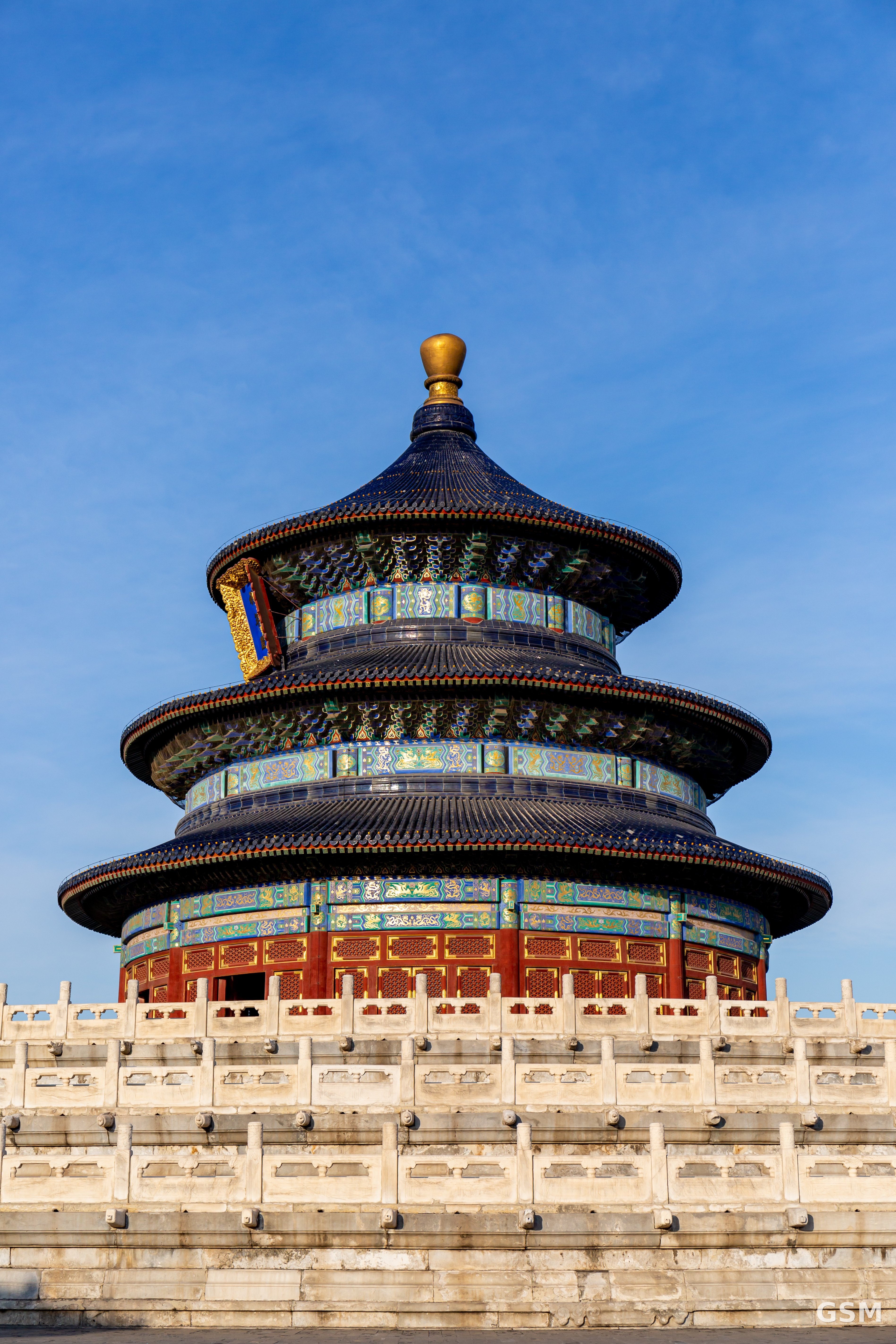
图片来源:北京天坛祈年殿实景,Balon Greyjoy 摄,CC0,Wikimedia Commons / The Hall of Prayer for Good Harvests at the Temple of Heaven, Beijing. Photo by Balon Greyjoy, CC0, via Wikimedia Commons.