中国五千年:南北朝:民族融合与石窟艺术
南北朝是晋朝之后中国南北长期分裂的时期,南朝包括宋、齐、梁、陈四个朝代,北朝包括北魏、东魏、西魏、北齐、北周五个朝代,时间约在公元四二〇年至五八九年之间。南方政权定都建康,依靠江南士族与侨姓世家维持统治,经济上开发江南水田,农业与手工业有所发展,建康成为当时繁华的都市。
北方则经历了鲜卑等民族建立政权的更替,其中北魏统一北方后,孝文帝推行改革,迁都洛阳,改用汉姓、说汉语、穿汉服,提倡与汉人通婚,促进了鲜卑族与汉族的融合。
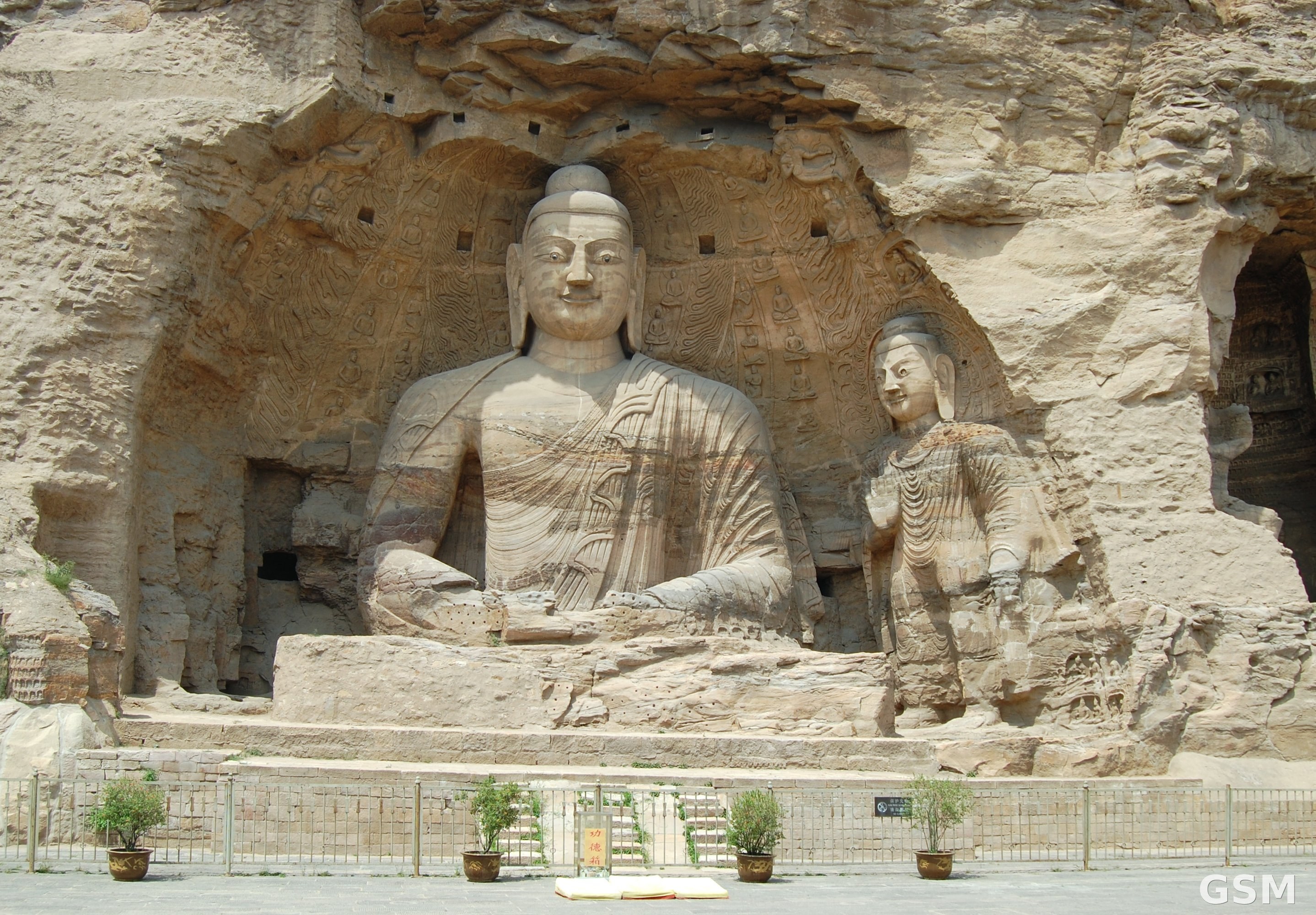
南北朝时期,佛教广泛传播,石窟艺术兴盛,云冈石窟、龙门石窟的开凿,大多始于这一时期,成为中国佛教艺术的重要遗存。同时,道教与玄学继续发展,文学、史学、科技也有成就,祖冲之将圆周率精确到小数点后七位,领先世界近千年。
南北对峙期间,战争时有发生,但人口流动、商贸往来与文化交流并未中断,江南的农业技术与北方的畜牧业互相影响。公元五八九年,隋文帝杨坚灭陈,结束了近三百年的分裂局面,南北朝时代告终。南北朝的民族融合与文化交融,为后来隋唐大一统奠定了人口、经济与文化基础。
南北朝的制度与文化交融也值得细说。北魏均田制把无主荒地分给农民耕种,租调制配合实行,恢复了北方农业。府兵制在西魏、北周时期形成,兵农合一,影响了隋唐的军事制度。
南方则保留了较完整的汉族礼制与文学传统,萧统编选《文选》,保存了大量先秦至梁代的诗文。南朝的青瓷烧造技术成熟,北朝的石刻与造像风格雄健,两地工艺互相借鉴。南北朝的乐府民歌,南有吴歌西曲,北有敕勒歌等,题材贴近生活。
这一时期民族间的通婚、改姓与语言融合,使华夏认同不断扩大,为隋唐多民族统一国家的形成准备了社会基础。南北朝结束时,南北人口与经济的差距已经缩小,统一的条件在制度与文化层面都已成熟。
信息来源:《宋书》《魏书》《南史》《北史》及云冈石窟、龙门石窟公开考古史料
Five Thousand Years of China: The Northern and Southern Dynasties: Ethnic Fusion and Grotto Art
The Northern and Southern Dynasties was the period of long north-south division after the Jin: the Southern Dynasties comprised Song, Qi, Liang and Chen, and the Northern Dynasties Northern Wei, Eastern Wei, Western Wei, Northern Qi and Northern Zhou, roughly from 420 to 589 CE. The southern regimes were based at Jiankang and maintained their rule by relying on the Jiangnan gentry and the émigré great families; economically they developed the paddy fields of Jiangnan, and agriculture and handicrafts advanced, making Jiankang a flourishing city of the time.
In the north, regimes founded by peoples such as the Xianbei succeeded one another; after the Northern Wei unified the north, Emperor Xiaowen carried out reforms — moving the capital to Luoyang, adopting Han surnames, speaking Chinese, wearing Han dress and encouraging intermarriage with the Han — promoting the fusion of Xianbei and Han.
During this period Buddhism spread widely and grotto art flourished; the carving of the Yungang and Longmen grottoes mostly began in this age, becoming important legacies of Chinese Buddhist art. At the same time Daoism and Xuanxue continued to develop, and literature, historiography and science also achieved much — Zu Chongzhi calculated pi to seven decimal places, leading the world by nearly a thousand years.
During the north-south standoff wars occurred from time to time, but movements of population, trade and cultural exchange never ceased; the farming techniques of Jiangnan and the animal husbandry of the north influenced each other. In 589, Emperor Wen of Sui, Yang Jian, destroyed Chen, ending nearly three centuries of division, and the age closed. The ethnic fusion and cultural intermingling of the period laid demographic, economic and cultural foundations for the great unification of Sui and Tang that followed.
The institutions and cultural blending of the period also merit detail. The Northern Wei equal-field system distributed ownerless wasteland to farmers to cultivate, with the rent-and-tax system alongside, restoring northern agriculture. The fubing militia system took shape under the Western Wei and Northern Zhou — soldiers and farmers in one — influencing the military systems of Sui and Tang.
The south preserved more intact the Han ritual system and literary tradition; Xiao Tong compiled the Wen Xuan (Selections of Refined Literature), preserving large quantities of poetry and prose from the pre-Qin to the Liang. Celadon firing matured in the south, while northern stone carving and statuary were bold in style, and the crafts of the two regions borrowed from each other. The yuefu folk songs of the period — Wu songs and Western airs in the south, the Song of Chile in the north — drew their subjects from life close at hand.
Intermarriage among ethnic groups, adoption of new surnames and linguistic fusion in this period continually widened the identity of Huaxia, preparing the social ground for the unified multi-ethnic state of Sui and Tang. By the period's end, the gap between north and south in population and economy had narrowed, and the conditions for unification were ripe at the level of institutions and culture alike.
Sources: Book of Song; Book of Wei; History of the South; History of the North; public archaeological and historical materials on the Yungang and Longmen grottoes.
来源:GSM·美国(原文链接)
图片来源:云冈石窟实景,Marcin Białek 摄,CC BY-SA 4.0,Wikimedia Commons / The Yungang Grottoes. Photo by Marcin Białek, CC BY-SA 4.0, via Wikimedia Commons.