中国五千年:晋朝:短暂统一与魏晋风度
晋朝由司马炎建立,分为西晋与东晋两个阶段,是三国之后短暂统一又再度分裂的时代。公元二六五年,司马炎取代曹魏称帝,国号晋,定都洛阳,史称西晋。二八〇年,西晋灭吴,结束了三国分裂,实现了短暂统一。
然而统一并未带来长治久安。晋武帝分封诸王,宗室势力膨胀,统治集团内部矛盾激化,贾后干政引发八王之乱,持续十余年的内战严重削弱了中央与北方经济。北方少数民族内迁已久,趁乱起兵,史称永嘉之乱。公元三一六年,西晋灭亡,北方陷入长期分裂,史称五胡十六国时期。
西晋宗室司马睿在江南士族支持下,于三一七年在建康称帝,史称东晋。东晋偏安江南,门阀士族势力强大,皇帝权威有限。祖逖北伐、淝水之战等事件,反映了南北之间的对峙与较量。公元三八三年,前秦苻坚率大军南下,东晋以少胜多取得淝水之战胜利,保住了江南半壁。
东晋后期,桓玄、刘裕等人相继专权。公元四二〇年,刘裕代晋称帝,东晋灭亡,南北朝时代随之开始。晋朝虽政治动荡,但书法、玄学与田园诗成就突出,王羲之的书法、陶渊明的诗文,至今仍是中国文化的重要遗产。
晋朝的文化与社会风貌同样鲜明。西晋时期的士族生活奢华,门阀政治逐渐成型,九品中正制使选官日益依赖家世。东晋时期,玄学清谈盛行,士人以旷达自况,王羲之、王献之父子的书法被后世尊为典范。
顾恺之的绘画理论与谢灵运的山水诗,也开一代风气。北方战乱使大量人口南迁,带来了先进的生产技术与劳动力,江南的开发因此加速,长江流域的经济地位不断上升。
晋朝的动荡还促使佛教进一步传播,僧人译经、建寺之风渐盛。晋朝留给后世的,不仅是统一又分裂的教训,还有魏晋风度与艺术成就所代表的文化高度。东晋的士族文化还影响了后世的审美,书法、绘画与园林的品格,至今仍被反复谈论。
信息来源:《晋书》《资治通鉴》及中国国家博物馆公开史料
Five Thousand Years of China: The Jin Dynasty: Brief Unity and the Wei-Jin Manner
The Jin was founded by Sima Yan and divides into the Western and Eastern Jin — an age of brief reunification after the Three Kingdoms followed by renewed division. In 265 CE Sima Yan replaced the Cao Wei and took the throne, with the dynastic name Jin and his capital at Luoyang — the Western Jin. In 280 the Western Jin destroyed Wu, ending the Three Kingdoms division and achieving a short-lived unification.
But unity did not bring lasting order. Emperor Wu of Jin enfeoffed the imperial princes, whose power swelled; contradictions within the ruling group sharpened, and Empress Jia's interference in government triggered the War of the Eight Princes, more than a decade of civil war that gravely weakened the centre and the northern economy.
The northern peoples, long migrated into the interior, rose in arms amid the chaos — the Disaster of Yongjia. In 316 the Western Jin fell, and the north sank into long division, the period of the Five Hu and Sixteen Kingdoms.
Sima Rui of the Jin imperial clan, backed by the southern gentry, took the throne at Jiankang in 317 — the Eastern Jin. The Eastern Jin held only the south; the great clans were powerful and imperial authority limited. Zu Ti's northern expedition and the Battle of Fei River reflect the standoff and contests between north and south. In 383, Fu Jian of the Former Qin led a great army south; the Eastern Jin, with fewer troops, won the Battle of Fei River and preserved the southern half of the country.
In the late Eastern Jin, Huan Xuan and Liu Yu seized power in turn. In 420 Liu Yu took the throne in place of the Jin, the Eastern Jin fell, and the age of the Northern and Southern Dynasties began. Though politically turbulent, the Jin excelled in calligraphy, Xuanxue (Neo-Daoist) thought and pastoral poetry; the calligraphy of Wang Xizhi and the poems of Tao Yuanming remain important legacies of Chinese culture.
The culture and social temper of the Jin were equally distinctive. In the Western Jin the aristocratic clans lived in luxury, the politics of the great families took shape, and the Nine-Rank System made official selection depend ever more on pedigree. In the Eastern Jin, Xuanxue 'pure conversation' flourished and scholars prized an untrammelled manner; the calligraphy of Wang Xizhi and his son Wang Xianzhi was honoured by later ages as the model.
Gu Kaizhi's theories of painting and Xie Lingyun's landscape poetry also set the fashion of an age. War in the north drove large numbers of people south, bringing advanced production techniques and labour; the development of Jiangnan thereby accelerated and the economic weight of the Yangtze valley rose continually.
The Jin's turmoil also spurred the further spread of Buddhism, as monks translated scriptures and built temples in growing numbers. What the Jin left to later ages is not only the lesson of unity followed by division, but also the cultural heights represented by the Wei-Jin manner and its artistic achievements. The gentry culture of the Eastern Jin also influenced later aesthetics; the character of calligraphy, painting and gardens is still discussed again and again today.
Sources: Book of Jin; Zizhi Tongjian (Comprehensive Mirror in Aid of Governance); public historical materials of the National Museum of China.
来源:GSM·美国(原文链接)
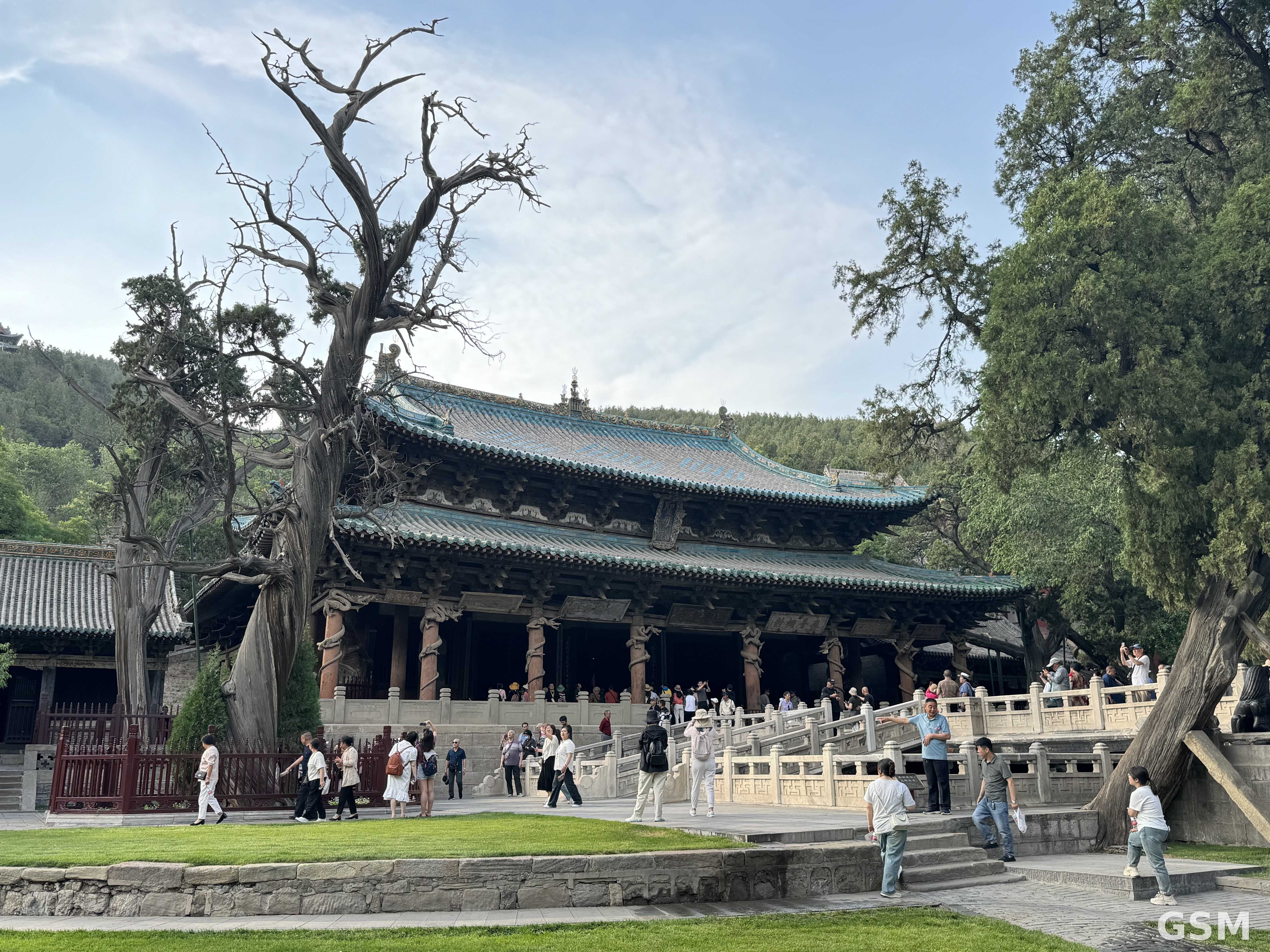
图片来源:太原晋祠圣母殿与鱼沼飞梁实景,Patrick20242023 摄,CC BY-SA 4.0,Wikimedia Commons / The Goddess Mother Hall and the Flying Bridge over the Fish Pond at Jinci Temple, Taiyuan. Photo by Patrick20242023, CC BY-SA 4.0, via Wikimedia Commons.